Chiudendo, la configurazione personalizzata non sarà salvata, a meno che l'articolo non sia stato aggiunto al carrello della spesa o ai prodotti preferiti.
Clicchi OK per chiudere MILLIPLEX® MAP, oppure Annulla per tornare alla selezione.
Scelga pannelli su misura e kit premiscelati, OPPURE le microsfere MAPmates™ per la trasduzione del segnale
Progetti e calcoli il prezzo dei Suoi kit MILLIPLEX® MAP.
Pannelli su misura e kit premiscelati
La nostra ampia gamma comprende pannelli multiplex che consentono di scegliere, nell'ambito del pannello, gli analiti più adatti per le Sue esigenze. Oppure Lei può scegliere le citochine premiscelate o i kit single plex.
Kit e MAPmates™ per studi di trasduzione del segnale
Scelga i kit premiscelati che permettono di esplorare interi processi e pathway. Oppure progetti kit su misura scegliendo le microsfere MAPmates™ single plex e seguendo le linee guida fornite.
Le seguenti MAPmates™ non possono essere dosate insieme: -MAPmates™ che richiedono tamponi differenti per l'analisi. -MAPmate™ fosfo-specifiche e totali, es GSK3β totale e GSK3β (Ser 9). -MAPmates™ PanTyr e sito-specifiche come fosfo-recettore EGF e fosfo-STAT1 (Tyr701). -Più di 1 fosfo-MAPmate™ per un solo bersaglio (Akt, STAT3). -GAPDH e β-Tubulina non possono essere miscelati con kit o MAPmates™ contenenti panTyr.
.
Numero di catalogo
Descrizione dell'ordine
Qtà/conf
Elenca
Questo articolo è stato aggiunto ai prodotti preferiti.
Selezioni una specie, un tipo di pannello, un kit o un tipo di campione
Per cominciare a progettare il Suo kit MILLIPLEX® MAP, selezioni una specie, un tipo di pannello o un kit di Suo interesse.
Custom Premix Selecting "Custom Premix" option means that all of the beads you have chosen will be premixed in manufacturing before the kit is sent to you.
Catalogue Number
Ordering Description
Qty/Pack
List
Questo articolo è stato aggiunto ai prodotti preferiti.
Specie
Tipo di pannello
Kit selezionato
Qtà
Numero di catalogo
Descrizione dell'ordine
Qtà/conf
Prezzo di listino
96-Well Plate
Qtà
Numero di catalogo
Descrizione dell'ordine
Qtà/conf
Prezzo di listino
Aggiungi altri reagenti (Le microsfere MAPmate devono essere utilizzate con un tampone ed un kit di rilevazione)
Qtà
Numero di catalogo
Descrizione dell'ordine
Qtà/conf
Prezzo di listino
48-602MAG
Buffer Detection Kit for Magnetic Beads
1 Kit
Opzione salva-spazio I Clienti che ordinano diversi kit possono scegliere di ridurre lo spazio necessario per lo stoccaggio, rinunciando al confezionamento del kit e ricevendo i vari reagenti per il saggio multiplex in buste di plastica.
Questo articolo è stato aggiunto ai prodotti preferiti.
Il prodotto è stato aggiunto al carrello.
Ora può disegnare un altro kit su misura, scegliere un kit premiscelato, procedere con il check out dell'ordine, oppure chiudere lo strumento per gli ordini on-line.
MAB2241
Sigma-AldrichAnti-Tau Antibody, clone Tau 12
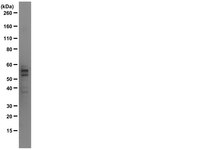
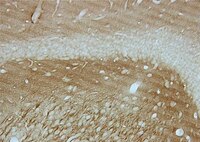
Anti-Tau Antibody, clone Tau 12 is an antibody against Tau for use in WB.
More>>Anti-Tau Antibody, clone Tau 12 is an antibody against Tau for use in WB. Less<<
Anti-Tau Antibody, clone Tau 12: MSDS (material safety data sheet) o SDS, certificato d’analisi (CoA) e certificato di qualità (CoQ), dossier, brochure e altri documenti disponibili.
G protein beta1/gamma2 subunit-interacting factor 1
Neurofibrillary tangle protein
Paired helical filament-tau
microtubule-associated protein tau
microtubule-associated protein tau, isoform 4
Background Information
Microtubule Associated Proteins, or MAPS, bind to the tubulin subunits of microtubule structures and regulate their functional stability. In the cell MAPs bind to monomer and multimerized tubulin. MAP binding to multimerized tubulin further stabilizes the formation of higher order microtubulin structures. MAP binding to microtubule structures is mediated through phosphorylation through Microtubule Affinity Regulated Kinase (MARK). Phosphorylation releases MAPs bound to microtubules, destabilizing the structure, driving it toward disassembly. There are predominately two MAP types, I, II. Type II MAP includes MAP2, MAP4, and tau and are found in nervous tissue. Six tau isoforms exist in brain tissue, and they are distinguished by their number of binding domains. Three isoforms have three binding domains and the other three have four binding domains. The binding domains are located in the carboxy-terminus of the protein and are positively-charged (allowing it to bind to the negatively-charged microtubule). The isoforms with four binding domains are better at stabilizing microtubules than those with three binding domains.
References
Product Information
Format
Purified
Control
Human brain tissue lysate.
Presentation
Purified in 0.1M Tris-Glycine (pH7.4) 150mM NaCl with 0.05% NaN3.
FUNCTION: Promotes microtubule assembly and stability, and might be involved in the establishment and maintenance of neuronal polarity. The C-terminus binds axonal microtubules while the N-terminus binds neural plasma membrane components, suggesting that tau functions as a linker protein between both. Axonal polarity is predetermined by tau localization (in the neuronal cell) in the domain of the cell body defined by the centrosome. The short isoforms allow plasticity of the cytoskeleton whereas the longer isoforms may preferentially play a role in its stabilization.
SUBUNIT STRUCTURE: Interacts with PSMC2 through SQSTM1 By similarity. Interacts with SQSTM1 when polyubiquitinated.
SUBCELLULAR LOCATION: Cytoplasm › cytosol. Cell membrane; Peripheral membrane protein; Cytoplasmic side. Cytoplasm › cytoskeleton. Cell projection › axon. Note= Mostly found in the axons of neurons, in the cytosol and in association with plasma membrane components.
TISSUE SPECIFICITY: Expressed in neurons. Isoform PNS-tau is expressed in the peripheral nervous system while the others are expressed in the central nervous system.
DEVELOPMENTAL STAGE: Four-repeat (type II) tau is expressed in an adult-specific manner and is not found in fetal brain, whereas three-repeat (type I) tau is found in both adult and fetal brain.
Domain The tau/MAP repeat binds to tubulin. Type I isoforms contain 3 repeats while type II isoforms contain 4 repeats.
PTM: Phosphorylation at serine and threonine residues in S-P or T-P motifs by proline-directed protein kinases (PDPK: CDC2, CDK5, GSK-3, MAPK) (only 2-3 sites per protein in interphase, seven-fold increase in mitosis, and in PHF-tau), and at serine residues in K-X-G-S motifs by MAP/microtubule affinity-regulating kinase (MARK) in Alzheimer diseased brains. Phosphorylation decreases with age. Phosphorylation within tau's repeat domain or in flanking regions seems to reduce tau's interaction with, respectively, microtubules or plasma membrane components. Phosphorylation on Ser-610, Ser-622, Ser-641 and Ser-673 in several isoforms during mitosis.
Polyubiquitinated. Requires functional TRAF6 and may provoke SQSTM1-dependent degradation by the proteasome By similarity. PHF-tau can be modified by three different forms of polyubiquitination. 'Lys-48'-linked polyubiquitination is the major form, 'Lys-6'-linked and 'Lys-11'-linked polyubiquitination also occur.
Glycation of PHF-tau, but not normal brain tau. Glycation is a non-enzymatic post-translational modification that involves a covalent linkage between a sugar and an amino group of a protein molecule forming ketoamine. Subsequent oxidation, fragmentation and/or cross-linking of ketoamine leads to the production of advanced glycation endproducts (AGES). Glycation may play a role in stabilizing PHF aggregation leading to tangle formation in AD.
INVOLVEMENT IN DISEASE: In Alzheimer disease, the neuronal cytoskeleton in the brain is progressively disrupted and replaced by tangles of paired helical filaments (PHF) and straight filaments, mainly composed of hyperphosphorylated forms of TAU (PHF-TAU or AD P-TAU).
Defects in MAPT are a cause of frontotemporal dementia and parkinsonism linked to chromosome 17 (FTDP17) [MIM:600274, 172700]; also called frontotemporal dementia (FTD) or historically termed Pick complex. This form of frontotemporal dementia is characterized by presenile dementia with behavioral changes, deterioration of cognitive capacities and loss of memory. In some cases, parkinsonian symptoms are prominent. Neuropathological changes include frontotemporal atrophy often associated with atrophy of the basal ganglia, substantia nigra, amygdala. In most cases, protein tau deposits are found in glial cells and/or neurons.
Defects in MAPT are a cause of pallido-ponto-nigral degeneration (PPND) [MIM:168610]. The clinical features include ocular motility abnormalities, dystonia and urinary incontinence, besides progressive parkinsonism and dementia. Ref.51 Ref.54 Ref.61 Ref.34 Ref.35 Ref.41 Ref.47 Ref.53
Defects in MAPT are a cause of corticobasal degeneration (CBD). It is marked by extrapyramidal signs and apraxia and can be associated with memory loss. Neuropathologic features may overlap Alzheimer disease, progressive supranuclear palsy, and Parkinson disease. Ref.51 Ref.54 Ref.61
Defects in MAPT are a cause of progressive supranuclear palsy (PSP) [MIM:601104, 260540]; also known as Steele-Richardson-Olszewski syndrome. PSP is characterized by akinetic-rigid syndrome, supranuclear gaze palsy, pyramidal tract dysfunction, pseudobulbar signs and cognitive capacities deterioration. Neurofibrillary tangles and gliosis but no amyloid plaques are found in diseased brains. Most cases appear to be sporadic, with a significant association with a common haplotype including the MAPT gene and the flanking regions. Familial cases show an autosomal dominant pattern of transmission with incomplete penetrance; genetic analysis of a few cases showed the occurrence of tau mutations, including a deletion of Asn-613. Ref.51 Ref.54 Ref.61 Ref.42 Ref.50 Ref.56 Ref.62 Ref.63 Ref.65
Defects in MAPT may be a cause of hereditary dysphasic disinhibition dementia (HDDD) [MIM:607485]. HDDD is a frontotemporal dementia characterized by progressive cognitive deficits with memory loss and personality changes, severe dysphasic disturbances leading to mutism, and hyperphagia. Ref.51 Ref.54 Ref.61
Unless otherwise stated in our catalog or other company documentation accompanying the product(s), our products are intended for research use only and are not to be used for any other purpose, which includes but is not limited to, unauthorized commercial uses, in vitro diagnostic uses, ex vivo or in vivo therapeutic uses or any type of consumption or application to humans or animals.
Millipore’s Tau antibodies demonstrates specificity against microtubule binding protein Tau. See below for related products for Tau, based on the expertise of Upstate & Chemicon. Per saperne di più >>