Wenn Sie das Fenster schließen, wird Ihre Konfiguration nicht gespeichert, es sei denn, Sie haben Ihren Artikel in die Bestellung aufgenommen oder zu Ihren Favoriten hinzugefügt.
Klicken Sie auf OK, um das MILLIPLEX® MAP-Tool zu schließen oder auf Abbrechen, um zu Ihrer Auswahl zurückzukehren.
Wählen Sie konfigurierbare Panels & Premixed-Kits - ODER - Kits für die zelluläre Signaltransduktion & MAPmates™
Konfigurieren Sie Ihre MILLIPLEX® MAP-Kits und lassen sich den Preis anzeigen.
Konfigurierbare Panels & Premixed-Kits
Unser breites Angebot enthält Multiplex-Panels, für die Sie die Analyten auswählen können, die am besten für Ihre Anwendung geeignet sind. Unter einem separaten Register können Sie das Premixed-Cytokin-Format oder ein Singleplex-Kit wählen.
Kits für die zelluläre Signaltransduktion & MAPmates™
Wählen Sie gebrauchsfertige Kits zur Erforschung gesamter Signalwege oder Prozesse. Oder konfigurieren Sie Ihre eigenen Kits mit Singleplex MAPmates™.
Die folgenden MAPmates™ sollten nicht zusammen analysiert werden: -MAPmates™, die einen unterschiedlichen Assaypuffer erfordern. -Phosphospezifische und MAPmate™ Gesamtkombinationen wie Gesamt-GSK3β und Gesamt-GSK3β (Ser 9). -PanTyr und locusspezifische MAPmates™, z.B. Phospho-EGF-Rezeptor und Phospho-STAT1 (Tyr701). -Mehr als 1 Phospho-MAPmate™ für ein einziges Target (Akt, STAT3). -GAPDH und β-Tubulin können nicht mit Kits oder MAPmates™, die panTyr enthalten, analysiert werden.
.
Bestellnummer
Bestellinformationen
St./Pkg.
Liste
Dieser Artikel wurde zu Ihren Favoriten hinzugefügt.
Wählen Sie bitte Spezies, Panelart, Kit oder Probenart
Um Ihr MILLIPLEX® MAP-Kit zu konfigurieren, wählen Sie zunächst eine Spezies, eine Panelart und/oder ein Kit.
Custom Premix Selecting "Custom Premix" option means that all of the beads you have chosen will be premixed in manufacturing before the kit is sent to you.
Catalogue Number
Ordering Description
Qty/Pack
List
Dieser Artikel wurde zu Ihren Favoriten hinzugefügt.
Spezies
Panelart
Gewähltes Kit
Menge
Bestellnummer
Bestellinformationen
St./Pkg.
Listenpreis
96-Well Plate
Menge
Bestellnummer
Bestellinformationen
St./Pkg.
Listenpreis
Weitere Reagenzien hinzufügen (MAPmates erfordern die Verwendung eines Puffer- und Detektionskits)
Menge
Bestellnummer
Bestellinformationen
St./Pkg.
Listenpreis
48-602MAG
Buffer Detection Kit for Magnetic Beads
1 Kit
Platzsparende Option Kunden, die mehrere Kits kaufen, können ihre Multiplex-Assaykomponenten in Kunststoffbeuteln anstelle von Packungen erhalten, um eine kompaktere Lagerung zu ermöglichen.
Dieser Artikel wurde zu Ihren Favoriten hinzugefügt.
Das Produkt wurde in Ihre Bestellung aufgenommen
Sie können nun ein weiteres Kit konfigurieren, ein Premixed-Kit wählen, zur Kasse gehen oder das Bestell-Tool schließen.
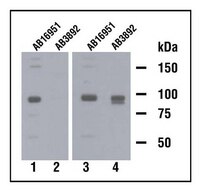
Anti-STAT1 Antibody, phospho-specific (Tyr701) is a Rabbit Polyclonal Antibody for detection of STAT1 also known as Signal Transducer & Activator of Transcription 1 & has been tested in WB.
More>>Anti-STAT1 Antibody, phospho-specific (Tyr701) is a Rabbit Polyclonal Antibody for detection of STAT1 also known as Signal Transducer & Activator of Transcription 1 & has been tested in WB. Less<<
SDB (Sicherheitsdatenblätter), Analysenzertifikate und Qualitätszertifikate, Dossiers, Broschüren und andere verfügbare Dokumente.
Protein A purified, followed by phospho-tyrosine adsorption. Liquid in 0.02M Tris, 0.25M NaCl, pH 7.5, with 0.1% Sodium Azide.
Applications
Application
Anti-STAT1 Antibody, phospho-specific (Tyr701) is a Rabbit Polyclonal Antibody for detection of STAT1 also known as Signal Transducer & Activator of Transcription 1 & has been tested in WB.
Key Applications
Western Blotting
Application Notes
Western blot: 1:1,000
Optimal working dilutions must be determined by the end user.
Biological Information
Immunogen
Synthetic phosphopeptide corresponding to amino acid residues surrounding the phosphorylated Tyr701 of human STAT1.
Epitope
phospho-specific (Tyr701)
Concentration
Please refer to the Certificate of Analysis for the lot-specific concentration.
Host
Rabbit
Specificity
Recognizes the activated form of STAT1 when phosphorylated on tyrosine 701. STATs (signal transducers and activators of transcription) are a family of cytoplasmic latent transcription factors that are activated to regulate gene expression in response to a large number of extracellular signaling polypeptides including cytokines, interferons, and growth factors. After phosphorylation by JAK tyrosine kinases, STATs enter the nucleus to regulate transcription of many different genes. STAT1 is activated by many different ligands including IFN family (IFN-alpha, IFN-beta, IFN-gamma, and IL-10), gp130 family (IL-6, IL-11, LIF, CNTF and G-CSF), and receptor tyrosine kinases (EGF, PDGF, CSF-1) (Darnell, 1997)). STAT1 has two forms, the 91 kDa STAT1alpha and the 84 kDa STAT1beta, which are encoded by the same gene with splicing variant (Schindler et al., 1992).
The protein encoded by this gene is a member of the STAT protein family. In response to cytokines and growth factors, STAT family members are phosphorylated by the receptor associated kinases, and then form homo- or heterodimers that translocate to the cell nucleus where they act as transcription activators. This protein can be activated by various ligands including interferon-alpha, interferon-gamma, EGF, PDGF and IL6. This protein mediates the expression of a variety of genes, which is thought to be important for cell viability in response to different cell stimuli and pathogens. Two alternatively spliced transcript variants encoding distinct isoforms have been described.
FUNCTION: SwissProt: P42224 # Signal transducer and activator of transcription that mediates signaling by interferons (IFNs). Following type I IFN (IFN-alpha and IFN-beta) binding to cell surface receptors, Jak kinases (TYK2 and JAK1) are activated, leading to tyrosine phosphorylation of STAT1 and STAT2. The phosphorylated STATs dimerize, associate with ISGF3G/IRF-9 to form a complex termed ISGF3 transcription factor, that enters the nucleus. ISGF3 binds to the IFN stimulated response element (ISRE) to activate the transcription of interferon stimulated genes, which drive the cell in an antiviral state. In response to type II IFN (IFN-gamma), STAT1 is tyrosine- and serine-phosphorylated. It then forms a homodimer termed IFN-gamma-activated factor (GAF), migrates into the nucleus and binds to the IFN gamma activated sequence (GAS) to drive the expression of the target genes, inducing a cellular antiviral state. SIZE: 750 amino acids; 87335 Da SUBUNIT: Isoform alpha homodimerizes upon IFN-gamma induced phosphorylation. Heterodimer with STAT2 upon IFN-alpha/beta induced phosphorylation. Interacts with NMI. Interacts with Sendai virus C', C, Y1 and Y2 proteins, Nipah virus P, V and W proteins, and rabies virus phosphoprotein preventing activation of ISRE and GAS promoter (By similarity). Interaction with HCV core protein results in STAT1 degradation. SUBCELLULAR LOCATION: Cytoplasm. Nucleus. Note=Translocated into the nucleus upon activation by IFN-alpha/beta. PTM: Phosphorylated on tyrosine residues in response to IFN-alpha, IFN-gamma, PDGF and EGF. Serine phosphorylation is also required for maximal transcriptional activity in IFN-gamma transduction (lacking in beta form). DISEASE: SwissProt: P42224 # Defects in STAT1 are the cause of STAT1 deficiency [MIM:600555]. Patients generally suffer from mycobacterial or viral diseases. In the case of complete deficiency, patients can die of viral disease. & Defects in STAT1 are a cause of mendelian susceptibility to mycobacterial disease (MSMD) [MIM:209950]; also known as familial disseminated atypical mycobacterial infection. This rare condition confers predisposition to illness caused by moderately virulent mycobacterial species, such as Bacillus Calmette-Guerin (BCG) vaccine and environmental non-tuberculous mycobacteria, and by the more virulent Mycobacterium tuberculosis. Other microorganisms rarely cause severe clinical disease in individuals with susceptibility to mycobacterial infections, with the exception of Salmonella which infects less than 50% of these individuals. The pathogenic mechanism underlying MSMD is the impairment of interferon-gamma mediated immunity whose severity determines the clinical outcome. Some patients die of overwhelming mycobacterial disease with lepromatous-like lesions in early childhood, whereas others develop, later in life, disseminated but curable infections with tuberculoid granulomas. MSMD is a genetically heterogeneous disease with autosomal recessive, autosomal dominant or X-linked inheritance. SIMILARITY: SwissProt: P42224 ## Belongs to the transcription factor STAT family. & Contains 1 SH2 domain.
Physicochemical Information
Dimensions
Materials Information
Toxicological Information
Safety Information according to GHS
Safety Information
Product Usage Statements
Usage Statement
Unless otherwise stated in our catalog or other company documentation accompanying the product(s), our products are intended for research use only and are not to be used for any other purpose, which includes but is not limited to, unauthorized commercial uses, in vitro diagnostic uses, ex vivo or in vivo therapeutic uses or any type of consumption or application to humans or animals.
Storage and Shipping Information
Storage Conditions
Maintain at 2-8ºC in undiluted aliquots for up to one year from date of receipt.
STATs (signal transducers and activators of transcription) are a family of latent cytoplasmic proteins that are activated to participate in gene control when cells encounter various extracellular polypeptides. Biochemical and molecular genetic explorations have defined a single tyrosine phosphorylation site and, in a dimeric partner molecule, an Src homology 2 (SH2) phosphotyrosine-binding domain, a DNA interaction domain, and a number of protein-protein interaction domains (with receptors, other transcription factors, the transcription machinery, and perhaps a tyrosine phosphatase). Mouse genetics experiments have defined crucial roles for each known mammalian STAT. The discovery of a STAT in Drosophila, and most recently in Dictyostelium discoideum, implies an ancient evolutionary origin for this dual-function set of proteins.
Proteins of transcription factor ISGF-3: one gene encodes the 91-and 84-kDa ISGF-3 proteins that are activated by interferon alpha. Schindler, C, et al. Proc. Natl. Acad. Sci. U.S.A., 89: 7836-9 (1992)
1992
ISGF-3 is an interferon-dependent positive-acting transcription factor that is cytoplasmically activated, possibly through direct interaction with the interferon receptor. The factor has been purified, its component proteins have been separated, and its peptide sequences have been obtained. From the sequences, degenerate oligonucleotide probes were constructed to screen for cDNA clones. Sequencing of the selected clones shows that the 91- and 84-kDa components represent two forms of a previously unknown (to our knowledge) protein. Several antibodies raised against these proteins prove that they indeed do encode protein components of ISGF-3. This work provides reagents to explore the modification of this cytoplasmically activated transcription factor.