Skip to Content
Merck

V3409

1-Vinyl-2-pyrrolidinone

contains sodium hydroxide as inhibitor, ≥99%

Synonym(s):

1-Vinyl-2-pyrrolidone

Sign In to View Organizational & Contract Pricing.

Select a Size


About This Item

Empirical Formula (Hill Notation):
C6H9NO
CAS Number:
Molecular Weight:
111.14
UNSPSC Code:
12162002
NACRES:
NA.23
PubChem Substance ID:
EC Number:
201-800-4
Beilstein/REAXYS Number:
110513
MDL number:
Technical Service
Need help? Our team of experienced scientists is here for you.
Let Us Assist
Technical Service
Need help? Our team of experienced scientists is here for you.
Let Us Assist

InChI key

WHNWPMSKXPGLAX-UHFFFAOYSA-N

InChI

1S/C6H9NO/c1-2-7-5-3-4-6(7)8/h2H,1,3-5H2

SMILES string

C=CN1CCCC1=O

vapor density

3.8 (vs air)

vapor pressure

0.1 mmHg ( 24 °C)

assay

≥99%

autoignition temp.

685 °F

contains

sodium hydroxide as inhibitor, 100 ppm sodium hydroxide as inhibitor (added to bulk material)

expl. lim.

10 %

refractive index

n20/D 1.512 (lit.)

bp

92-95 °C/11 mmHg (lit.)

density

1.04 g/mL at 25 °C (lit.)

storage temp.

2-8°C

Quality Level

Looking for similar products? Visit Product Comparison Guide

Related Categories

Application

1-Vinyl-2-pyrrolidinone (VP) is used in the study of macrophotoinitiator characteristics of poly (vinylchloride) type molecules. Also, used to study the genotoxicity of polyvinylpyrrolidone coated silver nanoparticles.

General description

1-Vinyl-2-pyrrolidinone is a colorless to yellow liquid, with a characteristic odor. Its melting point is around 13.5oC and boils at about 90-92oC. VP is completely miscible in water and in most organic solvents but partially miscible in aliphatic hydrocarbons. Industrial production of VP by reacting 2-pyrrolidone with acetylene at high pressure and temperature has been reported. The vinylation process proceeds in liquid phase and is catalyzed by 3-pyrrolidone -potassium hydroxide.

signalword

Danger

Hazard Classifications

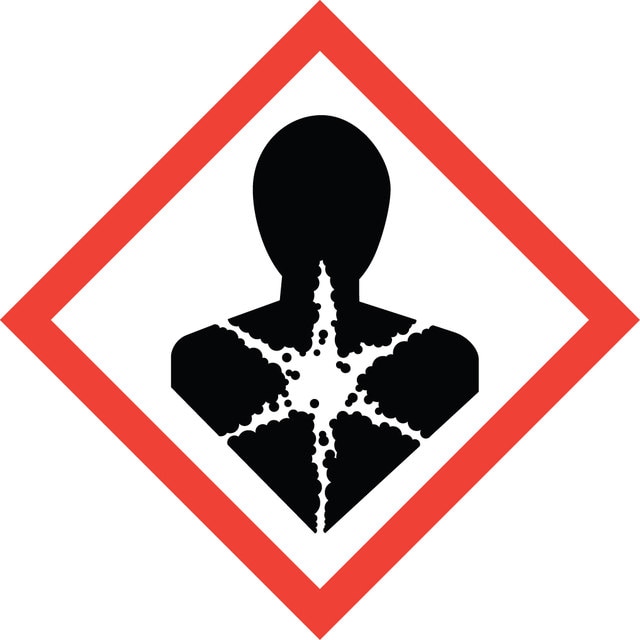
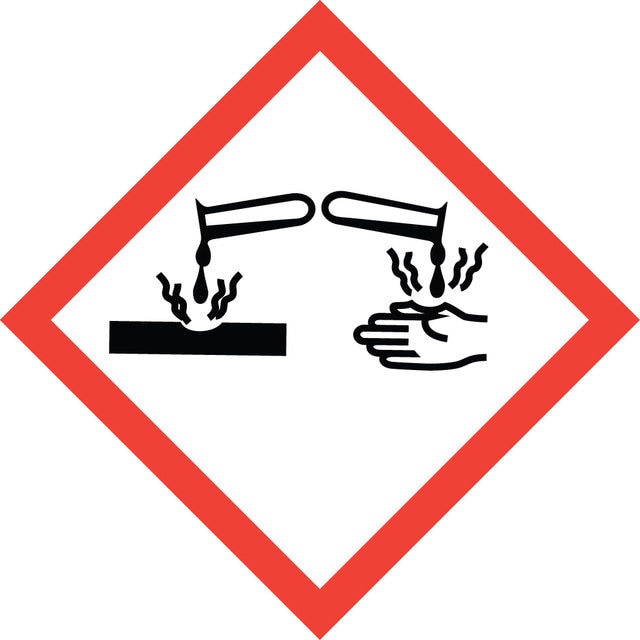
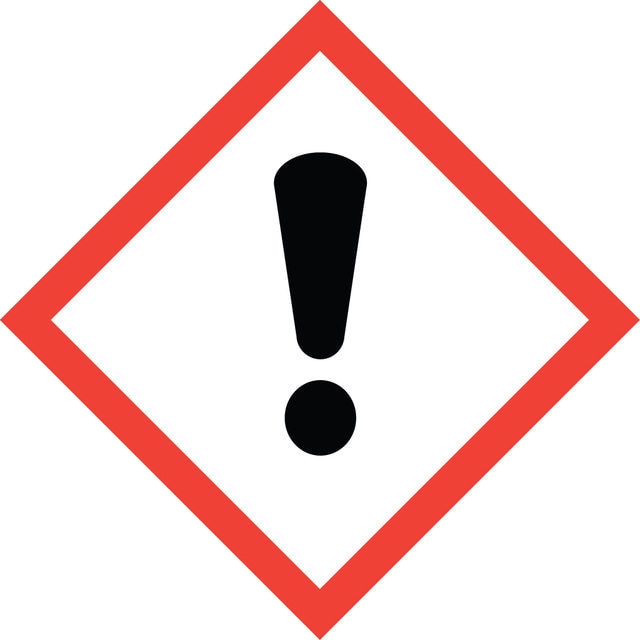
Acute Tox. 4 Dermal - Acute Tox. 4 Inhalation - Acute Tox. 4 Oral - Carc. 2 - Eye Dam. 1 - STOT RE 2 - STOT SE 3

target_organs

Respiratory system

Storage Class

10 - Combustible liquids

wgk

WGK 1

flash_point_f

203.0 °F - closed cup

flash_point_c

95 °C - closed cup

ppe

Eyeshields, Faceshields, Gloves, type ABEK (EN14387) respirator filter


Regulatory Listings

Regulatory Listings are mainly provided for chemical products. Only limited information can be provided here for non-chemical products. No entry means none of the components are listed. It is the user’s obligation to ensure the safe and legal use of the product.

Deleterious substance

pdsc

Group 4: Flammable liquids + Type 3 petroleums + Hazardous rank III + Water insoluble liquid

fsl

Substances Subject to be Indicated Names

ishl_indicated

Substances Subject to be Notified Names

ishl_notified

V3409-5ML: + V3409-BULK: + V3409-250G:4548173991917 + V3409-VAR: + V3409-18KG:4548173991894 + V3409-1KG-PM: + V3409-1KG:4548173991900 + V3409-250ML: + V3409-1L: + V3409-5G:4548173991887

jan


Choose from one of the most recent versions:

Certificates of Analysis (COA)

Lot/Batch Number

Don't see the Right Version?

If you require a particular version, you can look up a specific certificate by the Lot or Batch number.

Already Own This Product?

Find documentation for the products that you have recently purchased in the Document Library.

Visit the Document Library

Synthesis and characterization of poly (vinylchloride) type macrophotoinitiator comprising side-chain thioxanthone via click chemistry.
Akat H and Ozkan M
Express Polymer Letters, 5(4), 318-326 (2011)
Volker Engels et al.
Dalton transactions (Cambridge, England : 2003), 39(28), 6496-6502 (2010-06-23)
A modified polyol-based reduction method in ethylene glycol that incorporates poly(N-vinylpyrrolidone) (PVP, M(av) = 10,000; 40,000; 55,000) as polymeric anti-agglomerant alongside a reducing additive (N(2)H(4) x H(2)O, NaBH(4), NaH(2)PO(2) x H(2)O) has been employed to investigate the influence of synthetic
Hiroshi Ohno et al.
Chemistry (Weinheim an der Bergstrasse, Germany), 16(34), 10409-10417 (2010-07-14)
Recombinant antifreeze proteins (AFPs), representing a range of activities with respect to ice growth inhibition, were investigated for their abilities to control the crystal formation and growth of hydrocarbon hydrates. Three different AFPs were compared with two synthetic commercial inhibitors
Andrew M Telford et al.
Langmuir : the ACS journal of surfaces and colloids, 27(23), 14207-14217 (2011-10-21)
We investigated the dewetting of metastable poly(N-vinylpyrrolidone) (PNVP) thin films (45 nm) on top of polystyrene (PS) thin films (58 nm) as a function of annealing temperature and molecular weight of PS (96 and 6850 kg/mol). We focused on the
Ana C Borges et al.
Acta biomaterialia, 7(9), 3412-3421 (2011-06-10)
The swelling and compressive mechanical behavior as well as the morphology and biocompatibility of composite hydrogels based on Tween® 20 trimethacrylate (T3), N-vinyl-2-pyrrolidone (NVP) and nanofibrillated cellulose (NFC) were assessed in the present study. The chemical structure of T3 was

Articles

眼科用モノマーは、純度、信頼性と快適性を目標としており、コンタクトレンズをより手頃な価格にするためイノベーションを推進します。

Monomers for ophthalmic use aim for purity, reliability, and comfort, driving innovation for affordable contact lenses.

Related Content

有機合成・材料科学のセールを開催中!約18,000点を希望販売価格が最大70%OFFでご提供

Our team of scientists has experience in all areas of research including Life Science, Material Science, Chemical Synthesis, Chromatography, Analytical and many others.

Contact Technical Service