Skip to Content
Merck

71717

Sodium dodecyl sulfate

greener alternative

tested according to NF, mixture of sodium alkyl sulfates consisting mainly of sodium dodecyl sulfate

Synonym(s):

Natrium laurylsulfonicum, Dodecyl sodium sulfate, Dodecyl sulfate sodium salt, Lauryl sulfate sodium salt, SDS, Sodium lauryl sulfate

Sign In to View Organizational & Contract Pricing.

Select a Size


About This Item

Linear Formula:
CH3(CH2)11OSO3Na
CAS Number:
Molecular Weight:
288.38
NACRES:
NA.21
PubChem Substance ID:
eCl@ss:
39093306
UNSPSC Code:
12161900
EC Number:
205-788-1
MDL number:
Beilstein/REAXYS Number:
3599286
Technical Service
Need help? Our team of experienced scientists is here for you.
Let Us Assist
Technical Service
Need help? Our team of experienced scientists is here for you.
Let Us Assist

Product Name

Sodium dodecyl sulfate, tested according to NF, mixture of sodium alkyl sulfates consisting mainly of sodium dodecyl sulfate

InChI key

DBMJMQXJHONAFJ-UHFFFAOYSA-M

InChI

1S/C12H26O4S.Na/c1-2-3-4-5-6-7-8-9-10-11-12-16-17(13,14)15;/h2-12H2,1H3,(H,13,14,15);/q;+1/p-1

SMILES string

[Na+].CCCCCCCCCCCCOS([O-])(=O)=O

agency

USP
tested according to NF

description

anionic
62

assay

≥85.0% (content of sodium alkyl sulfates)

form

rod

mol wt

288.38 g/mol

Quality Level

greener alternative product characteristics

Catalysis
Learn more about the Principles of Green Chemistry.

sustainability

Greener Alternative Product

mp

204-207 °C (lit.)

solubility

water: soluble

HLB

40

application(s)

pharmaceutical (small molecule)

greener alternative category

Looking for similar products? Visit Product Comparison Guide

Application

Anionic detergent

General description

We are committed to bringing you Greener Alternative Products, which adhere to one or more of The 12 Principles of Greener Chemistry. This product is used as a surfactant to enhance catalysis.  Click here for more information.

pictograms

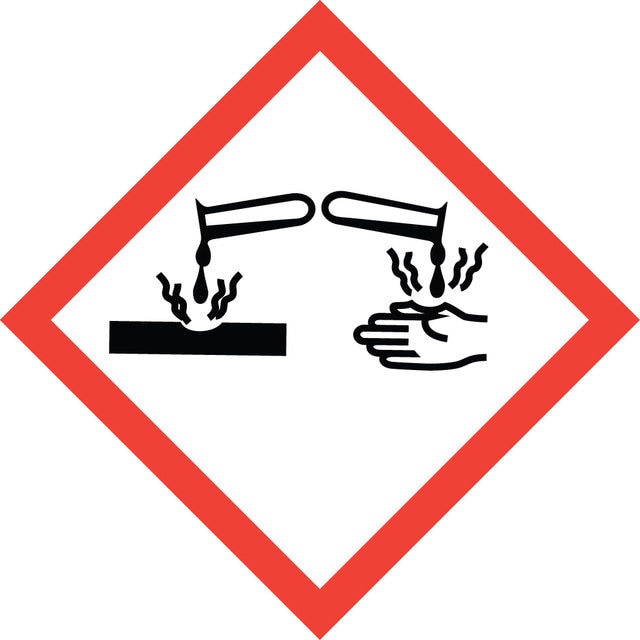
CorrosionExclamation mark

signalword

Danger

Hazard Classifications

Acute Tox. 4 Oral - Aquatic Chronic 3 - Eye Dam. 1 - Skin Irrit. 2

Storage Class

11 - Combustible Solids

wgk

WGK 2

flash_point_f

338.0 °F

flash_point_c

170 °C

ppe

Eyeshields, Faceshields, Gloves, type P3 (EN 143) respirator cartridges


Choose from one of the most recent versions:

Certificates of Analysis (COA)

Lot/Batch Number

Don't see the Right Version?

If you require a particular version, you can look up a specific certificate by the Lot or Batch number.

Already Own This Product?

Find documentation for the products that you have recently purchased in the Document Library.

Visit the Document Library

Shane Stegeman et al.
Cancer discovery, 5(4), 368-379 (2015-02-19)
Prostate cancer is the second most common malignancy among men worldwide. Genome-wide association studies have identified 100 risk variants for prostate cancer, which can explain approximately 33% of the familial risk of the disease. We hypothesized that a comprehensive analysis
A M Maillard et al.
Molecular psychiatry, 20(1), 140-147 (2014-11-26)
Anatomical structures and mechanisms linking genes to neuropsychiatric disorders are not deciphered. Reciprocal copy number variants at the 16p11.2 BP4-BP5 locus offer a unique opportunity to study the intermediate phenotypes in carriers at high risk for autism spectrum disorder (ASD)
Susanne Kohl et al.
Nature genetics, 47(7), 757-765 (2015-06-02)
Achromatopsia (ACHM) is an autosomal recessive disorder characterized by color blindness, photophobia, nystagmus and severely reduced visual acuity. Using homozygosity mapping and whole-exome and candidate gene sequencing, we identified ten families carrying six homozygous and two compound-heterozygous mutations in the
Lekun Fang et al.
Oncotarget, 5(10), 2974-2987 (2014-06-11)
Colorectal cancer (CRC) is one of the most common cancers worldwide, especially in Western countries. Although chemotherapy is used as an adjuvant or as a palliative treatment, drug resistance poses a great challenge. This study intended to identify biomarkers as
S Desrivières et al.
Molecular psychiatry, 20(2), 263-274 (2014-02-12)
Despite the recognition that cortical thickness is heritable and correlates with intellectual ability in children and adolescents, the genes contributing to individual differences in these traits remain unknown. We conducted a large-scale association study in 1583 adolescents to identify genes

Our team of scientists has experience in all areas of research including Life Science, Material Science, Chemical Synthesis, Chromatography, Analytical and many others.

Contact Technical Service