
L3771

Sodium dodecyl sulfate

BioReagent, suitable for electrophoresis, Molecular Biology, ≥98.5% (GC)
Synonym(s):
Dodecyl sodium sulfate, Dodecyl sulfate sodium salt, Lauryl sulfate sodium salt, SDS, Sodium lauryl sulfate
Select a Size
About This Item
Quality Segment
biological source
synthetic
grade
Molecular Biology
description
anionic
product line
BioReagent
assay
≥98.5% (GC)
form
powder
mol wt
micellar 18,000
greener alternative product characteristics
Catalysis
Learn more about the Principles of Green Chemistry.
sustainability
Greener Alternative Product
aggregation number
62
technique(s)
electrophoresis: suitable
impurities
≤2.0% water (Karl Fischer)
CMC
7-10 mM (20-25°C)
mp
204-207 °C (lit.)
transition temp
cloud point >100 °C
solubility
water: soluble
density
1.03 g/cm3 at 20 °C (68 °F)
anion traces
chloride (Cl-): ≤500 ppm, phosphate (PO43-): ≤10 ppm
cation traces
heavy metals (as Pb): ≤10 ppm
absorption
≤0.1 at 260 at 3%, ≤0.1 at 280 at 3%
HLB
40
suitability
suitable for electrophoresis
application(s)
advanced drug delivery
foreign activity
DNase, RNase, none detected
greener alternative category
storage temp.
room temp
SMILES string
[Na+].CCCCCCCCCCCCOS([O-])(=O)=O
InChI
1S/C12H26O4S.Na/c1-2-3-4-5-6-7-8-9-10-11-12-16-17(13,14)15;/h2-12H2,1H3,(H,13,14,15);/q;+1/p-1
InChI key
DBMJMQXJHONAFJ-UHFFFAOYSA-M
General description
Beyond protein analysis, SDS also finds applications in the electrophoretic separation of lipids, enabling the study and characterization of these important cellular components. Additionally, SDS is employed in various hybridization and molecular biology techniques, demonstrating its versatility across a range of research areas. SDS′s effectiveness in both ionic and anionic conditions further expands its utility, allowing it to adapt to diverse experimental setups and requirements. Its ability to unravel proteins by binding to peptide chains and imparting a negative charge effectively eliminates protein shape as a factor for gel separation, ensuring accurate protein size determination.
Application
- in chromatin immunoprecipitation
- in SDS-polyacrylamide gel electrophoresis (SDS-PAGE)
- as a component of radioimmunoprecipitation assay buffer for immunoblotting
Features and Benefits
- Highly versatile surfactant for your molecular biology and biochemical research
- Suitable for electrophoresis applications
- Tested to confirm low levels of heavy metal contamination,ensuring suitability for various applications.
Analysis Note
Other Notes
Still not finding the right product?
Explore all of our products under Sodium dodecyl sulfate
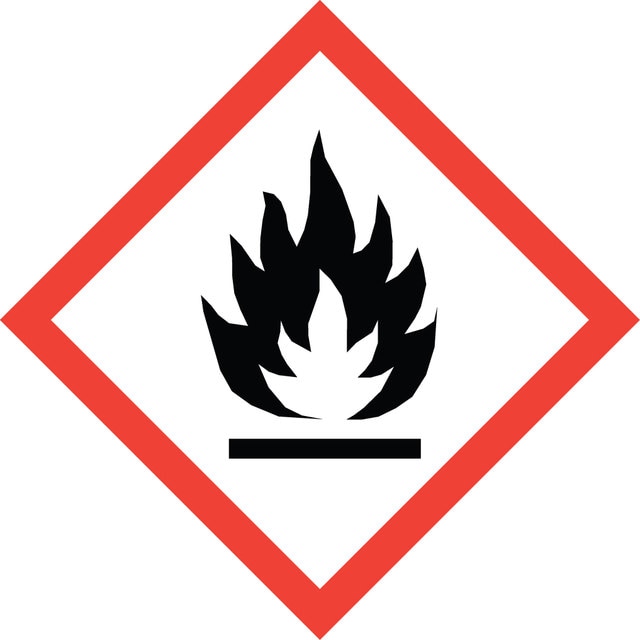


signalword
Danger
Hazard Classifications
Acute Tox. 4 Inhalation - Acute Tox. 4 Oral - Aquatic Chronic 3 - Eye Dam. 1 - Flam. Sol. 2 - Skin Irrit. 2 - STOT SE 3
target_organs
Respiratory system
Storage Class
4.1B - Flammable solid hazardous materials
wgk
WGK 2
flash_point_f
338.0 °F
flash_point_c
170 °C
ppe
Eyeshields, Faceshields, Gloves, type P3 (EN 143) respirator cartridges
Choose from one of the most recent versions:
Already Own This Product?
Find documentation for the products that you have recently purchased in the Document Library.