
ログインで組織・契約価格をご覧ください。
サイズを選択してください
表示を変更する
この商品について
実験式(ヒル表記法):
C9H13NO3 · C4H6O6
CAS番号:
分子量:
333.29
NACRES:
NA.24
PubChem Substance ID:
UNSPSC Code:
41116107
MDL number:
grade
pharmaceutical primary standard
API family
adrenaline
manufacturer/tradename
EDQM
application(s)
pharmaceutical (small molecule)
format
neat
storage temp.
2-8°C
SMILES string
O[C@H]([C@@H](O)C(O)=O)C(O)=O.CNC[C@H](O)c1ccc(O)c(O)c1
InChI
1S/C9H13NO3.C4H6O6/c1-10-5-9(13)6-2-3-7(11)8(12)4-6;5-1(3(7)8)2(6)4(9)10/h2-4,9-13H,5H2,1H3;1-2,5-6H,(H,7,8)(H,9,10)/t9-;1-,2-/m01/s1
InChI key
YLXIPWWIOISBDD-NDAAPVSOSA-N
Gene Information
human ... ADRA1A(148), ADRA1B(147), ADRA1D(146), ADRA2A(150), ADRA2B(151), ADRA2C(152), ADRB1(153), ADRB2(154), ADRB3(155)
General description
この製品は薬局方標準品です。発行元の薬局方により製造・供給されています。MSDSを含む製品情報などの詳しい情報は、発行元の薬局方のウェブサイトよりご確認ください。
Application
Adrenaline tartrate with impurity A EP Reference standard, intended for use in laboratory tests only as specifically prescribed in the European Pharmacopoeia.
Biochem/physiol Actions
アドレナリンレセプターアゴニストです。
Packaging
The product is delivered as supplied by the issuing Pharmacopoeia. For the current unit quantity, please visit the EDQM reference substance catalogue.
Other Notes
Sales restrictions may apply.
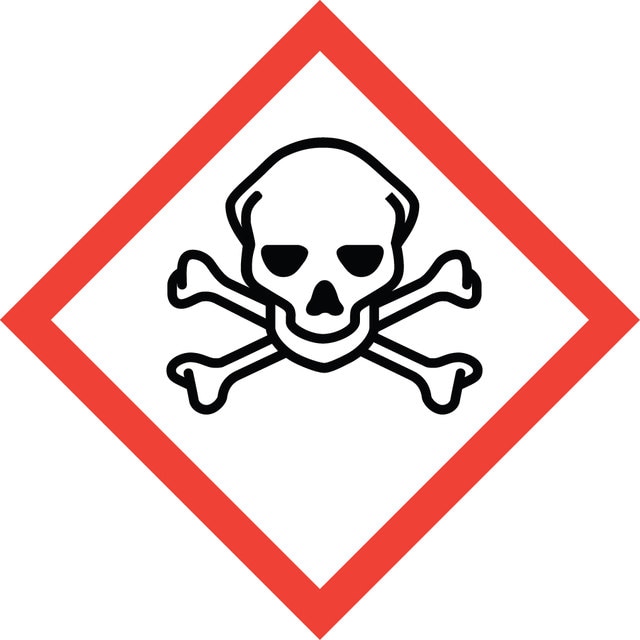
signalword
Danger
hcodes
Hazard Classifications
Acute Tox. 1 Oral
保管分類
6.1A - Combustible acute toxic Cat. 1 and 2 / very toxic hazardous materials
wgk
WGK 3
flash_point_f
Not applicable
flash_point_c
Not applicable
Yangjie Wei et al.
AAPS PharmSciTech, 16(2), 455-465 (2014-11-02)
Several attempts have been made to mask the bitter taste of oral formulations, but none have been made for injectable formulations. This study aims to mask the bitter taste of dental lidocaine HCl (LID) injection using hydroxypropyl-β-cyclodextrin (HP-β-CD) and sodium
Fabiano B Carvalho et al.
The Journal of nutritional biochemistry, 26(4), 378-390 (2015-01-31)
The aim of this study was to investigate the protective effect of anthocyanins (ANT) on oxidative and inflammatory parameters, as well as ion pump activities, in the pons of rats experimentally demyelinated with ethidium bromide (EB). Rats were divided in