Skip to Content
Merck

179957

Methanol

≥99.6%, Laboratory Reagent grade

Synonym(s):

Methyl alcohol

Sign In to View Organizational & Contract Pricing.

Select a Size

Change View

About This Item

Linear Formula:
CH3OH
CAS Number:
Molecular Weight:
32.04
NACRES:
NA.05
PubChem Substance ID:
eCl@ss:
39020101
UNSPSC Code:
12352104
EC Number:
200-659-6
MDL number:
Beilstein/REAXYS Number:
1098229
Assay:
≥99.6%
Grade:
Laboratory Reagent
Bp:
64.7 °C (lit.)
Vapor pressure:
410 mmHg ( 50 °C), 97.68 mmHg ( 20 °C)
Technical Service
Need help? Our team of experienced scientists is here for you.
Let Us Assist


Product Name

Methanol, Laboratory Reagent, ≥99.6%

grade

Laboratory Reagent

Quality Segment

vapor density

1.11 (vs air)

vapor pressure

410 mmHg ( 50 °C), 97.68 mmHg ( 20 °C)

assay

≥99.6%

form

liquid

autoignition temp.

725 °F

expl. lim.

36 %

dilution

(for analytical testing)

impurities

≤0.01% alkalinity (as NH3), ≤0.03% acidity (as HCOOH), ≤0.1% water

evapn. residue

≤0.01%

refractive index

n20/D 1.329 (lit.)

bp

64.7 °C (lit.)

mp

−98 °C (lit.)

density

0.791 g/mL at 25 °C (lit.)

format

neat

storage temp.

room temp

SMILES string

CO

InChI

1S/CH4O/c1-2/h2H,1H3

InChI key

OKKJLVBELUTLKV-UHFFFAOYSA-N

General description

Methanol is an industrially important alcohol. Its thermochemical conversion to C2-C10 hydrocarbons in the presence of shape-selective zeolites has been reported. Its oxidation on Ru-Pt catalyst system by ruthenium ad-atoms has been proposed. It participates in the purification step during the synthesis of pyocyanin, a toxic compound found in Pseudomonas aeruginosa.
Methanol is an organic solvent that can be synthesized from syngas in the presence of CuO/ZnO/Al2O3 catalysts. It is an ideal candidate as a hydrogen source in fuel cell technology due to its high H/C ratio, low propensity for soot generation, relatively low reforming temperature and as it exists in liquid state at room temperature. In a direct methanol fuel cell (DMFC), methanol undergoes oxidation with air to generate electricity. The olefins (ethylene or propylene) formed from methanol via MTO (methanol-to-olefins) process, can be an alternative to oil and gas to produce hydrocarbon fuels.

Application

Methanol may be used to compose the binary mixtures with acetonitrile in a study. Experimental evaluation of the values of dielectric constant and dielectric loss of these binary mixtures at microwave frequencies at 300°C has been reported.


Still not finding the right product?

Explore all of our products under Methanol

signalword

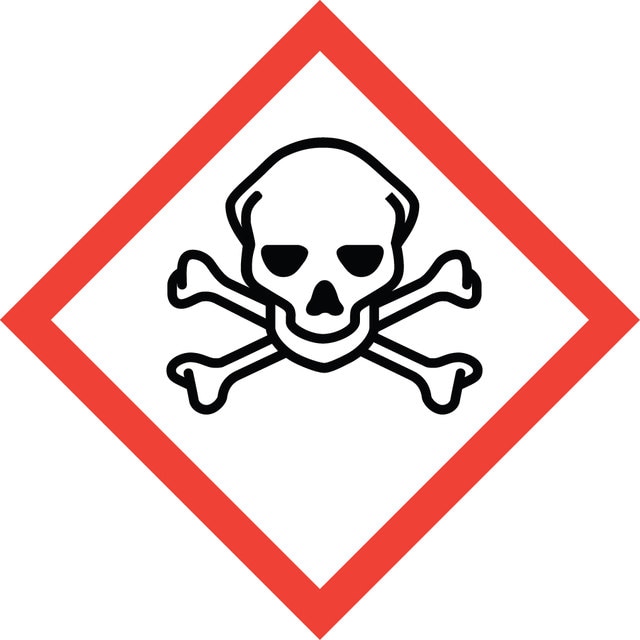
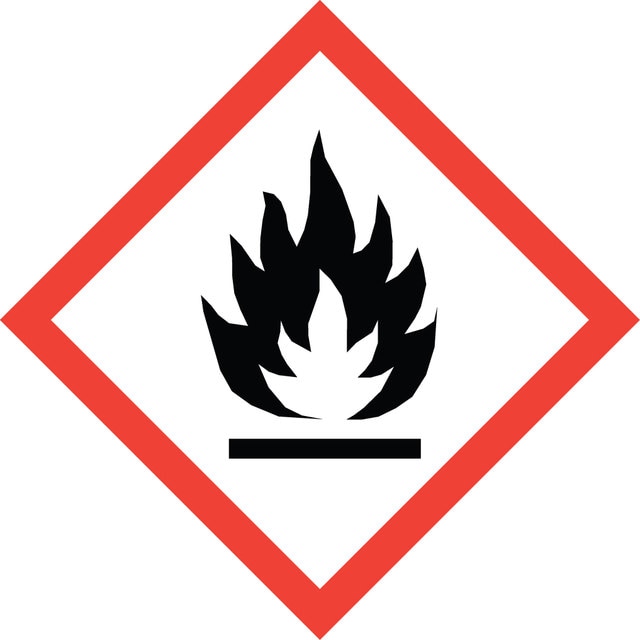
Danger

Hazard Classifications

Acute Tox. 3 Dermal - Acute Tox. 3 Inhalation - Acute Tox. 3 Oral - Flam. Liq. 2 - STOT SE 1

target_organs

Eyes,Central nervous system

Storage Class

3 - Flammable liquids

wgk

WGK 2

flash_point_f

49.5 °F - closed cup

flash_point_c

9.7 °C - closed cup


Choose from one of the most recent versions:

Certificates of Analysis (COA)

Lot/Batch Number

Don't see the Right Version?

If you require a particular version, you can look up a specific certificate by the Lot or Batch number.

Already Own This Product?

Find documentation for the products that you have recently purchased in the Document Library.

Visit the Document Library