
C1297

Copper(II) sulfate
ReagentPlus®, ≥99%
Synonym(s):
Cupric sulfate
Sign In to View Organizational & Contract Pricing.
Select a Size
Change View
About This Item
Linear Formula:
CuSO4
CAS Number:
Molecular Weight:
159.61
NACRES:
NA.21
PubChem Substance ID:
UNSPSC Code:
12352302
EC Number:
231-847-6
MDL number:
Assay:
≥99%
Form:
powder
vapor pressure
7.3 mmHg ( 25 °C)
Quality Segment
product line
ReagentPlus®
assay
≥99%
form
powder
reaction suitability
reaction type: click chemistry
pH
3.5-4.5 (20 °C, 50 g/L)
mp
200 °C (dec.) (lit.)
density
3.603 g/mL at 25 °C (lit.)
storage temp.
room temp
SMILES string
[Cu++].[O-]S([O-])(=O)=O
InChI
1S/Cu.H2O4S/c;1-5(2,3)4/h;(H2,1,2,3,4)/q+2;/p-2
InChI key
ARUVKPQLZAKDPS-UHFFFAOYSA-L
General description
Copper(II)sulfate is a Lewis acid catalyst commonly used to promote acid-catalyzed organic transformations.
Application
Copper(II)sulfate can be used as a catalyst for the:
- Alcoholysis of wheat straw into methyl levulinate.
- Selective oxidation of amines to imines in the presence of hydrogen peroxide as an oxidant.
- Synthesis of 1,2,3-triazoles via Click reactions of azides and alkynes.
- Microwave-assisted Huisgen-type cycloaddition to synthesize modified poly(N-vinylpyrrolidone).
Legal Information
ReagentPlus is a registered trademark of Merck KGaA, Darmstadt, Germany
Still not finding the right product?
Explore all of our products under Copper(II) sulfate
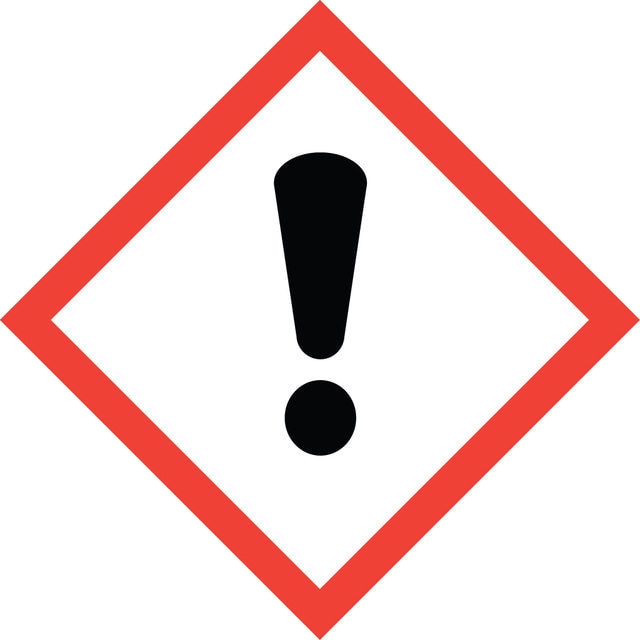
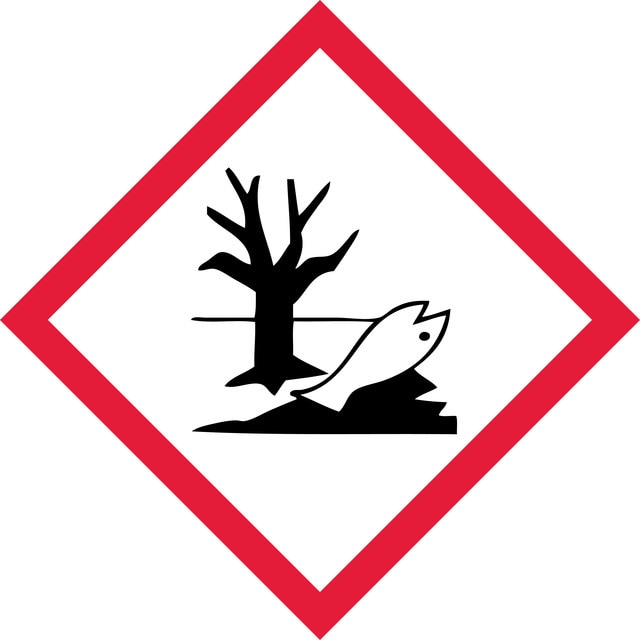
signalword
Warning
hcodes
Hazard Classifications
Acute Tox. 4 Oral - Aquatic Acute 1 - Aquatic Chronic 1 - Eye Irrit. 2 - Skin Irrit. 2
Storage Class
11 - Combustible Solids
flash_point_f
Not applicable
flash_point_c
Not applicable
Choose from one of the most recent versions:
Already Own This Product?
Find documentation for the products that you have recently purchased in the Document Library.