Skip to Content
Merck

557225

Methanol

suitable for GC/GC, for Purge & Trap SupraSolv®, suitable for EPA 601

Synonym(s):

Methyl alcohol

Sign In to View Organizational & Contract Pricing.

Select a Size

Change View

About This Item

Linear Formula:
CH3OH
CAS Number:
Molecular Weight:
32.04
NACRES:
NA.03
EC Index Number:
200-659-6
UNSPSC Code:
41116105
MDL number:
Beilstein/REAXYS Number:
1098229
Technique(s):
gas chromatography (GC): suitable
Bp:
64.7 °C (lit.)
Vapor pressure:
128 hPa ( 20 °C), 410 mmHg ( 50 °C), 97.68 mmHg ( 20 °C)
Technical Service
Need help? Our team of experienced scientists is here for you.
Let Us Assist


Product Name

Methanol, for Purge & Trap SupraSolv®

vapor density

1.11 (vs air)

vapor pressure

128 hPa ( 20 °C), 410 mmHg ( 50 °C), 97.68 mmHg ( 20 °C)

product line

SupraSolv®

form

liquid

autoignition temp.

725 °F

expl. lim.

36 %

technique(s)

gas chromatography (GC): suitable

refractive index

n20/D 1.329 (lit.)

kinematic viscosity

0.54-0.59 cSt(20 °C)

bp

64.7 °C (lit.)

mp

−98 °C (lit.)

transition temp

flash point 9.7 °C

density

0.791 g/mL at 25 °C (lit.)

format

neat

storage temp.

2-30°C

SMILES string

CO

InChI

1S/CH4O/c1-2/h2H,1H3

InChI key

OKKJLVBELUTLKV-UHFFFAOYSA-N

General description

Purge and trap (P&T) is a dynamic headspace sample preparation technique widely employed in gas chromatography (GC) for the isolation and concentration of volatile organic compounds (VOCs) and semi-volatile analytes from aqueous, solid, or gaseous matrices prior to instrumental analysis.The technique operates in three sequential phases:1. Purge Phase — An inert carrier gas (typically helium or nitrogen) is bubbled through or swept over the sample matrix at a controlled flow rate and temperature. This transfers volatile analytes from the sample into the gas phase through a process governed by Henry′s Law, whereby the partitioning of a compound between the liquid and gaseous phases is proportional to its partial pressure and Henry′s Law constant.2. Trap Phase — The purged analytes are swept onto a sorbent trap packed with one or more adsorbent materials (e.g., Tenax®, silica gel, activated charcoal, or polymeric resins). The trap selectively retains the target VOCs while allowing water vapor and the carrier gas to pass through, thereby achieving significant analyte preconcentration.3. Desorb Phase — The trap is rapidly heated to thermally desorb the concentrated analytes, which are then cryo-focused or directly transferred onto the GC column via a heated transfer line for chromatographic separation and detection.

Application

Purge and trap GC is extensively utilized in environmental monitoring (EPA Methods 524, 5030, 8260), drinking water analysis, industrial hygiene, food flavor profiling, and clinical toxicology, underscoring its versatility as a robust analytical tool for trace-level VOC determination.

Features and Benefits

  • Enhanced sensitivity through analyte preconcentration, enabling detection at ppt to ppb level
  • Minimal solvent use, reducing chemical waste and background interference
  • Applicability to complex matrices, including environmental water, soil, biological fluids, and food samples
  • Compatibility with various GC detectors, including mass spectrometry (GC-MS), flame ionization (FID), and photoionization detectors (PID)

Other Notes

Explore various lab safety accessories and equipment for safe handling of solvents to increase your safety level from the first usage.

Legal Information

SUPRASOLV is a registered trademark of Merck KGaA, Darmstadt, Germany


Still not finding the right product?

Explore all of our products under Methanol

signalword

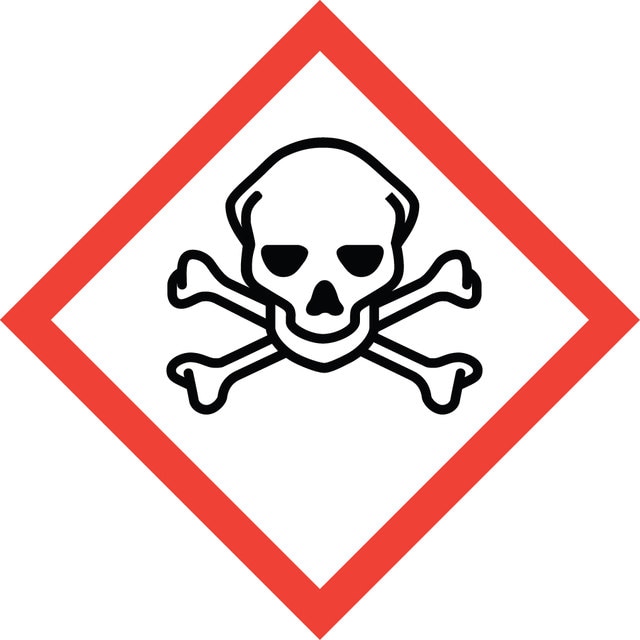
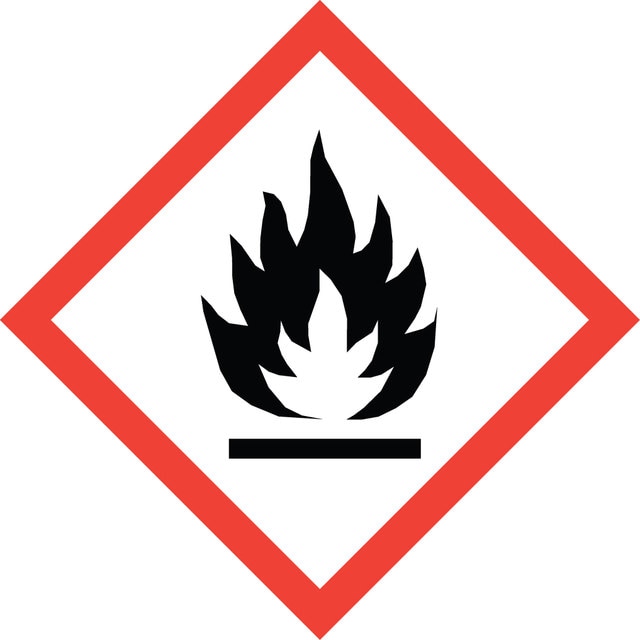
Danger

Hazard Classifications

Acute Tox. 3 Dermal - Acute Tox. 3 Inhalation - Acute Tox. 3 Oral - Flam. Liq. 2 - STOT SE 1

Storage Class

3 - Flammable liquids

wgk

WGK 2

flash_point_f

49.5 °F - closed cup

flash_point_c

9.7 °C - closed cup

target_organs

Eyes,Central nervous system


Certificates of Analysis (COA)

Search for Certificates of Analysis (COA) by entering the products Lot/Batch Number. Lot and Batch Numbers can be found on a product’s label following the words ‘Lot’ or ‘Batch’.

Already Own This Product?

Find documentation for the products that you have recently purchased in the Document Library.

Visit the Document Library