
175617

(3-Mercaptopropyl)trimethoxysilane
95%
Synonym(s):
3-(Trimethoxysilyl)-1-propanethiol
Sign In to View Organizational & Contract Pricing.
Select a Size
Change View
About This Item
Linear Formula:
HS(CH2)3Si(OCH3)3
CAS Number:
Molecular Weight:
196.34
UNSPSC Code:
12352103
NACRES:
NA.23
PubChem Substance ID:
EC Number:
224-588-5
Beilstein/REAXYS Number:
2038119
MDL number:
Quality Segment
assay
95%
form
liquid
refractive index
n20/D 1.444 (lit.)
bp
213-215 °C (lit.)
density
1.057 g/mL at 25 °C (lit.)
storage temp.
2-8°C
SMILES string
CO[Si](CCCS)(OC)OC
InChI
1S/C6H16O3SSi/c1-7-11(8-2,9-3)6-4-5-10/h10H,4-6H2,1-3H3
InChI key
UUEWCQRISZBELL-UHFFFAOYSA-N
General description
This 95% pure organofunctional silane is the industry standard for adhesion promotion. Its bifunctional nature (thiol/trimethoxysilyl) ensures robust chemical bonding at interfaces. The 5% impurity profile typically consists of harmless siloxane oligomers that do not compromise its performance in high-strength bonding or composite manufacturing.
Application
- Coupling & Adhesion: Acts as a powerful "molecular bridge" to improve the adhesion between sulfur-vulcanized rubbers or organic polymers and inorganic substrates like silica or glass.
- Filler Treatment: Used to treat mineral fillers (like silica) to improve their dispersion and reinforcement within polymer matrices.
- Composite Enhancement: Integrated into epoxy or phenolic resins to increase mechanical strength and moisture resistance in industrial composites.

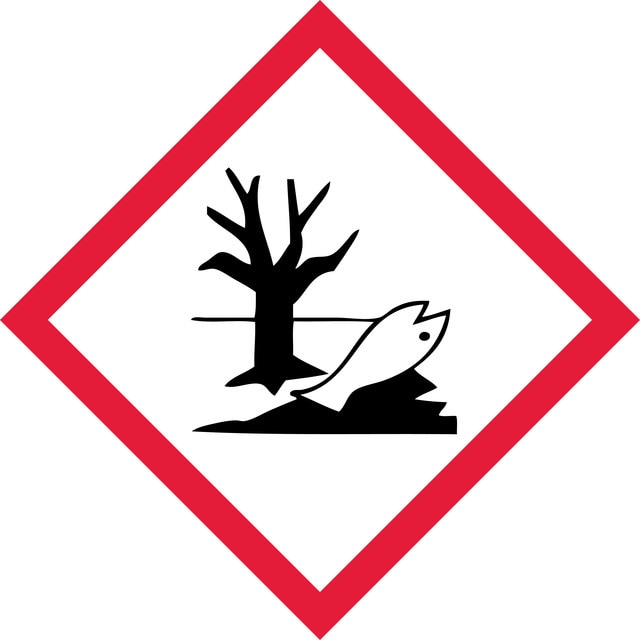
signalword
Warning
hcodes
Hazard Classifications
Acute Tox. 4 Oral - Aquatic Chronic 2 - Skin Sens. 1
Storage Class
10 - Combustible liquids
wgk
WGK 2
flash_point_f
204.8 °F - closed cup
flash_point_c
96 °C - closed cup
ppe
Eyeshields, Faceshields, Gloves, type ABEK (EN14387) respirator filter
Choose from one of the most recent versions:
Already Own This Product?
Find documentation for the products that you have recently purchased in the Document Library.