Sign In to View Organizational & Contract Pricing.
Select a Size
Change View
About This Item
Linear Formula:
CH3(CH2)10CON(CH3)CH2COOH
CAS Number:
Molecular Weight:
271.40
NACRES:
NA.21
PubChem Substance ID:
UNSPSC Code:
12161900
EC Number:
202-608-3
MDL number:
description
anionic
Quality Level
assay
≥95%
mol wt
average mol wt 600
aggregation number
2
CMC
14.6
SMILES string
CCCCCCCCCCCC(=O)N(C)CC(O)=O
InChI
1S/C15H29NO3/c1-3-4-5-6-7-8-9-10-11-12-14(17)16(2)13-15(18)19/h3-13H2,1-2H3,(H,18,19)
InChI key
BACYUWVYYTXETD-UHFFFAOYSA-N
General description
N-Lauroylsarcosine is an anionic surfactant with an ability to denature proteins. Due to its microbicidal property, N-lauroylsarcosine is being considered as a potent anti-microbicide in topical formulations, especially against sexually transmitted diseases (STDs).
Physical form
May be liquid at room temperature
signalword
Danger
hcodes
Hazard Classifications
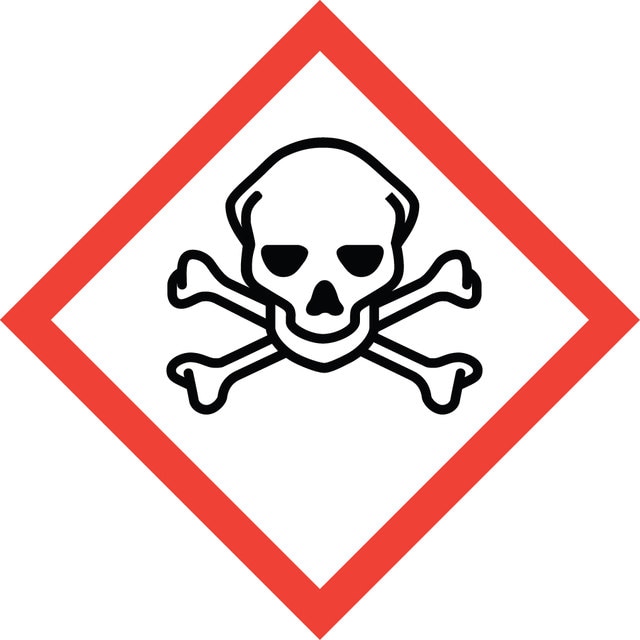
Acute Tox. 2 Inhalation - Eye Dam. 1 - Skin Irrit. 2
Storage Class
6.1A - Combustible acute toxic Cat. 1 and 2 / very toxic hazardous materials
wgk
WGK 1
flash_point_f
Not applicable
flash_point_c
Not applicable
ppe
dust mask type N95 (US), Eyeshields, Gloves
Choose from one of the most recent versions:
Already Own This Product?
Find documentation for the products that you have recently purchased in the Document Library.
Related Content
Roslyn N Brown et al.
Journal of proteome research, 9(9), 4454-4463 (2010-08-10)
A simple and effective subcellular proteomic method for fractionation based on osmotic lysis, differential centrifugation, and Sarkosyl solubilization was applied to the Gram-negative bacterium Shewanella oneidensis to gain insight into its subcellular architecture. Global differences in bacterial cytoplasm, inner membrane
Yoshiaki Furukawa et al.
The Journal of biological chemistry, 285(29), 22221-22231 (2010-04-21)
More than 100 different mutations in Cu,Zn-superoxide dismutase (SOD1) are linked to a familial form of amyotrophic lateral sclerosis (fALS). Pathogenic mutations facilitate fibrillar aggregation of SOD1, upon which significant structural changes of SOD1 have been assumed; in general, however
Kunie Ando et al.
The American journal of pathology, 178(2), 803-816 (2011-02-02)
Many models of human tauopathies have been generated in mice by expression of a human mutant tau with maintained expression of mouse endogenous tau. Because murine tau might interfere with the toxic effects of human mutant tau, we generated a