
8.05852

1-Methylimidazole

Greener Alternative
for synthesis
Synonym(s):
1-Methylimidazole, N-Methylimidazole
Select a Size
About This Item
vapor pressure
0.4 hPa ( 20 °C)
Quality Segment
assay
≥99.0% (GC)
form
liquid
autoignition temp.
525 °C
potency
1144 mg/kg LD50, oral (Rat), 400-640 mg/kg LD50, skin (Rabbit)
expl. lim.
2.7-15.7 % (v/v)
greener alternative product characteristics
Catalysis
Learn more about the Principles of Green Chemistry.
sustainability
Greener Alternative Product
pH
9.5-10.5 (20 °C, 50 g/L in H2O)
bp
198 °C/1013 hPa
mp
-2 °C
transition temp
flash point 92 °C
density
1.035 g/cm3 at 20 °C
greener alternative category
storage temp.
2-30°C
SMILES string
[n]1(cncc1)C
InChI
1S/C4H6N2/c1-6-3-2-5-4-6/h2-4H,1H3
InChI key
MCTWTZJPVLRJOU-UHFFFAOYSA-N
General description
Application
- Enhancement of noncorrosive electrolytes: Research discusses the role of 1-Methylimidazole in improving the properties of noncorrosive electrolytes for battery applications. This study explores how 1-Methylimidazole acts as a high donor number cosolvent, aiding in the release of free anions from commercially available magnesium salts, which could lead to innovations in battery technology (Xiao et al., 2024).
- Catalytic applications in organic synthesis: 1-Methylimidazole is utilized as a ligand in an air-stable ruthenium(II) complex, facilitating catalytic transfer hydrogenation of ketones from ethanol. This application demonstrates the catalytic versatility of 1-Methylimidazole in synthetic organic chemistry, providing a method for more efficient and sustainable chemical reactions (Beaufils et al., 2024).
- Functional materials for biomedical applications: Research involving 1-Methylimidazole focuses on developing sodium alginate- and cationic cellulose-functionalized polycaprolactone nanofibers. These materials are designed for specific in vitro and antibacterial applications, indicating the utility of 1-Methylimidazole in the creation of functional biomedical materials (Tolba et al., 2023).
Analysis Note
Density (d 20 °C/ 4 °C): 1.034 - 1.036
Identity (IR): passes test
Still not finding the right product?
Explore all of our products under 1-Methylimidazole
signalword
Danger
wgk
WGK 2
flash_point_f
197.6 °F - closed cup
flash_point_c
92 °C - closed cup
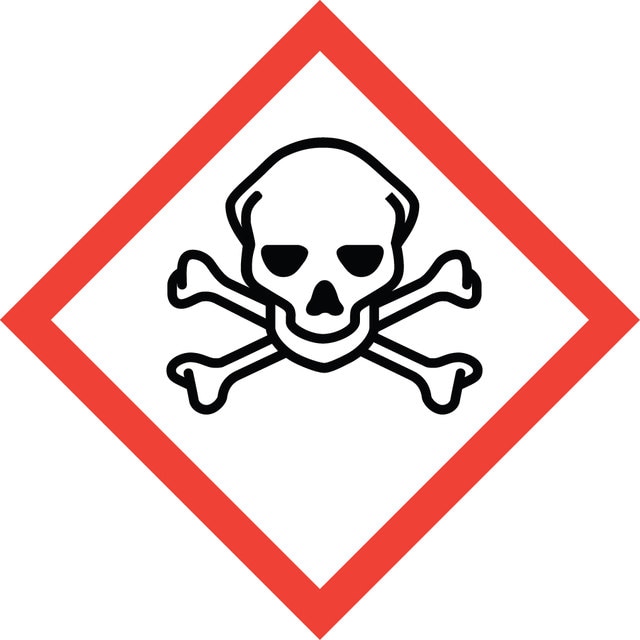

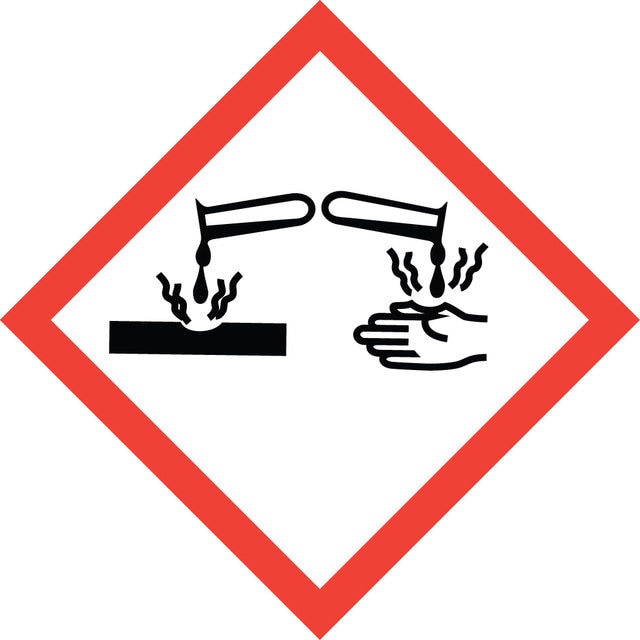
hcodes
Hazard Classifications
Acute Tox. 3 Dermal - Acute Tox. 4 Oral - Eye Dam. 1 - Repr. 2 - Skin Corr. 1B
Storage Class
6.1A - Combustible acute toxic Cat. 1 and 2 / very toxic hazardous materials
Choose from one of the most recent versions:
Already Own This Product?
Find documentation for the products that you have recently purchased in the Document Library.