Saltar al contenido
Merck

901351

1-Butanol

greener alternative

100% BioRenewable, reagent grade, ≥99.4%

Sinónimos:

n-Butanol, Butyl alcohol

Iniciar sesión para ver los precios por organización y contrato.

Seleccione un Tamaño


Acerca de este artículo

Fórmula lineal:
CH3(CH2)3OH
Número CAS:
Peso molecular:
74.12
NACRES:
NA.05
UNSPSC Code:
12352001
Beilstein/REAXYS Number:
969148
MDL number:
Assay:
≥99.4%
Grade:
reagent grade
Bp:
116-118 °C (lit.)
Servicio técnico
¿Necesita ayuda? Nuestro equipo de científicos experimentados está aquí para ayudarle.
Permítanos ayudarle
Servicio técnico
¿Necesita ayuda? Nuestro equipo de científicos experimentados está aquí para ayudarle.
Permítanos ayudarle

SMILES string

CCCCO

InChI

1S/C4H10O/c1-2-3-4-5/h5H,2-4H2,1H3

InChI key

LRHPLDYGYMQRHN-UHFFFAOYSA-N

vapor density

2.55 (vs air)

assay

≥99.4%

form

liquid

autoignition temp.

649 °F

expl. lim.

11.2 %

greener alternative product characteristics

Safer Solvents and Auxiliaries
Use of Renewable Feedstocks
Learn more about the Principles of Green Chemistry.

sustainability

Greener Alternative Product

renewable carbon content

100%

dilution

(for analytical testing)

impurities

≤0.0008 meq/g Titr. acid, ≤0.01% butyraldehyde, ≤0.1% water, ≤0.2% butyl ether

evapn. residue

≤0.005%

color

APHA: ≤10

Quality Level

grade

reagent grade

refractive index

n20/D 1.399 (lit.)

bp

116-118 °C (lit.)

mp

−90 °C (lit.)

density

0.81 g/mL at 25 °C (lit.)

greener alternative category

¿Está buscando productos similares? Visita Guía de comparación de productos

General description

We are committed to bringing you Greener Alternative Products, which adhere to one or more of The 12 Principles of Greener Chemistry. This product is 100% biorenewable and thus aligns with "Safer Solvents and Auxiliaries" and "Use of Renewable Feedstocks". Click here for more information.
This ACS grade 1-Butanol is a drop-in replacement for traditional 1-Butanol applications. Made from 100% renewable carbon (verified through C14 ASTM D6866-16 testing) and produced in an environmentally-friendly way which reduces the carbon footprint of production and reduces reliance on fossil-fuels.
It is also free from many contaminants that are present in petroleum derived 1-Butanol, such as isobutanol and aldehydes.

Application

Drop-in replacement for all 1-Butanol applications. Does not affect change in procedure or equipment.

1-Butanol may be used in applications such as:
  • Extraction and purification of compounds
  • Solvent in chemical synthesis
  • Intermediate in polymer synthesis
  • Adhesives and sealants formulation
  • Coatings

Features and Benefits

  • ASTM D6866 - Standard Test Methods for Determining the Biobased Content
  • Renewable Carbon Content – ≥99.9%
  • Made from Renewable Resource
  • Replacement for Petroleum-based 1-Butanol

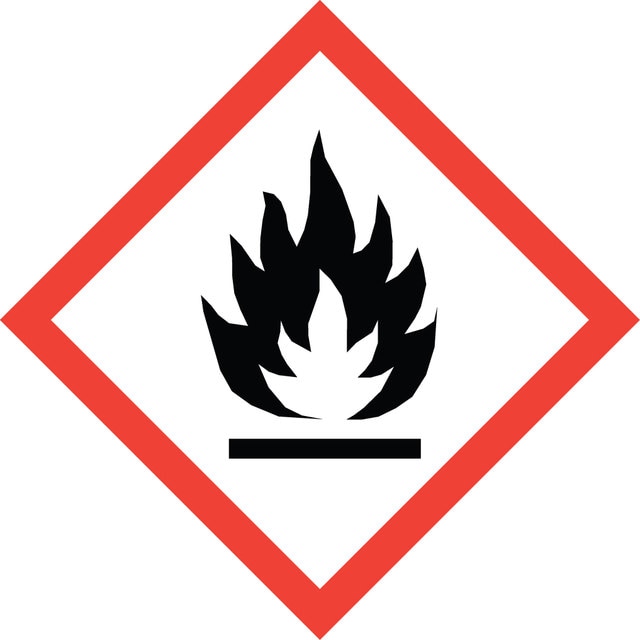
signalword

Danger

Hazard Classifications

Acute Tox. 4 Oral - Eye Dam. 1 - Flam. Liq. 3 - Skin Irrit. 2 - STOT SE 3

target_organs

Central nervous system, Respiratory system

Clase de almacenamiento

3 - Flammable liquids

wgk

WGK 1

flash_point_f

95.0 °F - Pensky-Martens closed cup

flash_point_c

35 °C - Pensky-Martens closed cup


Elija entre una de las versiones más recientes:

Certificados de análisis (COA)

Lot/Batch Number

It looks like we've run into a problem, but you can still download Certificates of Analysis from our Documentos section.

Si necesita más asistencia, póngase en contacto con Atención al cliente

¿Ya tiene este producto?

Encuentre la documentación para los productos que ha comprado recientemente en la Biblioteca de documentos.

Visite la Librería de documentos

E Gavini et al.
International journal of pharmaceutics, 307(1), 9-15 (2005-11-01)
The nasal route is used both for local therapies and, more recently, for the systemic administration of drugs, as well as for the delivery of peptides and vaccines. In this study the nasal administration of Carbamazepine (CBZ) has been studied
Acid-base properties of silica-aluminas: use of 1-butanol dehydration as a test reaction.
Berteau P, et al.
Applied Catalysis, 70(1), 307-323 (1991)
C R Shen et al.
Metabolic engineering, 10(6), 312-320 (2008-09-09)
Production of higher alcohols via the keto-acid intermediates found in microorganism's native amino-acid pathways has recently shown promising results. In this work, an Escherichia coli strain that produces 1-butanol and 1-propanol from glucose was constructed. The strain first converts glucose
The kinetics of the triethylamine-catalyzed reaction of diisocyanates with 1-butanol in toluene.
Burkus J and Eckert CF.
Journal of the American Chemical Society, 80(22), 5948-5950 (1958)
Prasenjit Seal et al.
The journal of physical chemistry. A, 117(2), 275-282 (2012-12-19)
In the present work, we study the H atom abstraction reactions by hydroxyl radical at all five sites of 1-butanol. Multistructural variational transition state theory (MS-VTST) was employed to estimate the five thermal rate constants. MS-VTST utilizes a multifaceted dividing

Nuestro equipo de científicos tiene experiencia en todas las áreas de investigación: Ciencias de la vida, Ciencia de los materiales, Síntesis química, Cromatografía, Analítica y muchas otras.

Póngase en contacto con el Servicio técnico