
Saltar al contenido
Merck

SML0061

SAHA

≥98% (HPLC), powder, HDAC inhibitor

Sinónimos:

N-hydroxy-N′-phenyl-octanediamide, Suberoylanilide hydroxamic acid, Vorinostat

Iniciar sesión para ver los precios por organización y contrato.

Seleccione un Tamaño


Acerca de este artículo

Fórmula empírica (notación de Hill):
C14H20N2O3
Número CAS:
Peso molecular:
264.32
UNSPSC Code:
12352200
PubChem Substance ID:
NACRES:
NA.77
MDL number:
Assay:
≥98% (HPLC)
Form:
powder
Quality level:
Servicio técnico
¿Necesita ayuda? Nuestro equipo de científicos experimentados está aquí para ayudarle.
Permítanos ayudarle
Servicio técnico
¿Necesita ayuda? Nuestro equipo de científicos experimentados está aquí para ayudarle.
Permítanos ayudarle

Nombre del producto

SAHA, ≥98% (HPLC)

SMILES string

ONC(=O)CCCCCCC(=O)Nc1ccccc1

InChI

1S/C14H20N2O3/c17-13(15-12-8-4-3-5-9-12)10-6-1-2-7-11-14(18)16-19/h3-5,8-9,19H,1-2,6-7,10-11H2,(H,15,17)(H,16,18)

InChI key

WAEXFXRVDQXREF-UHFFFAOYSA-N

assay

≥98% (HPLC)

form

powder

color

white to tan

solubility

DMSO: ≥15 mg/mL

shipped in

wet ice

storage temp.

−20°C

Quality Level

Gene Information

Application

SAHA may be used to study gene regulation, transcription regulation and cell signaling.

Biochem/physiol Actions

Potent, reversible pan-histone deacetylase (HDAC) inhibitor.
SAHA or Vorinostat facilitates the transcription of genes that result in apoptosis, differentiation and growth arrest. It has been observed to give beneficial results in lymphoma but not in solid tumors.
Vorinostat or suberoylanilide hydroxamic acid (SAHA) is a potent, reversible pan-histone deacetylase (HDAC) inhibitor. It inhibits both class I and class II HDACs, altering gene transcription and inducing cell cycle arrest and/or apoptosis in a wide variety of transformed cells.

Features and Benefits

This compound is a featured product for Gene Regulation research. Click here to discover more featured Gene Regulation products. Learn more about bioactive small molecules for other areas of research at sigma.com/discover-bsm.
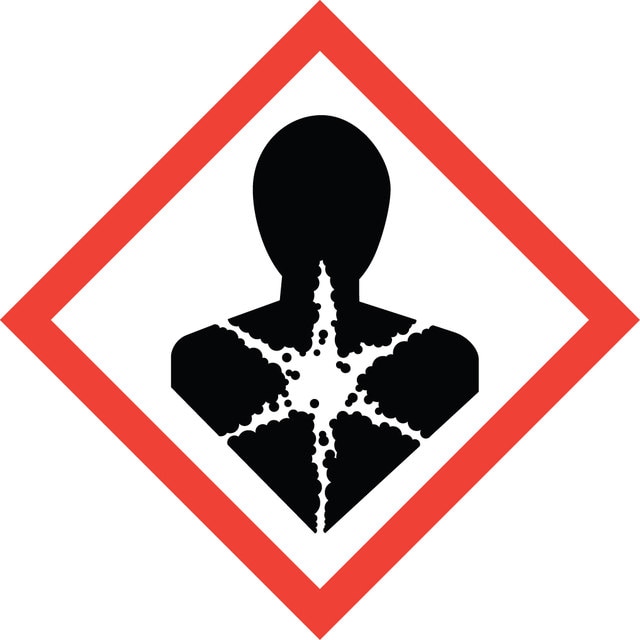
pictograms

Health hazard

signalword

Danger

hcodes

Hazard Classifications

Muta. 2 - Repr. 1A

Clase de almacenamiento

6.1C - Combustible acute toxic Cat.3 / toxic compounds or compounds which causing chronic effects

wgk

WGK 3

flash_point_f

Not applicable

flash_point_c

Not applicable


Elija entre una de las versiones más recientes:

Certificados de análisis (COA)

Lot/Batch Number

It looks like we've run into a problem, but you can still download Certificates of Analysis from our Documentos section.

Si necesita más asistencia, póngase en contacto con Atención al cliente

¿Ya tiene este producto?

Encuentre la documentación para los productos que ha comprado recientemente en la Biblioteca de documentos.

Visite la Librería de documentos

Sarah W Gordon et al.
American journal of clinical oncology, 42(8), 649-654 (2019-07-16)
Preclinical data suggest histone deacetylase inhibitors improve the therapeutic index of sorafenib. A phase I study was initiated to establish the recommended phase 2 dose of sorafenib combined with vorinostat in patients with unresectable hepatocellular carcinoma. Patients received vorinostat (200
Robert W Robey et al.
Molecular pharmaceutics, 8(6), 2021-2031 (2011-09-09)
The histone deacetylase inhibitors (HDIs) have shown promise in the treatment of a number of hematologic malignancies, leading to the approval of vorinostat and romidepsin for the treatment of cutaneous T-cell lymphoma and romidepsin for the treatment of peripheral T-cell
Gloria Manzotti et al.
Journal of experimental & clinical cancer research : CR, 38(1), 346-346 (2019-08-10)
RUNX2 is a Runt-related transcription factor required during embryogenesis for skeletal development and morphogenesis of other organs including thyroid and breast gland. Consistent evidence indicates that RUNX2 expression is aberrantly reactivated in cancer and supports tumor progression. The mechanisms leading
Sachith Mettananda et al.
Scientific reports, 9(1), 11649-11649 (2019-08-14)
β-Thalassaemia is one of the most common monogenic diseases with no effective cure in the majority of patients. Unbalanced production of α-globin in the presence of defective synthesis of β-globin is the primary mechanism for anaemia in β-thalassaemia. Clinical genetic
Weiwei Yu et al.
British journal of pharmacology, 174(20), 3608-3622 (2017-07-28)
Intrinsic and/or acquired resistance of epidermal growth factor receptor (EGFR) tyrosine kinase inhibitors (TKIs) commonly occurs in patients with non-small-cell lung cancer (NSCLC). Here, we developed a combined therapy of histone deacetylase inhibition by a novel HDAC inhibitor, YF454A, with

Contenido relacionado

Nuestro equipo de científicos tiene experiencia en todas las áreas de investigación: Ciencias de la vida, Ciencia de los materiales, Síntesis química, Cromatografía, Analítica y muchas otras.

Póngase en contacto con el Servicio técnico