
200050

Chromium(III) chloride
purified by sublimation, 99%
Synonym(s):
Chromic chloride, Chromium trichloride
Sign In to View Organizational & Contract Pricing.
Select a Size
Change View
About This Item
Linear Formula:
CrCl3
CAS Number:
Molecular Weight:
158.36
NACRES:
NA.23
PubChem Substance ID:
UNSPSC Code:
12352302
EC Number:
233-038-3
MDL number:
Assay:
99%
Form:
flakes
Quality Level
assay
99%
form
flakes
purified by
sublimation
reaction suitability
core: chromium, reagent type: catalyst
impurities
<0.2% water
density
2.87 g/mL at 25 °C (lit.)
SMILES string
Cl[Cr](Cl)Cl
InChI
1S/3ClH.Cr/h3*1H;/q;;;+3/p-3
InChI key
QSWDMMVNRMROPK-UHFFFAOYSA-K
Application
The vapor-phase co-reductions with other metal halides by hydrogen results in finely divided intermetallics with applications as structural materials or compounds with useful thermoelectric, magnetic, and oxidation-resistance properties.2
Chromium(III) chloride can be used in the formation of a catalytic system for the conversion of glucose into 5-hydroxymethylfurfural (HMF). It can also be used in the preparation of ionic liquid mixtures using choline chloride and water with improved ion mobility and conductivity.
Still not finding the right product?
Explore all of our products under Chromium(III) chloride
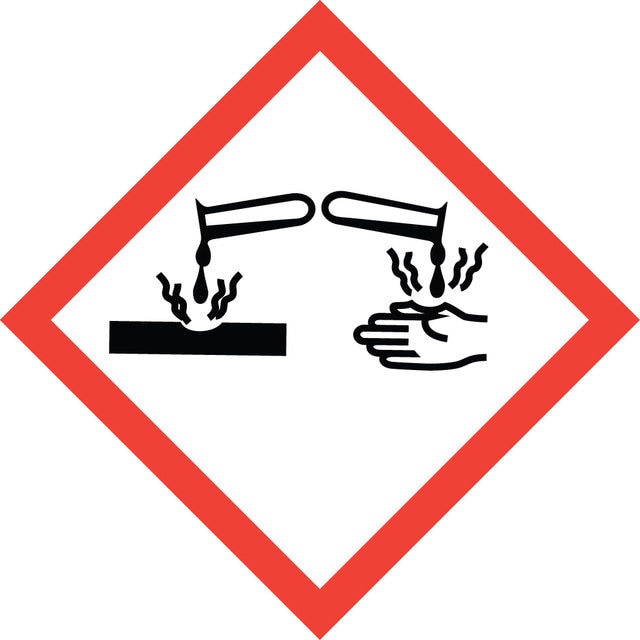

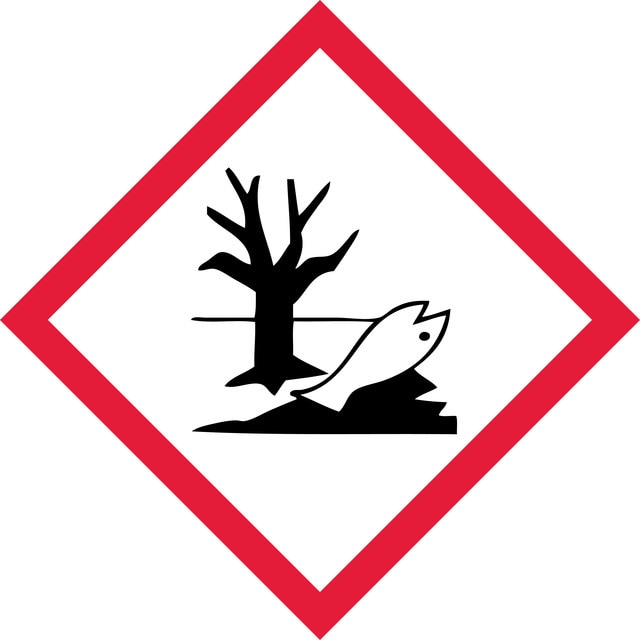
signalword
Warning
hcodes
Hazard Classifications
Acute Tox. 4 Oral - Aquatic Chronic 2 - Met. Corr. 1 - Skin Sens. 1B
flash_point_f
Not applicable
flash_point_c
Not applicable
ppe
dust mask type N95 (US), Eyeshields, Faceshields, Gloves
Storage Class
11 - Combustible Solids
Choose from one of the most recent versions:
Already Own This Product?
Find documentation for the products that you have recently purchased in the Document Library.
Physicochemical properties of ionic liquid mixtures containing choline chloride, chromium (III) chloride and water: effects of temperature and water content
Protsenko VS, et al.
Ionics, 23(3), 637-643 (2017)
Malene Barré Hansen et al.
Contact dermatitis, 54(3), 140-144 (2006-03-10)
Chromium allergy has become synonymous with Cr(VI) allergy. However, real exposure to chromium from leather products may include both Cr(III) and Cr(VI). In this study, we investigate the reactivity to both Cr(VI) and Cr(III) in consecutive patients to analyse the
M Pesti et al.
FEMS microbiology letters, 182(2), 375-380 (2000-01-06)
The in vivo effects of CrCl(3) on an ergosterol-producing 33 erg(+) strain of the eukaryotic yeast Candida albicans, and on its ergosterol-deficient erg(-)2 mutant, were studied by using electron paramagnetic resonance spectroscopy. A 5-doxylstearic acid spin probe was applied to