Skip to Content
Merck

172405

Tetraethylene glycol dimethyl ether

≥99%, cross-linking reagent click chemistry

Synonym(s):

2,5,8,11,14-Pentaoxapentadecane, Bis[2-(2-methoxyethoxy)ethyl] ether, Dimethoxytetraethylene glycol, Dimethyltetraglycol, Tetraglyme

Sign In to View Organizational & Contract Pricing.

Select a Size

Change View

About This Item

Linear Formula:
CH3O(CH2CH2O)4CH3
CAS Number:
Molecular Weight:
222.28
NACRES:
NA.23
PubChem Substance ID:
UNSPSC Code:
12162002
EC Number:
205-594-7
MDL number:
Beilstein/REAXYS Number:
1760005
Technical Service
Need help? Our team of experienced scientists is here for you.
Let Us Assist


Product Name

Tetraethylene glycol dimethyl ether, ≥99%

vapor density

7.7 (vs air)

Quality Level

vapor pressure

<0.01 mmHg ( 20 °C)

assay

≥99%, ≥99.0% (GC)

form

liquid

autoignition temp.

510 °F

reaction suitability

reagent type: cross-linking reagent
reaction type: click chemistry

impurities

≤1.0% Water (Karl Fischer), ≤50 ppm Trace peroxide (as H2O2)

refractive index

n20/D 1.432 (lit.)

bp

275-276 °C (lit.)

mp

−30 °C (lit.)

density

1.009 g/mL at 25 °C (lit.)

polymer architecture

shape: linear
functionality: homobifunctional

SMILES string

COCCOCCOCCOCCOC

InChI

1S/C10H22O5/c1-11-3-5-13-7-9-15-10-8-14-6-4-12-2/h3-10H2,1-2H3

InChI key

ZUHZGEOKBKGPSW-UHFFFAOYSA-N

General description

Tetraethylene glycol dimethyl ether or tetraglyme is an organic aprotic colourless solvent with film forming ability.

Application

Tetraglyme coating was applied on glucose sensors, such as Nafion by RF to render it “non fouling” and enhancing linking of bio mimetic molecules to the surface. Tetraglyme helps in selective adsorption of proteins while promoting cell adhesion. Other general uses include as an electrolyte in lithium ion battery.

Legal Information

Nafion is a trademark of The Chemours Company FC, LLC


Still not finding the right product?


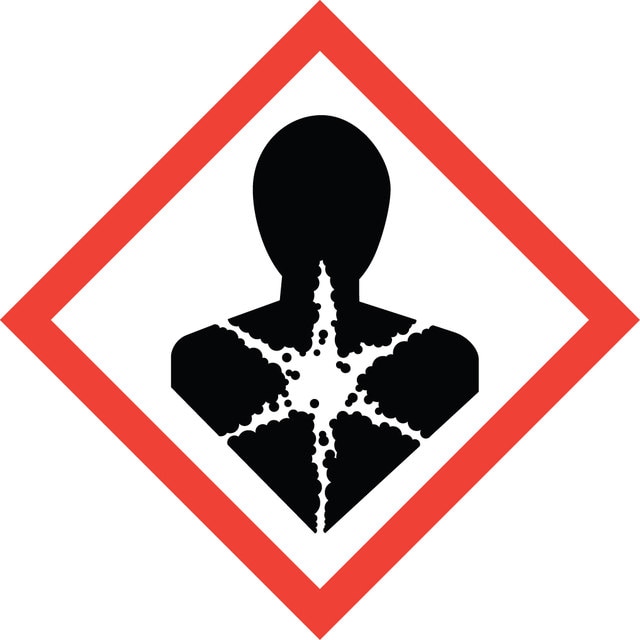
pictograms

Health hazard

signalword

Danger

hcodes

Hazard Classifications

Repr. 1B

supp_hazards

Storage Class

6.1C - Combustible acute toxic Cat.3 / toxic compounds or compounds which causing chronic effects

wgk

WGK 1

flash_point_f

276.8 °F - closed cup

flash_point_c

136 °C - closed cup

ppe

Eyeshields, Faceshields, Gloves, type ABEK (EN14387) respirator filter


Regulatory Listings

Regulatory Listings are mainly provided for chemical products. Only limited information can be provided here for non-chemical products. No entry means none of the components are listed. It is the user’s obligation to ensure the safe and legal use of the product.

143-24-8

CAS No.

143-24-8

CAS No.


Choose from one of the most recent versions:

Certificates of Analysis (COA)

Lot/Batch Number

Don't see the Right Version?

If you require a particular version, you can look up a specific certificate by the Lot or Batch number.

Already Own This Product?

Find documentation for the products that you have recently purchased in the Document Library.

Visit the Document Library


Yongguang Zhang et al.
Nanoscale research letters, 9(1), 137-137 (2014-03-25)
A novel sulfur/graphene nanosheet (S/GNS) composite was prepared via a simple ball milling of sulfur with commercial multi-layer graphene nanosheet, followed by a heat treatment. High-resolution transmission and scanning electronic microscopy observations showed the formation of irregularly interlaced nanosheet-like structure
Luisa Mayorga Szott et al.
Journal of biomedical materials research. Part A, 96(1), 150-161 (2010-11-26)
Nonspecific protein adsorption, particularly fibrinogen (Fg), is thought to be an initiating step in the foreign body response (FBR) to biomaterials by promoting phagocyte attachment. In previous studies, we therefore prepared radiofrequency glow discharge (ethylene oxide)-like tetraglyme (CH(3)O(CH(2)CH(2)O)(4)CH(3)) coatings adsorbing
Gautam Mishra et al.
Langmuir : the ACS journal of surfaces and colloids, 26(5), 3720-3730 (2009-12-03)
Physical and photolithographic techniques are commonly used to create chemical patterns for a range of technologies including cell culture studies, bioarrays and other biomedical applications. In this paper, we describe the fabrication of chemical micropatterns from commonly used plasma polymers.