
470864

Bromine
≥99.99% trace metals basis
Synonym(s):
Dibromine
Select a Size
About This Item
vapor density
7.14 (vs air)
Quality Segment
vapor pressure
175 mmHg ( 20 °C), 671 mmHg ( 55 °C)
assay
≥99.5% (by Na2S2O3, titration), ≥99.99% trace metals basis
resistivity
7.8E18 μΩ-cm, 20°C
impurities
≤0.001% I2, ≤0.001% S compounds, <100 ppm total metallic impurities
evapn. residue
≤0.005%
bp
58.8 °C (lit.)
mp
−7.2 °C (lit.)
density
3.119 g/mL at 25 °C (lit.)
anion traces
chloride (Cl-): ≤0.05%
cation traces
Ni: ≤5 ppm, heavy metals: ≤2 ppm
SMILES string
BrBr
InChI
1S/Br2/c1-2
InChI key
GDTBXPJZTBHREO-UHFFFAOYSA-N
Application
It can be used:
- To brominate alkylbenzenes at the benzylic position using photocatalytic conditions.
- To prepare brominated aromatic compounds by electrophilic aromatic substitution reactions in the presence of Lewis acid catalysts.
- For the bromination of carbonyl compounds at a carbonyl group via Hell-Volhard-Zelinski reaction in the presence of phosphorus trihalides.
- To prepare isocyanates, carbamates, or amines by reacting with primary amides in the presence of base via Hofmann rearrangement.
Other Notes
Still not finding the right product?
Explore all of our products under Bromine
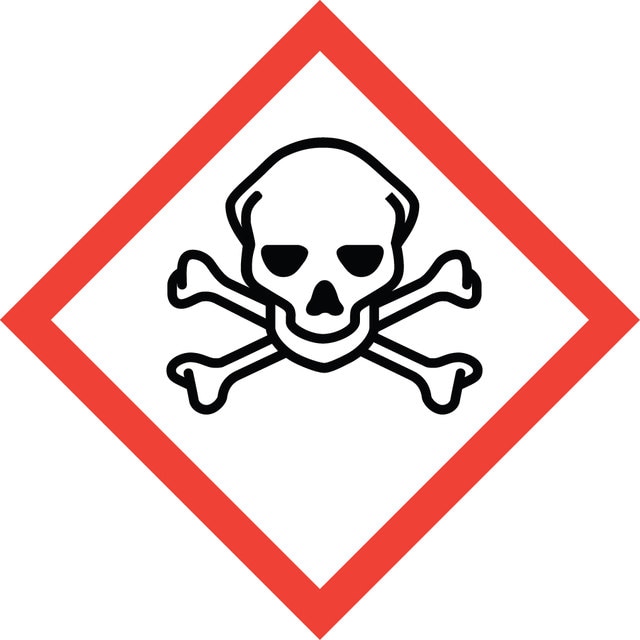
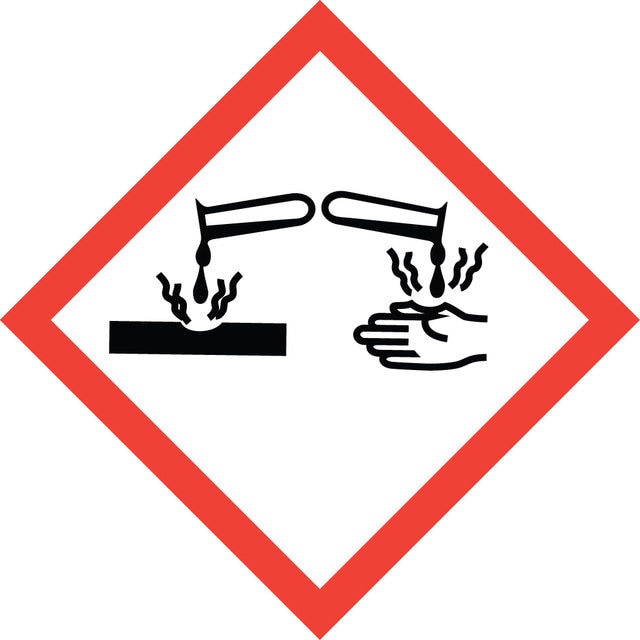
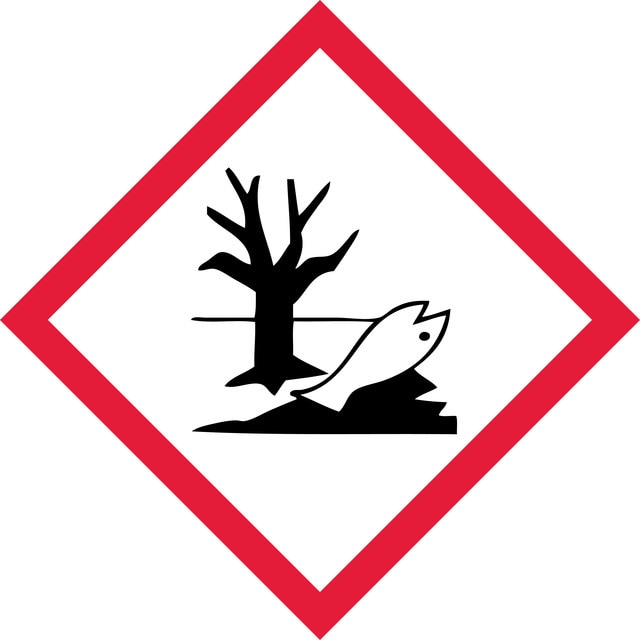
signalword
Danger
hcodes
Hazard Classifications
Acute Tox. 1 Inhalation - Aquatic Acute 1 - Eye Dam. 1 - Skin Corr. 1A
Storage Class
6.1B - Non-combustible acute toxic Cat. 1 and 2 / very toxic hazardous materials
wgk
WGK 2
flash_point_f
Not applicable
flash_point_c
Not applicable
ppe
Faceshields, Gloves, Goggles
Choose from one of the most recent versions:
Already Own This Product?
Find documentation for the products that you have recently purchased in the Document Library.