
277576

Bromine
ACS reagent, ≥99.5%
Sign In to View Organizational & Contract Pricing.
Select a Size
Change View
About This Item
Linear Formula:
Br2
CAS Number:
Molecular Weight:
159.81
NACRES:
NA.21
PubChem Substance ID:
UNSPSC Code:
12141915
EC Number:
231-778-1
MDL number:
Assay:
≥99.5%
Grade:
ACS reagent
Form:
liquid
grade
ACS reagent
Quality Segment
vapor density
7.14 (vs air)
vapor pressure
175 mmHg ( 20 °C), 671 mmHg ( 55 °C)
assay
≥99.5%
form
liquid
resistivity
7.8E18 μΩ-cm, 20°C
impurities
organic bromine compounds, passes test, ≤0.001% I2, ≤0.001% S compounds
evapn. residue
≤0.005%
bp
58.8 °C (lit.)
mp
−7.2 °C (lit.)
density
3.119 g/mL at 25 °C (lit.)
anion traces
chloride (Cl-): ≤0.05%
cation traces
Ni: ≤5 ppm, heavy metals: ≤2 ppm
SMILES string
BrBr
InChI
1S/Br2/c1-2
InChI key
GDTBXPJZTBHREO-UHFFFAOYSA-N
General description
Bromine is a highly volatile and reactive halogen that can be used as a powerful brominating and oxidizing agent in chemical synthesis.
Application
Bromine can be used as a brominating agent for the bromination of:
It can also be used as an oxidizing agent for the oxidation of:
It can also be used as a Lewis acid catalyst to:
- Aromatic and heterocyclic compounds.
- Carbonyl compounds at α position to carbonyl groups.
- Aromatic carboxylic acids via Hell-Volhard-Zelinski reaction in the presence of phosphorus trihalides.
- Alkylbenzenes at the benzylic position using photocatalytic conditions.
It can also be used as an oxidizing agent for the oxidation of:
- Primary alcohols to either aldehydes or esters.
- Secondary alcohols to ketones.
It can also be used as a Lewis acid catalyst to:
- Convert epoxides and CO2 to cyclic carbonates in a continuous flow system.
- Synthesize bis(indolyl)methanes by reacting indoles with carbonyl compounds.
Still not finding the right product?
Explore all of our products under Bromine
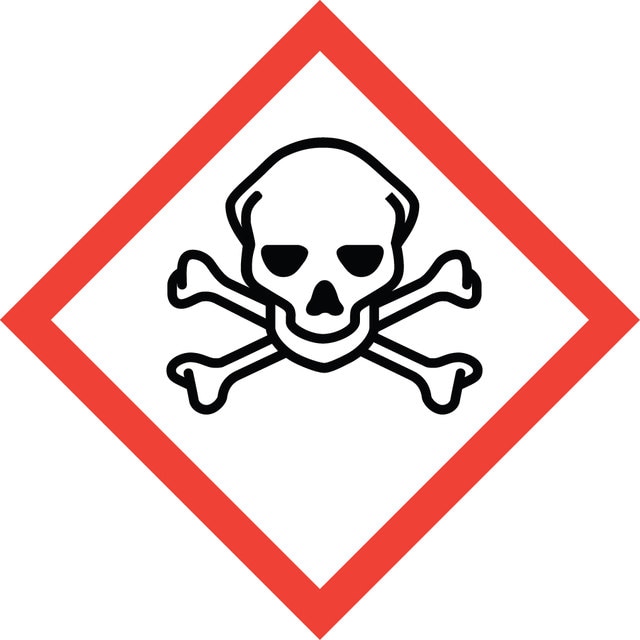
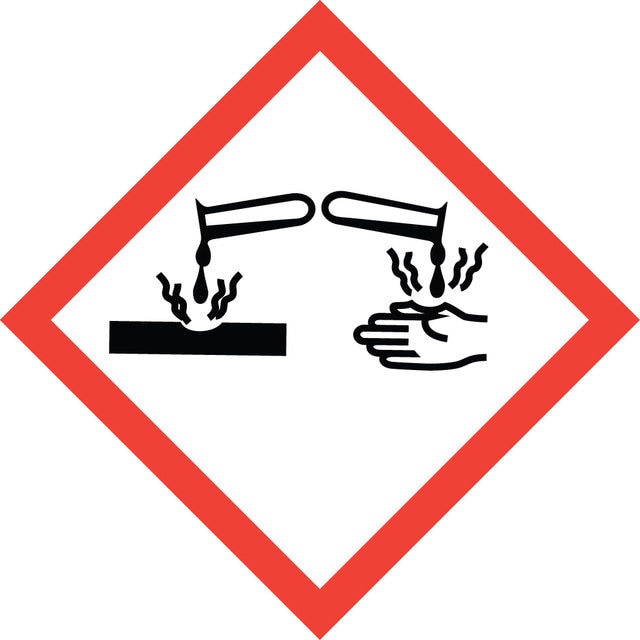
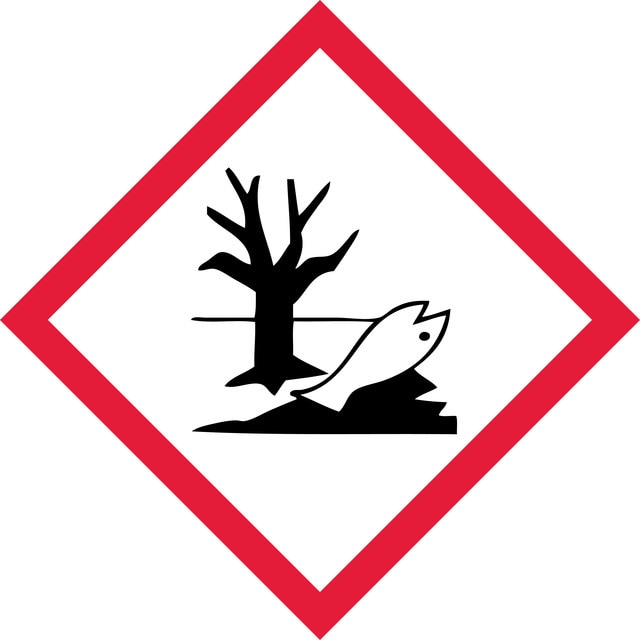
signalword
Danger
hcodes
Hazard Classifications
Acute Tox. 1 Inhalation - Aquatic Acute 1 - Eye Dam. 1 - Skin Corr. 1A
Storage Class
6.1B - Non-combustible acute toxic Cat. 1 and 2 / very toxic hazardous materials
wgk
WGK 2
flash_point_f
Not applicable
flash_point_c
Not applicable
Choose from one of the most recent versions:
Already Own This Product?
Find documentation for the products that you have recently purchased in the Document Library.