Skip to Content
Merck

676934

1,4-Dioxane

ACS reagent, ≥99.0%, contains <=25 ppm BHT as stabilizer

Synonym(s):

Diethylene oxide, Dioxane

Sign In to View Organizational & Contract Pricing.

Select a Size

Change View

About This Item

Empirical Formula (Hill Notation):
C4H8O2
CAS Number:
Molecular Weight:
88.11
UNSPSC Code:
12352005
NACRES:
NA.21
PubChem Substance ID:
EC Number:
204-661-8
Beilstein/REAXYS Number:
102551
MDL number:
Assay:
≥99.0%
Grade:
ACS reagent
Technique(s):
thin layer chromatography (TLC): suitable
Bp:
100-102 °C (lit.)
Vapor pressure:
27 mmHg ( 20 °C), 40 mmHg ( 25 °C)
Technical Service
Need help? Our team of experienced scientists is here for you.
Let Us Assist


grade

ACS reagent

Quality Level

vapor density

3 (vs air)

vapor pressure

27 mmHg ( 20 °C), 40 mmHg ( 25 °C)

assay

≥99.0%

form

liquid

autoignition temp.

356 °F

expl. lim.

22 %

technique(s)

thin layer chromatography (TLC): suitable

impurities

≤0.0016 meq/g Titr. acid, ≤0.005% Peroxide as (H2O2), ≤0.01% Carbonyl (as HCHO), ≤0.05% water

evapn. residue

≤0.005%

color

APHA: ≤20

refractive index

n20/D 1.422 (lit.)

pH

6.0-8 (20 °C, 500 g/L)

bp

100-102 °C (lit.)

mp

10-12 °C (lit.)

transition temp

freezing point ≥11.0

density

1.034 g/mL at 25 °C (lit.)

SMILES string

C1COCCO1

InChI

1S/C4H8O2/c1-2-6-4-3-5-1/h1-4H2

InChI key

RYHBNJHYFVUHQT-UHFFFAOYSA-N

General description

1,4-Dioxane is widely used as a solvent for various organic compounds in industry. It is a non-biodegradable contaminant found in industrial effluents. Its oxidative degradation by using oxygen and ozone has been useful in converting it into biodegradable products, which can be easily removed by conventional methods.
Our premium ACS solvents are ideal for routine chemical synthesis, drying, purification, and critical labware cleaning. They meet or exceed the rigorous standards of the American Chemical Society (ACS), ensuring high-quality results for your research needs.

Premium ACS Solvents: Our solvents meet or exceed the stringent standards set by the American Chemical Society, ensuring high quality and reliability for your laboratory applications.

Replicable and Publishable Results: Designed for consistency, our solvents deliver results that can be reliably reproduced, making them ideal for research that requires publication.

Versatile Applications: Suitable for routine chemical synthesis, drying, purification, and critical labware cleaning, our solvents cater to a wide range of research needs in the laboratory.

Application

1,4-Dioxane may be employed as solvent in the synthesis of N-(4-(prop-2-ynyloxy)phenyl)acetamide and 3-(4-(prop-2-ynyloxy)phenyl)-3,4-dihydro-2H-benzo[e][1,3]oxazine.


Still not finding the right product?

Explore all of our products under 1,4-Dioxane
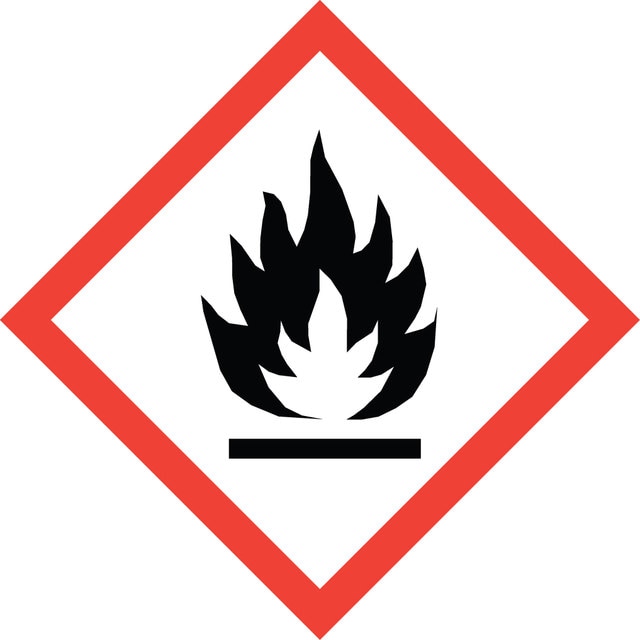

signalword

Danger

Hazard Classifications

Carc. 1B - Eye Irrit. 2 - Flam. Liq. 2 - STOT SE 3

target_organs

Respiratory system

supp_hazards

Storage Class

3 - Flammable liquids

wgk

WGK 3

flash_point_f

51.8 °F - closed cup

flash_point_c

11 °C - closed cup


Regulatory Listings

Regulatory Listings are mainly provided for chemical products. Only limited information can be provided here for non-chemical products. No entry means none of the components are listed. It is the user’s obligation to ensure the safe and legal use of the product.

123-91-1

CAS No.

123-91-1

CAS No.


Choose from one of the most recent versions:

Certificates of Analysis (COA)

Lot/Batch Number

It looks like we've run into a problem, but you can still download Certificates of Analysis from our Documents section.

If you need assistance, please contact Customer Support

Already Own This Product?

Find documentation for the products that you have recently purchased in the Document Library.

Visit the Document Library


Oxidation and biodegradability enhancement of 1,4-dioxane using hydrogen peroxide and ozone.
C D Adams et al.
Environmental science & technology, 28(11), 1812-1818 (1994-10-01)
Self-curable benzoxazine functional polybutadienes synthesized by click chemistry.
Kukut M, et al.
Designed Monomers and Polymers, 12(2), 167-176 (2009)
Xiaohua Liu et al.
Biomaterials, 31(2), 259-269 (2009-09-29)
It remains a challenge to synthesize functional materials that can develop advanced scaffolding architectures for tissue engineering. In this study, a series of biodegradable amphiphilic poly(hydroxyalkyl (meth)acrylate)-graft-poly(l-lactic acid) (PHAA-g-PLLA) copolymers have been synthesized and fabricated into nano-fibrous scaffolds. These copolymers