Sign In to View Organizational & Contract Pricing.
Select a Size
About This Item
NACRES:
NA.32
UNSPSC Code:
12352207
usage
sufficient for 100 tests
packaging
pkg of 1 kit
storage condition
dry at room temperature
detection method
colorimetric
shipped in
dry ice
storage temp.
−20°C
Quality Level
General description
The Senescence Cells Histochemical Staining Kit contains all the reagents required for identifying senescent cells using an assay based on a histochemical stain for β-galactosidase activity at pH 6. β-galactosidase activity is detectable in senescent cells, but not in quiescent, immortal, or tumor cells. Cellular senescence is a progression of events, whereby cells move from an actively dividing to a non-dividing stage. The cellular senescence process is associated with aging. The decrease in cell division is virtually irreversible and complete. In conjunction with the loss of the ability to divide, changes occur in the morphology, shape, and physical appearance of the cells, and their pattern of gene expression. At the end of the process cell death usually occurs, although the cells may remain viable for a long time.
Application
Senescence Cells Histochemical Staining Kit has been used for:
- senescence-associated β-galactosidase assay
- to test for senescence in human pancreatic cancer cells
- adipose-derived stem cells (ADSCs)
- cord blood mesenchymal stromal/stem cells (CBMSC)
Biochem/physiol Actions
Replicative senescence is a growth-arrest state associated with loss of division potential, changes in cell morphology, shape and physical appearance, and the pattern of gene expression in cells.
Legal Information
Manufactured under license to US Patent Nos. 5,491,069 and 5,795,728.
Kit Components Only
Product No.
Description
- X-gal solution 4 mL
- Staining Solution, 10X 15 mL
- Fixation Buffer 10x 15 mL
- Reagent B 1.5 mL
- Reagent C 1.5 mL
- Dulbecco's Phosphate Buffered Saline (PBS) 10x 60 mL
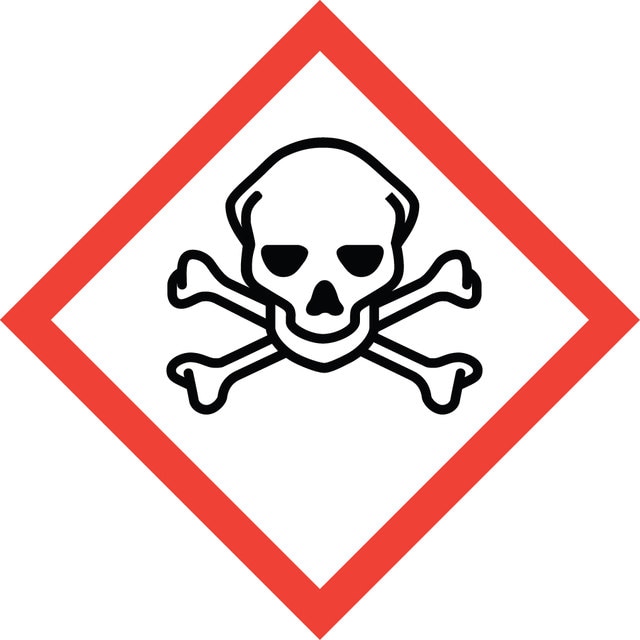
signalword
Danger
Hazard Classifications
Acute Tox. 3 Inhalation - Acute Tox. 4 Dermal - Acute Tox. 4 Oral - Aquatic Chronic 3 - Carc. 1B - Eye Dam. 1 - Muta. 2 - Resp. Sens. 1 - Skin Corr. 1B - Skin Sens. 1 - STOT SE 3
target_organs
Respiratory system
supp_hazards
Storage Class
6.1C - Combustible acute toxic Cat.3 / toxic compounds or compounds which causing chronic effects
Choose from one of the most recent versions:
Already Own This Product?
Find documentation for the products that you have recently purchased in the Document Library.
G P Dimri et al.
Proceedings of the National Academy of Sciences of the United States of America, 92(20), 9363-9367 (1995-09-26)
Normal somatic cells invariably enter a state of irreversibly arrested growth and altered function after a finite number of divisions. This process, termed replicative senescence, is thought to be a tumor-suppressive mechanism and an underlying cause of aging. There is
B van der Loo et al.
Experimental cell research, 241(2), 309-315 (1998-06-25)
A beta-galactosidase activity has recently been used as a histochemical marker of replicative senescence in human fibroblasts and keratinocytes. To establish whether this marker could be used to detect senescence of vascular cells, we have investigated its presence in cultures
Mandy Oj Grootaert et al.
Autophagy, 11(11), 2014-2032 (2015-09-24)
Autophagy is triggered in vascular smooth muscle cells (VSMCs) of diseased arterial vessels. However, the role of VSMC autophagy in cardiovascular disease is poorly understood. Therefore, we investigated the effect of defective autophagy on VSMC survival and phenotype and its
Natalja E Fedorovich et al.
Biomaterials, 30(3), 344-353 (2008-10-22)
Photopolymerizable hydrogels, formed by UV-exposure of photosensitive polymers in the presence of photoinitiators, are widely used materials in tissue engineering research employed for cellular entrapment and patterning. During photopolymerization, the entrapped cells are directly exposed to polymer and photoinitiator molecules.
Hadis Shakeri et al.
Cardiovascular research, 114(7), 1041-1051 (2018-03-13)
Cardiovascular ageing is a key determinant of life expectancy. Cellular senescence, a state of irreversible cell cycle arrest, is an important contributor to ageing due to the accumulation of damaged cells. Targeting cellular senescence could prevent age-related cardiovascular diseases. In
Our team of scientists has experience in all areas of research including Life Science, Material Science, Chemical Synthesis, Chromatography, Analytical and many others.
Contact Technical Service