Skip to Content
Merck

S8626

Sulfadiazine

99.0-101.0%

Synonym(s):

4-Amino-N-(2-pyrimidinyl)benzenesulfonamide, N1-(Pyrimidin-2-yl)sulfanilamide

Sign In to View Organizational & Contract Pricing.

Select a Size

Change View

About This Item

Empirical Formula (Hill Notation):
C10H10N4O2S
CAS Number:
Molecular Weight:
250.28
UNSPSC Code:
51283908
NACRES:
NA.85
PubChem Substance ID:
EC Number:
200-685-8
Beilstein/REAXYS Number:
6733588
MDL number:
Technical Service
Need help? Our team of experienced scientists is here for you.
Let Us Assist


description

Solubility - Practically insoluble in water, slightly soluble in acetone, very slightly soluble in ethanol (96 per cent). It dissolves in solutions of alkali hydroxides and in dilute mineral acids.

Quality Level

assay

99.0-101.0%

form

powder or crystals

color

white to faint yellow, faint pink

mp

253 °C (dec.) (lit.)

solubility

96% ethanol: very slightly soluble, acetone: slightly soluble, water: practically insoluble

antibiotic activity spectrum

Gram-negative bacteria, Gram-positive bacteria, mycoplasma

mode of action

DNA synthesis | interferes, enzyme | inhibits

SMILES string

Nc1ccc(cc1)S(=O)(=O)Nc2ncccn2

InChI

1S/C10H10N4O2S/c11-8-2-4-9(5-3-8)17(15,16)14-10-12-6-1-7-13-10/h1-7H,11H2,(H,12,13,14)

InChI key

SEEPANYCNGTZFQ-UHFFFAOYSA-N

General description

Chemical structure: sulfonamide

Application

Sulfadiazine is a short-acting sulfonamide that is commonly used with pyrimethamine to treat toxoplasmosis in patients with acquired immunodeficiency syndrome. It is also used to treat newborns with congenital infections. Sulfadiazine has been used to control acute infections when studying murine models of reactivated toxoplasmosis.

Biochem/physiol Actions

Sulfadiazine is a sulfonamide antibiotic that blocks the synthesis of dihydrofolic acid by inhibiting the enzyme dihydropteroate synthase. Sulfadiazine is a competitive inhibitor of bacterial para-aminobenzoic acid (PABA), which is required for bacterial synthesis of folic acid. It is active against Gram positive bacteria, Gram negative bacteria and Chlamydia. Mode of resistance is via the alteration of dihydropteroate synthase or alternative pathway for folic acid synthesis.

Other Notes

Keep container tightly closed in a dry and well-ventilated place.Storage class (TRGS 510): Non Combustible Solids


Still not finding the right product?

Explore all of our products under Sulfadiazine

signalword

Warning

Hazard Classifications

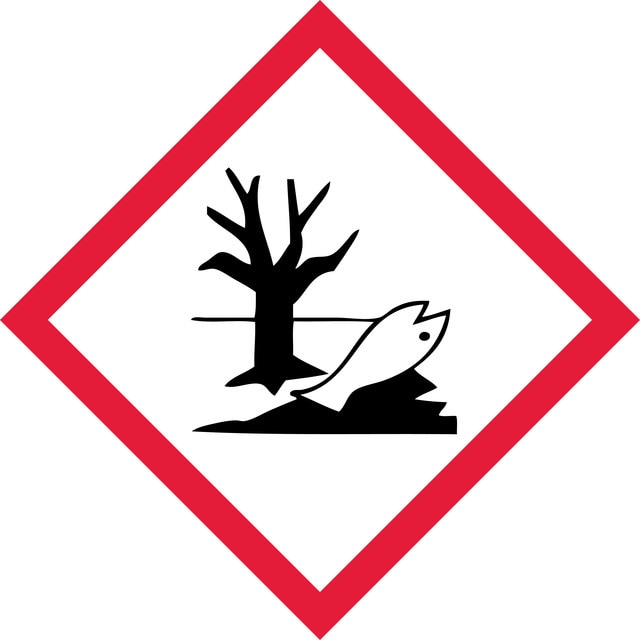
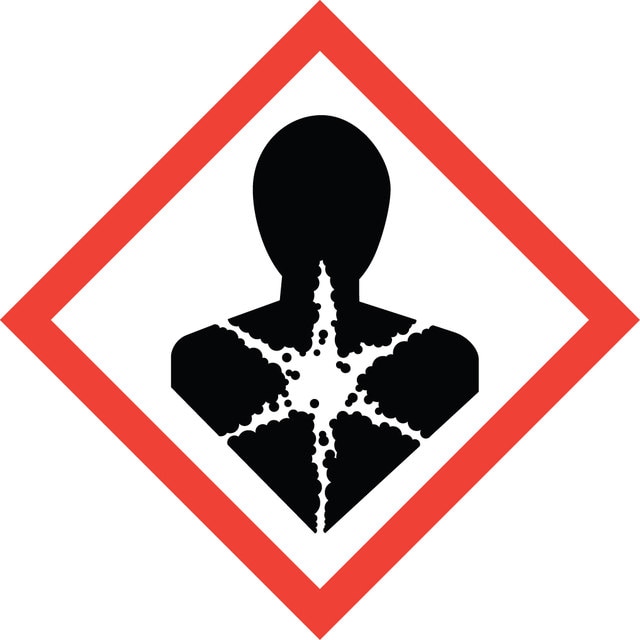
Acute Tox. 4 Oral - Aquatic Chronic 2 - Repr. 2

Storage Class

11 - Combustible Solids

wgk

WGK 2

ppe

dust mask type N95 (US), Eyeshields, Faceshields, Gloves


Choose from one of the most recent versions:

Certificates of Analysis (COA)

Lot/Batch Number

Don't see the Right Version?

If you require a particular version, you can look up a specific certificate by the Lot or Batch number.

Already Own This Product?

Find documentation for the products that you have recently purchased in the Document Library.

Visit the Document Library


Sven Jechalke et al.
Applied and environmental microbiology, 79(5), 1704-1711 (2013-01-15)
Spreading manure containing antibiotics in agriculture is assumed to stimulate the dissemination of antibiotic resistance in soil bacterial populations. Plant roots influencing the soil environment and its microflora by exudation of growth substrates might considerably increase this effect. In this
Romain Sonneville et al.
Neurology, 79(17), 1762-1766 (2012-10-12)
Cerebral toxoplasmosis remains a common neurologic complication in patients with AIDS. In this study, we aimed to characterize the prognosis of patients with HIV infection with severe forms of cerebral toxoplasmosis and to investigate the effects of adjunctive steroids on
Tamim M Niazi et al.
International journal of radiation oncology, biology, physics, 84(3), e305-e310 (2012-06-02)
For patients with anal canal and advanced rectal cancer, chemoradiation therapy is a curative modality or an important adjunct to surgery. Nearly all patients treated with chemoradiation experience some degree of radiation-induced dermatitis (RID). Prevention and effective treatment of RID