Skip to Content
Merck

T7765

Tunicamycin

from Streptomyces sp., ≥98% (HPLC), powder, N-acetylglucosamine transferase inhibitor

Sign In to View Organizational & Contract Pricing.

Select a Size

Change View

About This Item

CAS Number:
UNSPSC Code:
51111800
PubChem Substance ID:
NACRES:
NA.77
Beilstein/REAXYS Number:
6888090
MDL number:
Quality level:
Technical Service
Need help? Our team of experienced scientists is here for you.
Let Us Assist


Product Name

Tunicamycin from Streptomyces sp.,

Quality Level

solubility

95% ethanol: soluble 1 mg/mL, clear to faintly hazy, THF: soluble <1 mg/mL, dioxane: soluble <1 mg/mL, DMF: soluble >10 mg/mL, pyridine: >10 mg/mL, DMSO: soluble 4.9-5.1 mg/mL, clear to slightly hazy, colorless to yellow, methanol: slightly soluble 4.9-5.1 mg/mL, methanol: soluble 4.9-5.1 mg/mL, clear to slightly hazy, colorless to yellow, acetone: insoluble, aqueous base: insoluble, chloroform: insoluble, ethyl acetate: insoluble

antibiotic activity spectrum

fungi, viruses

mode of action

protein synthesis | interferes

storage temp.

2-8°C

SMILES string

CC(C)CCCCCCCC\C=C\C(=O)N[C@@H]1[C@@H](O)[C@@H](O)[C@@H](C[C@@H](O)[C@H]2O[C@H]([C@H](O)[C@@H]2O)N3C=CC(=O)NC3=O)O[C@H]1O[C@@H]4O[C@@H](CO)[C@H](O)[C@@H](O)[C@@H]4NC(C)=O

InChI

1S/C37H60N4O16/c1-18(2)12-10-8-6-4-5-7-9-11-13-23(45)39-26-30(50)27(47)21(54-36(26)57-35-25(38-19(3)43)29(49)28(48)22(17-42)55-35)16-20(44)33-31(51)32(52)34(56-33)41-15-14-24(46)40-37(41)53/h11,13-15,18,20-22,25-36,42,44,47-52H,4-10,12,16-17H2,1-3H3,(H,38,43)(H,39,45)(H,40,46,53)/b13-11+/t20-,21-,22+,25+,26-,27+,28+,29+,30-,31+,32-,33-,34-,35+,36+/m1/s1

InChI key

YJQCOFNZVFGCAF-WPTOCQRYSA-N

General description

Chemical structure: nucleoside
Contains homologues A,B,C, and D. Composition may vary from lot to lot. Actual content given on label.
Tunicamycin is an antibiotic and a glycosylation inhibitor. Its mode of action includes blocking human UDP-HexNAc:polyprenol-P HexNAc-1-P enzymes in the enzyme GlcNAc phosphotransferase (GPT). Glycosylation is a major post-translational modification that plays a critical role in glycoprotein folding, stability, and subcellular localization, as well as in the biological functions of the glycoprotein. Abnormal glycosylation has been identified as a signature of cancer and has been shown to play a significant role in tumor progression, metastasis, and chemoresistance. Research shows tunicamycin exhibits antitumor action. Furthermore, tunicamycin inhibition of N-glycosylation ultimately results in the build-up of unstructured proteins in the endoplasmic reticulum (ER) lumen, potentially leading to ER stress. Tunicamycin also exhibits antibacterial and antifungal actions. It blocks the formation of protein N-glycosidic linkages by inhibiting the transfer of N-acetylglucosamine 1-phosphate to dolichol monophosphate. Tunicamycin also Inhibits bacterial and eukaryote N-acetylglucosamine transferases and prevents the formation of N-acetylglucosamine lipid intermediates.

Application

Tunicamycin has been used to study the effect of N-linked glycosylation of human proton-coupled folate transporter (HsPCFT) in HeLa cells. Tunicamycin has also been used to study the functional effects of coxsackievirus and adenovirus receptor (CAR) glycosylation in COS-7 cells. Tunicamycin from Streptomyces sp. has been used to inhibit N-glycosylation in cell culture experiments.

Biochem/physiol Actions

Blocks the formation of protein N-glycosidic linkages.

Preparation Note

Tunicamycin dissolves in DMSO at 4.9-5.1 mg/ml and yields a clear to very slightly hazy, colorless to yellow solution. Furthermore, tunicamycin is soluble in DMF (>10 mg/ml), pyridine (>10 mg/ml), water (<5 mg/ml, pH 9.0), dioxane (<1 mg/ml) and THF. However, it is insoluble in other organic solvents such as acetone, chloroform, and ethyl acetate, and in aqueous solutions with pH <6. Aqueous solutions can be prepared from stock solutions by diluting with water at pH 8-10 or with buffers with pH >7, preferably >8. Tunicamycin will not dissolve in phosphate buffer, pH 8, at 1 mg/ml, even with heating, but solubility can be achieved by raising the pH to 9 and back titrating to pH 7-8.


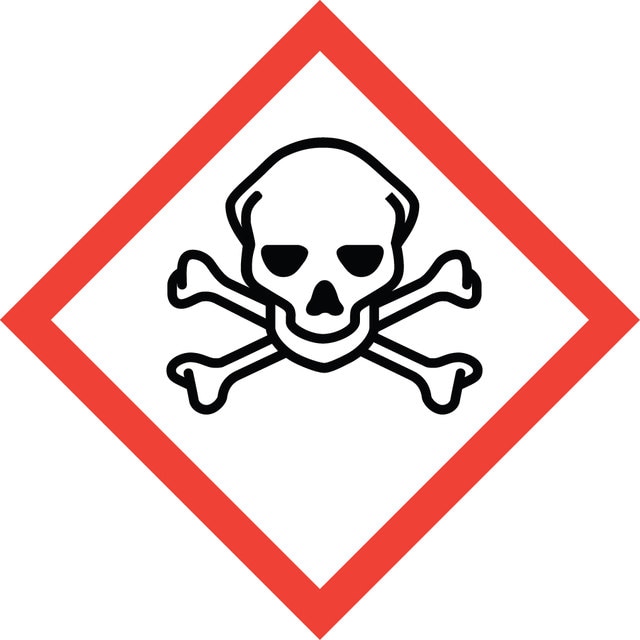
pictograms

Skull and crossbones

signalword

Danger

hcodes

Hazard Classifications

Acute Tox. 1 Oral

Storage Class

6.1A - Combustible acute toxic Cat. 1 and 2 / very toxic hazardous materials

wgk

WGK 3

flash_point_f

Not applicable

flash_point_c

Not applicable

ppe

Eyeshields, Faceshields, Gloves, type P3 (EN 143) respirator cartridges


Choose from one of the most recent versions:

Certificates of Analysis (COA)

Lot/Batch Number

Don't see the Right Version?

If you require a particular version, you can look up a specific certificate by the Lot or Batch number.

Already Own This Product?

Find documentation for the products that you have recently purchased in the Document Library.

Visit the Document Library