Sign In to View Organizational & Contract Pricing.
Select a Size
Change View
About This Item
Linear Formula:
CH3(CH2)11OSO3Na
CAS Number:
Molecular Weight:
288.38
EC Number:
205-788-1
UNSPSC Code:
12161902
PubChem Substance ID:
Beilstein/REAXYS Number:
3599286
MDL number:
grade
SAJ special grade
vapor pressure
≤0 hPa ( 20 °C)
description
anionic detergent
assay
≥97.0%
form
rod
mol wt
288.38 g/mol
availability
available only in Japan
pH
9.1 (10 g/L)
mp
204-207 °C (lit.)
SMILES string
[Na+].CCCCCCCCCCCCOS([O-])(=O)=O
InChI
1S/C12H26O4S.Na/c1-2-3-4-5-6-7-8-9-10-11-12-16-17(13,14)15;/h2-12H2,1H3,(H,13,14,15);/q;+1/p-1
InChI key
DBMJMQXJHONAFJ-UHFFFAOYSA-M
Application
Anionic detergent
Still not finding the right product?
Explore all of our products under Sodium dodecyl sulfate
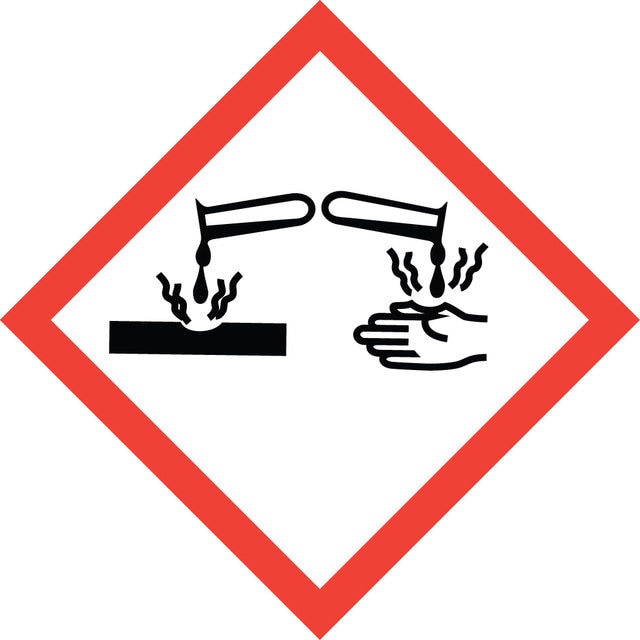
signalword
Danger
hcodes
Hazard Classifications
Acute Tox. 4 Oral - Aquatic Chronic 3 - Eye Dam. 1 - Skin Irrit. 2
Storage Class
11 - Combustible Solids
wgk
WGK 2
flash_point_f
338.0 °F
flash_point_c
170 °C
ppe
Eyeshields, Faceshields, Gloves, type P3 (EN 143) respirator cartridges
Choose from one of the most recent versions:
Already Own This Product?
Find documentation for the products that you have recently purchased in the Document Library.
Susanne Kohl et al.
Nature genetics, 47(7), 757-765 (2015-06-02)
Achromatopsia (ACHM) is an autosomal recessive disorder characterized by color blindness, photophobia, nystagmus and severely reduced visual acuity. Using homozygosity mapping and whole-exome and candidate gene sequencing, we identified ten families carrying six homozygous and two compound-heterozygous mutations in the
Lekun Fang et al.
Oncotarget, 5(10), 2974-2987 (2014-06-11)
Colorectal cancer (CRC) is one of the most common cancers worldwide, especially in Western countries. Although chemotherapy is used as an adjuvant or as a palliative treatment, drug resistance poses a great challenge. This study intended to identify biomarkers as
S Desrivières et al.
Molecular psychiatry, 20(2), 263-274 (2014-02-12)
Despite the recognition that cortical thickness is heritable and correlates with intellectual ability in children and adolescents, the genes contributing to individual differences in these traits remain unknown. We conducted a large-scale association study in 1583 adolescents to identify genes