
274135

N,N-Dimethylacrylamide
99%, contains 500 ppm monomethyl ether hydroquinone as inhibitor
Synonym(s):
2-Propenamide
Sign In to View Organizational & Contract Pricing.
Select a Size
Change View
About This Item
Linear Formula:
CH2=CHCON(CH3)2
CAS Number:
Molecular Weight:
99.13
UNSPSC Code:
12162002
NACRES:
NA.23
PubChem Substance ID:
EC Number:
220-237-5
Beilstein/REAXYS Number:
1742219
MDL number:
Quality Level
assay
99%
form
liquid
contains
500 ppm monomethyl ether hydroquinone as inhibitor
refractive index
n20/D 1.473 (lit.)
bp
80-81 °C/20 mmHg (lit.)
density
0.962 g/mL at 25 °C (lit.)
SMILES string
CN(C)C(=O)C=C
InChI
1S/C5H9NO/c1-4-5(7)6(2)3/h4H,1H2,2-3H3
InChI key
YLGYACDQVQQZSW-UHFFFAOYSA-N
General description
N,N-Dimethylacrylamide (DMAA) is a non-ionic monomer with high reactivity and low initiation temperature. It is commonly used as a monomer in the production of polymers and copolymers for various applications such as hydrogels, polymeric flocculants, biomedical and drug delivery applications, polymer coatings, smart coatings, adhesives, sensors, self-healing materials, and water treatment agents. The unique structure of DMMA can form a three-dimensional network with other hydrogels and enhance their water retention capacity. It is also used as a crosslinking agent in polymerization reactions.
Application
N, N-Dimethylacrylamide(DMAA) can be used in the following applications:
- Synthesis of poly(N,N-dimethylacrylamide) (PDMAA) nanoparticles which are used in biomedical and drug delivery applications.
- Use as a co-monomer in the synthesis of thermoresponsive polymers used in smart coatings, adhesives, and sensors.
- As a reactive diluent in the manufacture of UV-cured coatings and inks.
- Use as a co-monomer with polyethylene glycol dimethacrylate (PEGDMA) and a chitosan derivative to develop an injectable hydrogel that can be used as a bone tissue engineering matrix.
- A series of DMMA-based hydrogels for the removal of heavy metals and organic dyes from polluted water. These hydrogels are highly efficient in removing cationic dyes due to electrostatic interaction and hydrogen bonding in the DMMA backbone.
- Non-toxic luminescent carbon dot/poly(DMMA) nanocomposite via surface-initiated reversible addition-fragmentation chain transfer polymerization.
- Polymer coating for quartz crystal microbalance(QCM) sensor. The poly(DMMA) gel acts as a sensing material to adsorb Au(III) ions from HCl aqueous solution and it is inactive to most other metal ions and organic compounds.
Features and Benefits
- It is an appropriate precursor for copolymerization due to its low initiation temperature and high reactivity.
- Its unique structure forms a 3D network and improves the water retention capacity of hydrogels.
- It is highly soluble in water.
- It can easily bind to colloidal particles to enhance the bridging effect which plays a key role in flocculation.
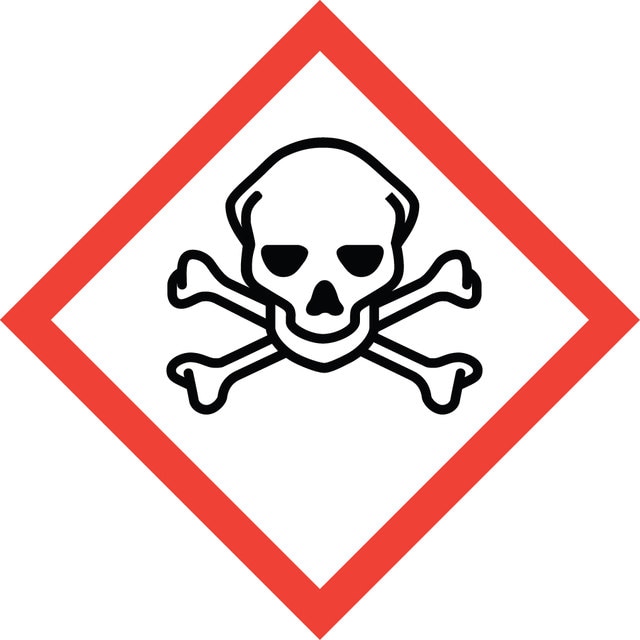

signalword
Danger
hcodes
Hazard Classifications
Acute Tox. 3 Dermal - Acute Tox. 3 Oral - Eye Dam. 1
Storage Class
6.1C - Combustible acute toxic Cat.3 / toxic compounds or compounds which causing chronic effects
wgk
WGK 1
flash_point_f
158.0 °F
flash_point_c
70 °C
ppe
Eyeshields, Faceshields, Gloves, type ABEK (EN14387) respirator filter
Choose from one of the most recent versions:
Already Own This Product?
Find documentation for the products that you have recently purchased in the Document Library.
Graft copolymerization of N, N-Dimethylacrylamide to cellulose in homogeneous media using atom transfer radical polymerization for hemocompatibility
Yan L and Wei T
Journal of Biomedical Science and Engineering, 10(1), 37-37 (2008)
Yuriko Matsumura et al.
Polymers, 11(7) (2019-07-20)
In order to clarify the local environment during interpolymer complex formation between poly(carboxylic acids) and poly(acrylamide derivatives) with different N-substitutions, a fluorescence label technique was used. 3-(2-propenyl)-9-(4-N,N-dimethylaminophenyl) phenanthrene (VDP) was used as an intramolecular fluorescence probe. All polymers were synthesized
Copolymerization of N, N-dimethylacrylamide with styrene and butadiene: The first example of polar growing chain end/nonpolar monomer cross-initiation.
Nakhmanovich BI, et al.
Macromolecular Rapid Communications, 22(15), 1243-1248 (2001)