Sign In to View Organizational & Contract Pricing.
Select a Size
About This Item
Linear Formula:
CH3CHCl2
CAS Number:
Molecular Weight:
98.96
UNSPSC Code:
41116107
NACRES:
NA.24
PubChem Substance ID:
EC Number:
200-863-5
Beilstein/REAXYS Number:
1696901
MDL number:
InChI key
SCYULBFZEHDVBN-UHFFFAOYSA-N
InChI
1S/C2H4Cl2/c1-2(3)4/h2H,1H3
SMILES string
CC(Cl)Cl
grade
analytical standard
shelf life
limited shelf life, expiry date on the label
contains
100 ppm hydroquinone as stabilizer
technique(s)
HPLC: suitable, gas chromatography (GC): suitable
application(s)
environmental
format
neat
Quality Level
General description
1,1-Dichloroethane is typically utilized as an intermediate for the synthesis of vinyl chloride.
Application
1,1-Dichloroethane may be used as an analytical reference standard for the determination of the analyte in water and ambient air samples by gas chromatography (GC) based techniques.
Refer to the product′s Certificate of Analysis for more information on a suitable instrument technique. Contact Technical Service for further support.
Other Notes
Find a digital Reference Material for this product available on our online platform ChemisTwin® for NMR. You can use this digital equivalent on ChemisTwin® for your sample identity confirmation and compound quantification (with digital external standard). An NMR spectrum of this substance can be viewed and an online comparison against your sample can be performed with a few mouseclicks. Learn more here and start your free trial.
signalword
Danger
hcodes
Hazard Classifications
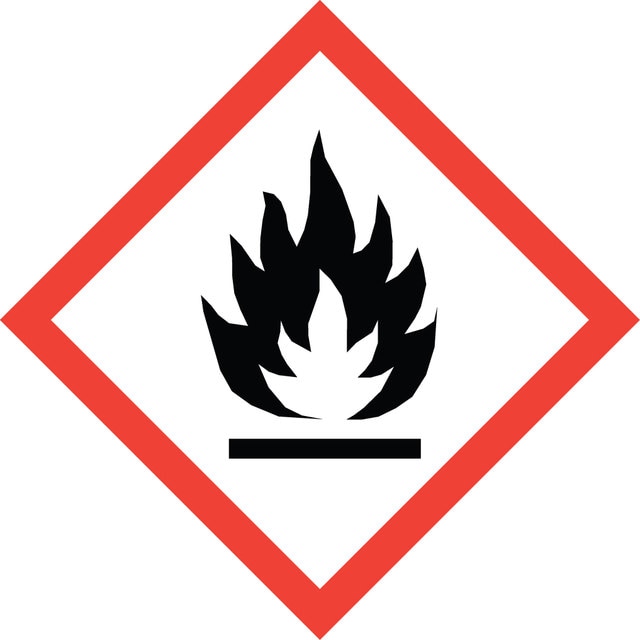
Acute Tox. 4 Oral - Aquatic Chronic 3 - Eye Irrit. 2 - Flam. Liq. 2 - STOT SE 3
target_organs
Respiratory system
Storage Class
3 - Flammable liquids
wgk
WGK 3
flash_point_f
14.0 °F - closed cup
flash_point_c
-10.0 °C - closed cup
ppe
Eyeshields, Faceshields, Gloves
Choose from one of the most recent versions:
Already Own This Product?
Find documentation for the products that you have recently purchased in the Document Library.
Halogenated Hydrocarbons
Comprehensive Toxicology, 7(9), 459-474 (2010)
Multicomponent analysis of volatile organic compounds in water by automated purge and trap coupled to gas chromatography-mass spectrometry
Martinez E, et al.
Journal of Chromatography A, 959(1-2), 181-190 (2002)
Multi-adsorbent preconcentration and gas chromatographic analysis of air toxics with an automated collection/analytical system
Pollack AJ, et al.
Journal of the Air & Waste Management Association (1995), 41(9), 1213-1217 (1991)
The determination of volatile organic compounds from EPA Method 524.2 using purge-and-trap capillary gas chromatography, ECD, and FID
Kessels H, et al.
Journal of Chromatographic Science, 30(7), 247-255 (1992)
Nancy Vanstone et al.
Environmental science & technology, 42(1), 126-132 (2008-03-21)
Degradation of 1,1- and 1,2-dichloroethane (1,1-DCA, 1,2-DCA) and carbon tetrachloride (CCl4) on Zn0 was investigated using compound specific isotope analysis (CSIA) to measure isotopic fractionation factors for chloroalkane degradation by hydrogenolysis, by alpha-elimination, and by beta-elimination. Significant differences in enrichment
Our team of scientists has experience in all areas of research including Life Science, Material Science, Chemical Synthesis, Chromatography, Analytical and many others.
Contact Technical Service