
M1775

Methanol
Absolute - Acetone free
Synonym(s):
Methyl alcohol
Sign In to View Organizational & Contract Pricing.
Select a Size
Change View
About This Item
Linear Formula:
CH3OH
CAS Number:
Molecular Weight:
32.04
UNSPSC Code:
12352104
NACRES:
NA.05
PubChem Substance ID:
EC Number:
200-659-6
Beilstein/REAXYS Number:
1098229
MDL number:
Bp:
64.7 °C (lit.)
Vapor pressure:
410 mmHg ( 50 °C), 97.68 mmHg ( 20 °C)
vapor density
1.11 (vs air)
Quality Segment
vapor pressure
410 mmHg ( 50 °C), 97.68 mmHg ( 20 °C)
form
liquid, solution
autoignition temp.
725 °F
expl. lim.
36 %
refractive index
n20/D 1.329 (lit.)
bp
64.7 °C (lit.)
mp
−98 °C (lit.)
density
0.791 g/mL at 25 °C (lit.)
format
neat
SMILES string
CO
InChI
1S/CH4O/c1-2/h2H,1H3
InChI key
OKKJLVBELUTLKV-UHFFFAOYSA-N
General description
Methanol is the simplest aliphatic alcohol consisting of methyl and alcohol groups. Methanol is often used as a solvent as well as a reagent in research labs and chemical industries.
Application
Methanol can be used:
- To prepare methanolic uranyl acetate solution that may be utilized as a stain for tissues.
- In the synthesis of 4-nitro-N-(quinolin-8-yl) benzenesulfonamide by microwave reaction.
Features and Benefits
Methanol has:
- Low freezing point.
- Miscible in water.
Other Notes
Suitable for use as a fixative and in preparing various Romanowsky type staining solutions.
Still not finding the right product?
Explore all of our products under Methanol
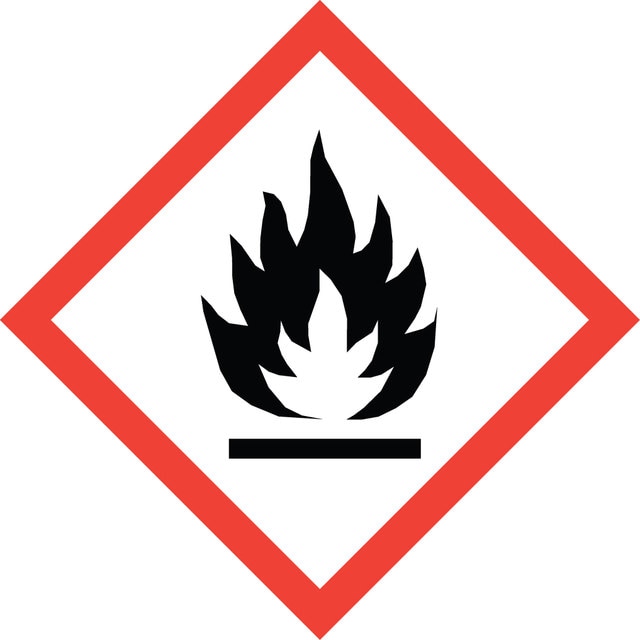
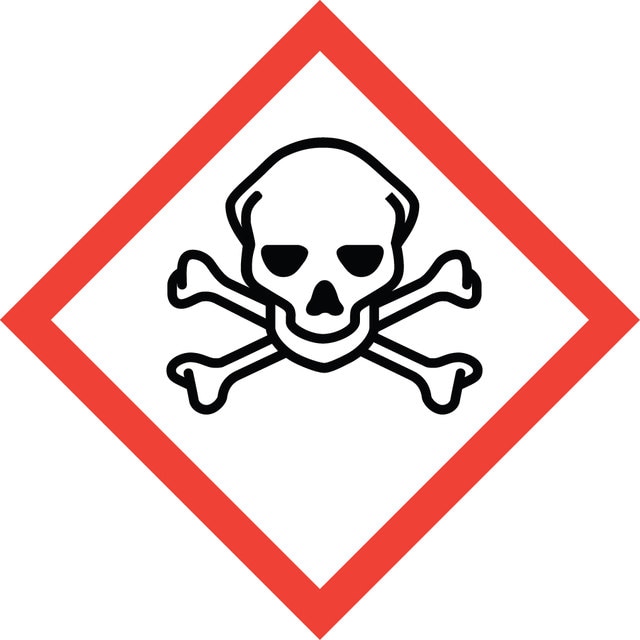
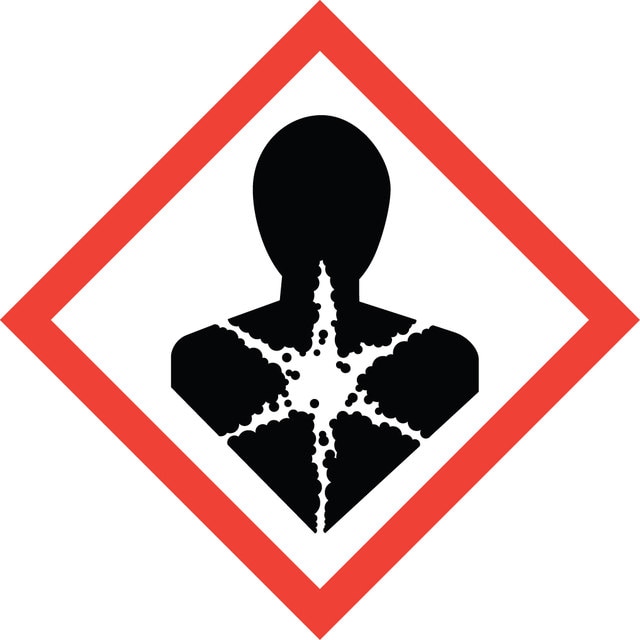
signalword
Danger
Hazard Classifications
Acute Tox. 3 Dermal - Acute Tox. 3 Inhalation - Acute Tox. 3 Oral - Flam. Liq. 2 - STOT SE 1
target_organs
Eyes,Central nervous system
Storage Class
3 - Flammable liquids
wgk
WGK 2
flash_point_f
49.5 °F - closed cup
flash_point_c
9.7 °C - closed cup
Choose from one of the most recent versions:
Already Own This Product?
Find documentation for the products that you have recently purchased in the Document Library.