
114235

1,3,5-Triallyl-1,3,5-triazine-2,4,6(1H,3H,5H)-trione
98%
Synonym(s):
1,3,5-Tri-2-propen-1-yl-1,3,5-triazine-2,4,6(1H ,3H ,5H )-trione, 1,3,5-Triallyl-1,3,5-triazinane-2,4,6-trione, 1,3,5-Triallylisocyanurate, 1,3,5-Triallylisocyanuric acid, 1,3,5-Tris-2′-propenylisocyanuric acid, Triallyl isocyanurate
Select a Size
About This Item
Quality Level
assay
98%
contains
500 ppm tert-butylhydroquinone as inhibitor
refractive index
n20/D 1.513 (lit.)
bp
149-152 °C/4 mmHg (lit.)
density
1.159 g/mL at 25 °C (lit.)
SMILES string
C=CCN1C(=O)N(CC=C)C(=O)N(CC=C)C1=O
InChI
1S/C12H15N3O3/c1-4-7-13-10(16)14(8-5-2)12(18)15(9-6-3)11(13)17/h4-6H,1-3,7-9H2
InChI key
KOMNUTZXSVSERR-UHFFFAOYSA-N
General description
Application
- A crosslinking agent or additive in the synthesis of polylactic acid /flax composite materials to enhance their properties and performance under gamma irradiation.
- A monomer in the synthesis of flexible ionogels with good mechanical properties via in situ thiol-ene photopolymerization with trimethylolpropane tris(3-mercaptopropionate). These ionogels further find applications in electrochemical capacitors.
- A monomer in the fabrication of the shape memory polymer substrates.
Still not finding the right product?
Explore all of our products under 1,3,5-Triallyl-1,3,5-triazine-2,4,6(1H,3H,5H)-trione
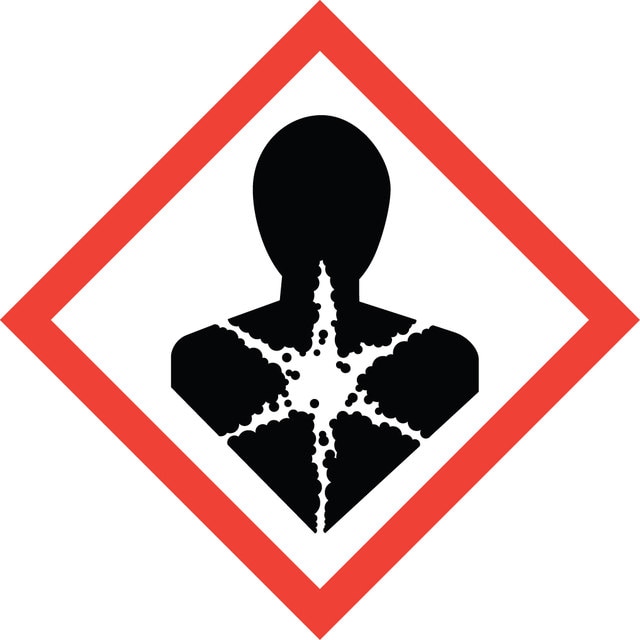

signalword
Warning
hcodes
Hazard Classifications
Acute Tox. 4 Oral - STOT RE 2
wgk
WGK 1
flash_point_f
319.1 °F - closed cup
flash_point_c
159.5 °C - closed cup
ppe
Eyeshields, Faceshields, Gloves, type ABEK (EN14387) respirator filter
Storage Class
10 - Combustible liquids
Choose from one of the most recent versions:
Already Own This Product?
Find documentation for the products that you have recently purchased in the Document Library.
Articles
With dentists placing nearly 100 million dental fillings into patients′ teeth annually in the U.S. alone, polymeric composite restoratives account for a very large share of the biomaterials market.