Sign In to View Organizational & Contract Pricing.
Select a Size
About This Item
Linear Formula:
[(CH3)3SiO]2Si(CH3)2
CAS Number:
Molecular Weight:
236.53
UNSPSC Code:
12352103
NACRES:
NA.22
PubChem Substance ID:
EC Number:
203-497-4
Beilstein/REAXYS Number:
1753063
MDL number:
vapor density
>1 (vs air)
Quality Level
assay
98%
form
liquid
refractive index
n20/D 1.384 (lit.)
bp
153 °C (lit.)
mp
−82 °C (lit.)
density
0.82 g/mL at 25 °C (lit.)
SMILES string
C[Si](C)(C)O[Si](C)(C)O[Si](C)(C)C
InChI
1S/C8H24O2Si3/c1-11(2,3)9-13(7,8)10-12(4,5)6/h1-8H3
InChI key
CXQXSVUQTKDNFP-UHFFFAOYSA-N
Looking for similar products? Visit Product Comparison Guide
Related Categories
General description
Octamethyltrisiloxane, commonly referred to as octamethylcyclotetrasiloxane, falls under the category of siloxanes. Its versatile applications include serving as a solvent, coupling agent, and surface tension modifier in various industries. Furthermore, it plays a significant role in the production of adhesives, sealants, and lubricants.
Application
Octamethyltrisiloxane is used as a solvent for good dispersion of styrene and polydimethylsiloxane (PDMS), which are used in the fabrication of perovskite barium titanate inverse opal films.
Storage Class
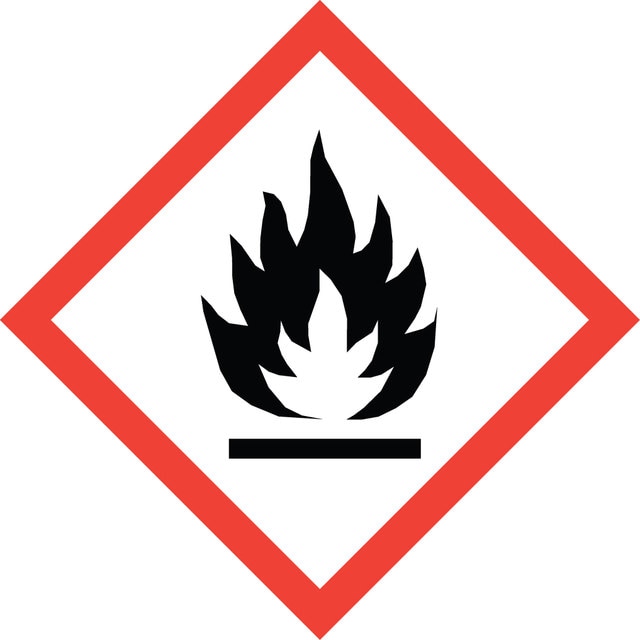
3 - Flammable liquids
wgk
WGK 3
flash_point_f
84.2 °F - (External MSDS)
flash_point_c
29 °C - (External MSDS)
ppe
Eyeshields, Faceshields, Gloves, type ABEK (EN14387) respirator filter
signalword
Danger
hcodes
Hazard Classifications
Flam. Liq. 3 - vPvB
Choose from one of the most recent versions:
Already Own This Product?
Find documentation for the products that you have recently purchased in the Document Library.
Masahito Hosokawa et al.
Biosensors & bioelectronics, 67, 379-385 (2014-09-10)
This paper proposes a high-throughput, function-based screening approach of a metagenomic library for isolating novel microbial enzymes by droplet-based microfluidics. We used gel microdroplets (GMDs) dispersed in oil as picoliter-volume reaction vessels for lipolytic enzyme by encapsulating cells in individual
Gregory T Hohensee et al.
Nature communications, 6, 6578-6578 (2015-03-07)
The thermal conductance of interfaces between metals and diamond, which has a comparatively high Debye temperature, is often greater than can be accounted for by two-phonon processes. The high pressures achievable in a diamond anvil cell (DAC) can significantly extend
Hunter Elliott et al.
Nature cell biology, 17(2), 137-147 (2015-01-27)
In many cases, cell function is intimately linked to cell shape control. We used endothelial cell branching morphogenesis as a model to understand the role of myosin II in shape control of invasive cells migrating in 3D collagen gels. We
Sung-Jin Kim et al.
Nature communications, 6, 7301-7301 (2015-06-16)
Self-switching microfluidic circuits that are able to perform biochemical experiments in a parallel and autonomous manner, similar to instruction-embedded electronics, are rarely implemented. Here, we present design principles and demonstrations for gravity-driven, integrated, microfluidic pulsatile flow circuits. With a common
UV-curable nanocomposite based on methacrylic-siloxane resin and surface-modified TiO2 nanocrystals.
Chiara Ingrosso et al.
ACS applied materials & interfaces, 7(28), 15494-15505 (2015-07-08)
A novel UV-light-curable nanocomposite material formed of a methacrylic-siloxane resin loaded with 1 wt % oleic acid and 3-(trimethoxysilyl)propyl methacrylate silane (OLEA/MEMO)-coated TiO2 nanorods (NRs) has been manufactured as a potential self-curing structural coating material for protection of monuments and
Our team of scientists has experience in all areas of research including Life Science, Material Science, Chemical Synthesis, Chromatography, Analytical and many others.
Contact Technical Service