
656895

Nickel(II) sulfate
99.99% trace metals basis
Synonym(s):
Nickel(2+) sulfate, Nickelous sulfate
Select a Size
About This Item
grade
anhydrous
assay
99.99% trace metals basis
form
solid
reaction suitability
core: nickel
impurities
≤150.0 ppm Trace Metal Analysis
SMILES string
[Ni++].[O-]S([O-])(=O)=O
InChI
1S/Ni.H2O4S/c;1-5(2,3)4/h;(H2,1,2,3,4)/q+2;/p-2
InChI key
LGQLOGILCSXPEA-UHFFFAOYSA-L
General description
Properties of NiSO4:
- Highly soluble in water
- It can participate in redox reactions
- It can form complexes with various ligands
Application
- Nickel-based electrocatalysts for oxygen evolution.
- Ni-doped titanium dioxide nanoparticles for the photocatalytic degradation of organic pollutants such as methyl orange.
- Spherical silica particles coated with Ni, which find application in the field of ceramic industry and in catalysis.
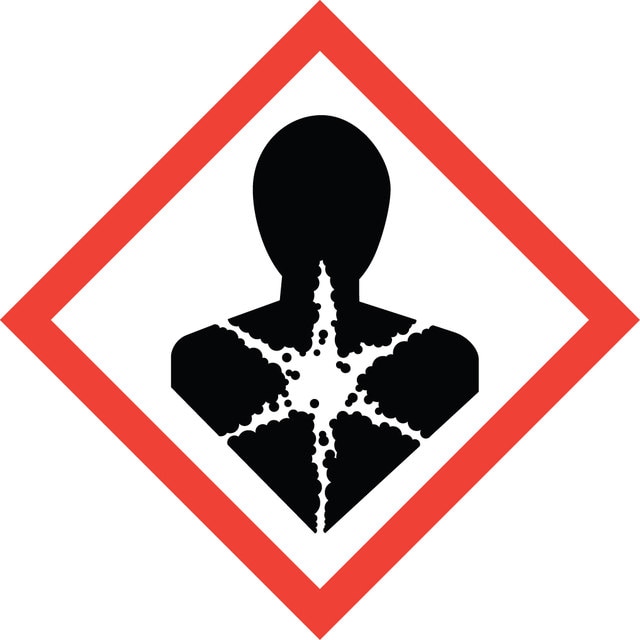

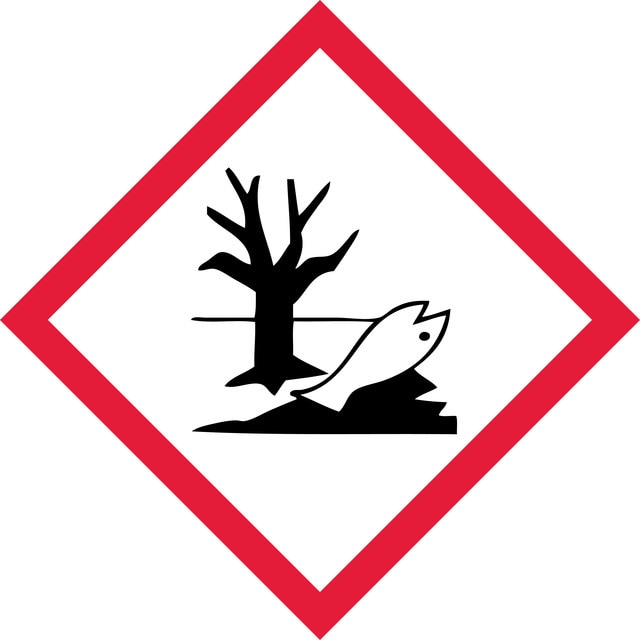
signalword
Danger
Hazard Classifications
Acute Tox. 4 Inhalation - Acute Tox. 4 Oral - Aquatic Chronic 1 - Carc. 1A Inhalation - Muta. 2 - Repr. 1B - Resp. Sens. 1 - Skin Irrit. 2 - Skin Sens. 1 - STOT RE 1 Inhalation
target_organs
respiratory tract irritation
Storage Class
6.1C - Combustible acute toxic Cat.3 / toxic compounds or compounds which causing chronic effects
wgk
WGK 3
flash_point_f
Not applicable
flash_point_c
Not applicable
ppe
Eyeshields, Faceshields, Gloves, type P3 (EN 143) respirator cartridges
Choose from one of the most recent versions:
Already Own This Product?
Find documentation for the products that you have recently purchased in the Document Library.
Articles
Lithium-ion batteries' characteristics make them popular for electricity storage due to portability, rechargeability, and low cost.
Plasmonic nanoparticles have unique optical properties that can be tailored to suit a variety of applications in the biotechnology1–8 and electronics9–16 industries.