Skip to Content
Merck

34124

Deoxynivalenol solution

100 μg/mL in acetonitrile, analytical standard

Synonym(s):

3α,7α,15-Trihydroxy-12,13-epoxytrichothec-9-en-8-one, DON, Vomitoxin

Sign In to View Organizational & Contract Pricing.

Select a Size

Change View

About This Item

Empirical Formula (Hill Notation):
C15H20O6
CAS Number:
Molecular Weight:
296.32
NACRES:
NA.24
PubChem Substance ID:
UNSPSC Code:
85151701
EC Number:
200-835-2
MDL number:
Technical Service
Need help? Our team of experienced scientists is here for you.
Let Us Assist


grade

analytical standard

Quality Level

shelf life

limited shelf life, expiry date on the label

concentration

100 μg/mL in acetonitrile

technique(s)

HPLC: suitable, gas chromatography (GC): suitable

application(s)

cleaning products
cosmetics
food and beverages
personal care

format

single component solution

storage temp.

−20°C

SMILES string

CC1=C[C@H]2O[C@@H]3[C@H](O)C[C@@](C)([C@]34CO4)[C@@]2(CO)[C@H](O)C1=O

InChI

1S/C15H20O6/c1-7-3-9-14(5-16,11(19)10(7)18)13(2)4-8(17)12(21-9)15(13)6-20-15/h3,8-9,11-12,16-17,19H,4-6H2,1-2H3/t8-,9-,11-,12-,13-,14-,15+/m1/s1

InChI key

LINOMUASTDIRTM-QGRHZQQGSA-N

General description

Deoxynivalenol belongs to the group of tetracyclic sesquiterpenoid mycotoxins called trichothecenes, produced by Fusarium fungi, naturally occurring in small grains and infected corn.

Check out our entire range of trichothecene type mycotoxin reference materials
Deoxynivalenol is frequently found in cereals and agricultural products including, corn, barley, oats, rye, maize, wheat, malt, bread, beer, etc. It is a mycotoxin and primarily affects the livestock industry by reducing the food intake in farm animals. The effect of DON contamination in cereals and other food samples serves as one of the factors of Kashin-Beck disease, a chronic and endemic osteoarticular disorder.

Application

Deoxynivalenol solution has been used as an analytical reference standard for the quantification of the analyte in cornmeal and wheat meal matrices using high-performance liquid chromatography with UV detection (HPLC-UV). It is used as an analytical standard in investigating its toxicity mechanism on human chondrocytes by microarray and bioinformatics analysis.
Refer to the product′s Certificate of Analysis for more information on a suitable instrument technique. Contact Technical Service for further support.

Disclaimer

Supply conditions do not apply to the regions and states of Brazil: North, Northeast, Mato Grosso do Sul, Mato Grosso, and Rio Grande do Sul.


Still not finding the right product?

Explore all of our products under Deoxynivalenol solution
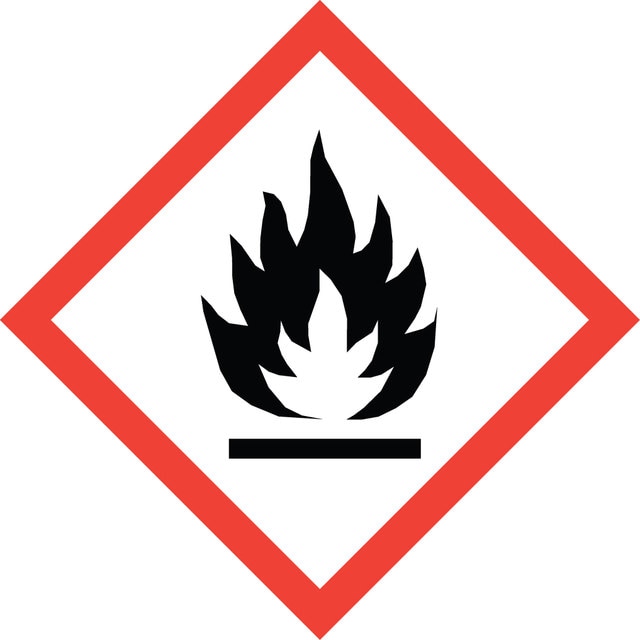

pictograms

FlameExclamation mark

signalword

Danger

Hazard Classifications

Acute Tox. 4 Dermal - Acute Tox. 4 Inhalation - Acute Tox. 4 Oral - Eye Irrit. 2 - Flam. Liq. 2

Storage Class

3 - Flammable liquids

wgk

WGK 2

flash_point_f

35.6 °F - closed cup

flash_point_c

2 °C - closed cup

ppe

Eyeshields, Faceshields, Gloves, type ABEK (EN14387) respirator filter


Choose from one of the most recent versions:

Certificates of Analysis (COA)

Lot/Batch Number

It looks like we've run into a problem, but you can still download Certificates of Analysis from our Documents section.

If you need assistance, please contact Customer Support

Already Own This Product?

Find documentation for the products that you have recently purchased in the Document Library.

Visit the Document Library


Related Content

Detailed list of mycotoxin analysis products for Food & Beverage manufacturers and testers, ensuring safety standards.


Determination of 12 type A and B trichothecenes in cereals by liquid chromatography? electrospray ionization tandem mass spectrometry
Klotzel M, et al.
Journal of Agricultural and Food Chemistry, 53, 8904-8910 (2005)
Production of monoclonal antibodies for the specific detection of deoxynivalenol and 15-acetyldeoxynivalenol by ELISA
Sinha.CR, et al.
Journal of Agricultural and Food Chemistry, 43, 1740-1744 (1995)
Lei Yang et al.
Toxicology letters, 321, 61-68 (2019-12-22)
T-2 toxin and deoxynivalenol (DON) are two representative mycotoxins that are commonly found in cereals and agricultural products. As T-2 toxin and DON are considered the cause of Kashin-Beck disease, a special osteoarticular disease, chondrocytes would be a vital target
