
P8013

Pargyline hydrochloride
synthetic, 98% (TLC), MAO-B inhibitor, powder or crystals
Synonym(s):
N-Methyl-N-(2-propynyl)benzylamine hydrochloride, N-Methyl-N-propargylbenzylamine hydrochloride
Sign In to View Organizational & Contract Pricing.
Select a Size
Change View
About This Item
Linear Formula:
C6H5CH2N(CH3)CH2C≡CH·HCl
CAS Number:
Molecular Weight:
195.69
NACRES:
NA.77
PubChem Substance ID:
UNSPSC Code:
12352200
EC Number:
206-175-1
MDL number:
Beilstein/REAXYS Number:
3699487
Assay:
98% (TLC)
Form:
powder or crystals
Product Name
Pargyline hydrochloride,
biological source
synthetic
assay
98% (TLC)
form
powder or crystals
mp
160-163 °C (lit.)
solubility
water: 50 mg/mL, clear, colorless to faintly yellow
storage temp.
−20°C
SMILES string
Cl[H].CN(CC#C)Cc1ccccc1
InChI
1S/C11H13N.ClH/c1-3-9-12(2)10-11-7-5-4-6-8-11;/h1,4-8H,9-10H2,2H3;1H
InChI key
BCXCABRDBBWWGY-UHFFFAOYSA-N
Gene Information
human ... MAOA(4128), MAOB(4129)
Application
Pargyline hydrochloride has been used:
- as a histone demethylase inhibitor to treat monocytes to investigate whether various inhibitors affect training
- to maximize uptake into dopaminergic neurons (DA) neurons in experimental rats,
- to study its effect on discolouration of medullary tissues of sclerotia of S. sclerotiorum
Biochem/physiol Actions
Pargyline hydrochloride acts as a histone demethylase inhibitor. It has antihypertensive action.
Selective MAO-B inhibitor.
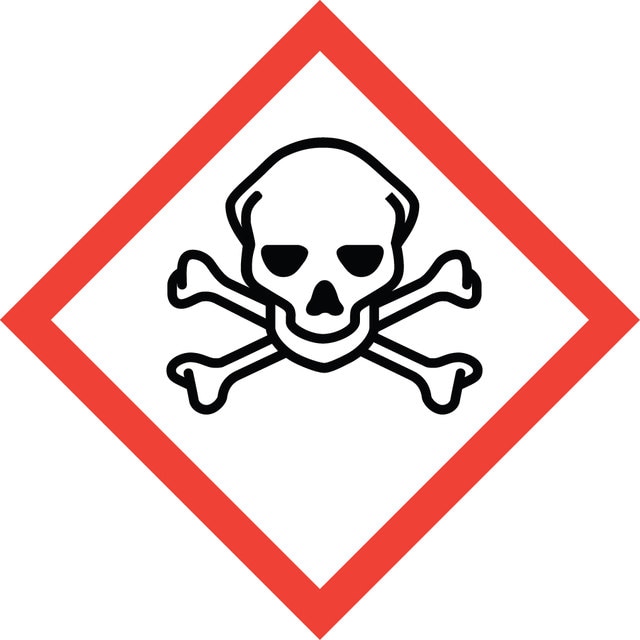
signalword
Danger
hcodes
pcodes
Hazard Classifications
Acute Tox. 3 Oral
Storage Class
6.1C - Combustible acute toxic Cat.3 / toxic compounds or compounds which causing chronic effects
wgk
WGK 3
flash_point_f
Not applicable
flash_point_c
Not applicable
ppe
dust mask type N95 (US), Eyeshields, Faceshields, Gloves
Choose from one of the most recent versions:
Already Own This Product?
Find documentation for the products that you have recently purchased in the Document Library.
Trained immunity or tolerance: opposing functional programs induced in human monocytes after engagement of various pattern recognition receptors
Ifrim DC, et al.
Clinical and Vaccine Immunology : CVI, 21(4), 534-545 (2014)
Debapriya Saha et al.
Epigenomes, 4(4) (2021-04-09)
Differential DNA methylation is characteristic of gene regulatory regions, such as enhancers, which mostly constitute low or intermediate CpG content in their DNA sequence. Consequently, quantification of changes in DNA methylation at these sites is challenging. Given that DNA methylation
An update on antidepressant toxicity: an evolution of unique toxicities to master
Liebelt EL
Clinical Pediatric Emergency Medicine, 9(1), 24-34 (2008)