
T3824

Tyrosinase from mushroom
lyophilized powder, ≥1000 unit/mg solid
Synonym(s):
Catechol Oxidase, Monophenol Monooxygenase, Monophenol, dihydroxyphenylalanine:oxygen oxidoreductase, Polyphenol Oxidase
Sign In to View Organizational & Contract Pricing.
Select a Size
About This Item
CAS Number:
UNSPSC Code:
12352204
NACRES:
NA.54
MDL number:
Specific activity:
≥1000 unit/mg solid
Biological source:
fungus (mushroom)
biological source
fungus (mushroom)
form
lyophilized powder
specific activity
≥1000 unit/mg solid
mol wt
119.5 kDa by electrophoresis, 128 kDa by sedimentation velocity diffusion, 133 kDa by LS
application(s)
diagnostic assay manufacturing
shipped in
wet ice
storage temp.
−20°C
Quality Level
General description
Isoelectric point (pI): 4.7-5
pH optimum is 6-7
Molecular weight: 128 kDa by sedimentation velocity diffusion; 133 kDa by light-scattering measurements, and 119.5 kDa by electrophoresis.
Tyrosinase is a copper-containing oxidase, which has activity for both catechols and cresol. It is responsible for browning reactions. The enzyme is reported to have two binding sites for aromatic substrates and a different binding site for oxygen-copper. The copper is probably Cu(I), with inactivation involving oxidation to Cu(II) ion.
pH optimum is 6-7
Molecular weight: 128 kDa by sedimentation velocity diffusion; 133 kDa by light-scattering measurements, and 119.5 kDa by electrophoresis.
Tyrosinase is a copper-containing oxidase, which has activity for both catechols and cresol. It is responsible for browning reactions. The enzyme is reported to have two binding sites for aromatic substrates and a different binding site for oxygen-copper. The copper is probably Cu(I), with inactivation involving oxidation to Cu(II) ion.
Isoelectric point (pI): 4.7-5
pH optimum is 6-7
Molecular weight: 128 kDa by sedimentation velocity diffusion; 133 kDa by light-scattering measurements, and 119.5 kDa by electrophoresis.
pH optimum is 6-7
Molecular weight: 128 kDa by sedimentation velocity diffusion; 133 kDa by light-scattering measurements, and 119.5 kDa by electrophoresis.
Tyrosinase is a copper-containing oxidase with activity for catechols and cresol. Tyrosinase participates in the conversion of tyrosine to dihydroxyphenylalanine (DOPA), and polymerization of DOPA leads to melanin formation. Tyrosinase has a role in browning reactions. The enzyme is said to have two binding sites for aromatic substrates and a distinct binding site for oxygen-copper.
Application
Tyrosinase activity has been assessed in a study that developed an alternative therapeutic agent for treating hyperpigmentation. Tyrosinase has also been used in a study to investigate the oculocutaneous albinism phenotype in the Pakistani population.
Biochem/physiol Actions
Converts tyrosine to L-DOPA or tyramine to dopamine
Other Notes
One unit = ΔA280 of 0.001 per min at pH 6.5 at 25 °C in 3 mL reaction mix containing L-tyrosine.
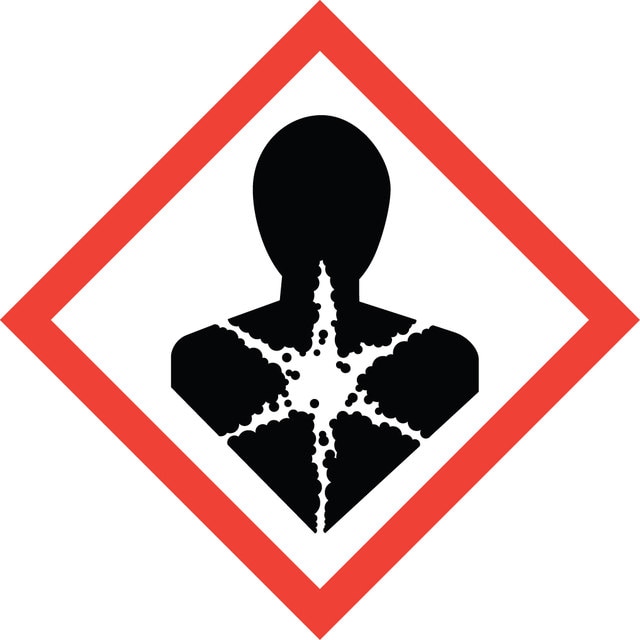
signalword
Danger
hcodes
pcodes
Hazard Classifications
Resp. Sens. 1
Storage Class
11 - Combustible Solids
wgk
WGK 3
flash_point_f
Not applicable
flash_point_c
Not applicable
ppe
Eyeshields, Gloves, type N95 (US)
Choose from one of the most recent versions:
Already Own This Product?
Find documentation for the products that you have recently purchased in the Document Library.
Shilpi Goenka et al.
Molecules (Basel, Switzerland), 25(16) (2020-08-13)
Previous studies have reported that estrogen hormone promotes melanogenesis while progesterone inhibits it. A selective estrogen receptor modulator (SERM), tamoxifen, has been shown to promote melanogenesis; however, to date, there have been no reports on the effects of a selective
Malte Rolff et al.
Chemical Society reviews, 40(7), 4077-4098 (2011-03-19)
The critical review describes the known dicopper systems mediating the aromatic hydroxylation of monophenolic substrates. Such systems are of interest as structural and functional models of the type 3 copper enzyme tyrosinase, which catalyzes the ortho-hydroxylation of tyrosine to DOPA
Thomas J Jaworek et al.
Orphanet journal of rare diseases, 7, 44-44 (2012-06-28)
Oculocutaneous albinism (OCA) is caused by a group of genetically heterogeneous inherited defects that result in the loss of pigmentation in the eyes, skin and hair. Mutations in the TYR, OCA2, TYRP1 and SLC45A2 genes have been shown to cause
Tyrosinase inhibitory effects and inhibition mechanisms of nobiletin and hesperidin from citrus peel crude extracts.
Zhang, et al.
Journal of Enzyme Inhibition and Medicinal Chemistry, 22, 83-90 (2019)
Neda Rafat et al.
Biosensors, 11(11) (2021-11-26)
A novel, integrated experimental and modeling framework was applied to an inhibition-based bi-enzyme (IBE) electrochemical biosensor to detect acetylcholinesterase (AChE) inhibitors that may trigger neurological diseases. The biosensor was fabricated by co-immobilizing AChE and tyrosinase (Tyr) on the gold working
Related Content
Our team of scientists has experience in all areas of research including Life Science, Material Science, Chemical Synthesis, Chromatography, Analytical and many others.
Contact Technical Service