Skip to Content
Merck

112941

tert-Butylhydroquinone

97%

Synonym(s):

2-(1,1-Dimethylethyl)-1,4-benzenediol, NSC 4972

Sign In to View Organizational & Contract Pricing.

Select a Size


About This Item

Linear Formula:
(CH3)3CC6H3-1,4-(OH)2
CAS Number:
Molecular Weight:
166.22
UNSPSC Code:
12162002
NACRES:
NA.23
PubChem Substance ID:
EC Number:
217-752-2
Beilstein/REAXYS Number:
637923
MDL number:
Technical Service
Need help? Our team of experienced scientists is here for you.
Let Us Assist
Technical Service
Need help? Our team of experienced scientists is here for you.
Let Us Assist

InChI key

BGNXCDMCOKJUMV-UHFFFAOYSA-N

InChI

1S/C10H14O2/c1-10(2,3)8-6-7(11)4-5-9(8)12/h4-6,11-12H,1-3H3

SMILES string

CC(C)(C)c1cc(O)ccc1O

assay

97%

autoignition temp.

855 °F

mp

127-129 °C (lit.)

Quality Level

Looking for similar products? Visit Product Comparison Guide

Related Categories

Application

TBHQ was used to study the inactivation of barotolerant strains of Listeria monocytogenes and Escherichia coli. Environment friendly electrode materials for supercapacitors were attained by decorating the surface of graphene nanosheets with TBHQ.

General description

tert-Butylhydroquinone (TBHQ) is a phenolic antioxidant. TBHQ is frequently used as a food preservative. In low concentrations it shows cytoprotective qualities while at higher concentrations it exhibits cytotoxic behavior.

pictograms

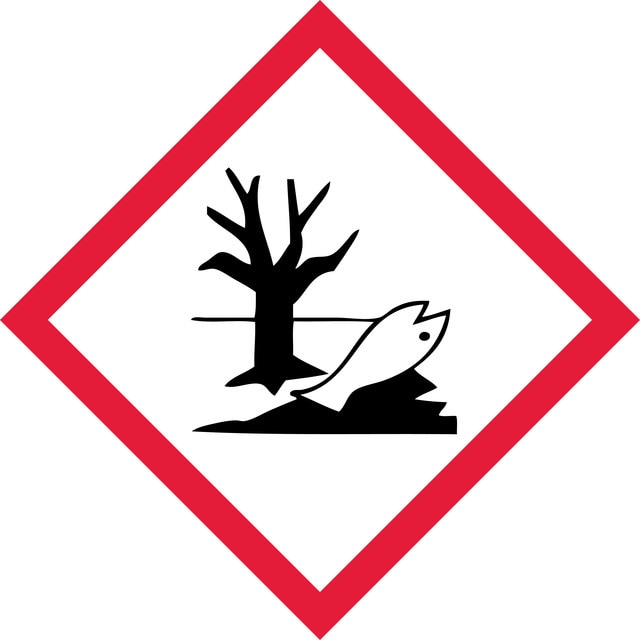
Exclamation markEnvironment

signalword

Warning

Hazard Classifications

Acute Tox. 4 Dermal - Acute Tox. 4 Oral - Aquatic Acute 1 - Aquatic Chronic 1 - Eye Irrit. 2 - Skin Irrit. 2 - Skin Sens. 1

Storage Class

13 - Non Combustible Solids

wgk

WGK 3

flash_point_f

195.8 °F - closed cup

flash_point_c

91 °C - closed cup

ppe

dust mask type N95 (US), Eyeshields, Gloves


Regulatory Listings

Regulatory Listings are mainly provided for chemical products. Only limited information can be provided here for non-chemical products. No entry means none of the components are listed. It is the user’s obligation to ensure the safe and legal use of the product.

Substances Subject to be Indicated Names

ishl_indicated

Substances Subject to be Notified Names

ishl_notified

112941-100G: + 112941-500G: + 112941-5G: + 112941-VAR: + 112941-BULK: + 112941-25KG: + 112941-10KG:

jan


Choose from one of the most recent versions:

Certificates of Analysis (COA)

Lot/Batch Number

Don't see the Right Version?

If you require a particular version, you can look up a specific certificate by the Lot or Batch number.

Already Own This Product?

Find documentation for the products that you have recently purchased in the Document Library.

Visit the Document Library

Yoon-Kyung Chung et al.
Journal of microbiology (Seoul, Korea), 46(3), 289-294 (2008-07-08)
Antimicrobial efficacy of ultra-high-pressure (UHP) can be enhanced by application of additional hurdles. The objective of this study was to systematically assess the enhancement in pressure lethality by TBHQ treatment, against barotolerant strains of Escherichia coli O157:H7 and Listeria monocytogenes.
Valentina Metličar et al.
Plants (Basel, Switzerland), 8(10) (2019-10-02)
Japanese knotweed (Fallopia japonica Houtt.) and Bohemian knotweed (Fallopia x bohemica) are invasive alien plant species, causing great global ecological and economic damage. Mechanical excavation of plant material represents an effective containment method, but it is not economically and environmentally
Negar Gharavi et al.
Current drug metabolism, 8(1), 1-7 (2007-02-03)
Tert-butylhydroquinone (tBHQ) has been commonly used as a synthetic food antioxidant to prevent oils and fats from oxidative deterioration and rancidity due to its potent anti-lipid peroxidation activity. In North America, the maximum level of tBHQ allowed in fat products
Anna De Blasio et al.
Journal of cellular physiology, 235(2), 629-637 (2019-07-18)
The present study shows that nuclear factor erythroid 2-related factor 2 (NRF2) and miR-29b-1-5p are two opposite forces which could regulate the fate of MDA-MB-231 cells, the most studied triple-negative breast cancer (TNBC) cell line. We show that NRF2 activation
Huang-Hui Chen et al.
Free radical biology & medicine, 52(6), 1054-1066 (2012-01-17)
The Nrf2/ARE pathway plays an important role in inducing phase II detoxifying enzymes and antioxidant proteins and has been considered a potential target for cancer chemoprevention because it eliminates harmful reactive oxygen species or reactive intermediates generated from carcinogens. The

Our team of scientists has experience in all areas of research including Life Science, Material Science, Chemical Synthesis, Chromatography, Analytical and many others.

Contact Technical Service