Skip to Content
Merck

147230

Acrylic acid

anhydrous, contains 200 ppm MEHQ as inhibitor, 99%

Synonym(s):

2-Propenoic acid

Sign In to View Organizational & Contract Pricing.

Select a Size


About This Item

Linear Formula:
CH2=CHCOOH
CAS Number:
Molecular Weight:
72.06
NACRES:
NA.23
PubChem Substance ID:
eCl@ss:
39021317
UNSPSC Code:
12162002
EC Number:
201-177-9
MDL number:
Beilstein/REAXYS Number:
635743
Technical Service
Need help? Our team of experienced scientists is here for you.
Let Us Assist
Technical Service
Need help? Our team of experienced scientists is here for you.
Let Us Assist

InChI

1S/C3H4O2/c1-2-3(4)5/h2H,1H2,(H,4,5)

SMILES string

OC(=O)C=C

InChI key

NIXOWILDQLNWCW-UHFFFAOYSA-N

grade

anhydrous

vapor density

2.5 (vs air)

vapor pressure

4 mmHg ( 20 °C)

assay

99%

form

liquid

autoignition temp.

744 °F

contains

200 ppm MEHQ as inhibitor

expl. lim.

13.7 %

bp

139 °C (lit.)

mp

13 °C (lit.)

density

1.051 g/mL at 25 °C (lit.)

Quality Level

Looking for similar products? Visit Product Comparison Guide

General description

Acrylic acid is an unsaturated carboxylic acid that is commonly used as a versatile building block in the chemical industry because of its reactive double bond between the carbon and oxygen atoms. It is used to prepare various acrylic acid-based polymers, which are used for various applications such as adhesives, paints & coatings, medical devices, organic semiconductors,thin-film transistors, hydrogels and lithium-ion batteries. Additionally, acrylic acid also serves as one of the polyelectrolytes in the self-assembled polymeric film used for hydrogen generation.

Application

Acrylic acid can be primarily used as a monomer to produce various acrylic polymers, including polyacrylic acid, polymethyl methacrylate (PMMA), acrylonitrile butadiene styrene (ABS), and many others. These polymers exhibit a wide range of properties, such as transparency, scratch-resistant, flexibility, and resistance to water and chemicals, which make them valuable materials in various applications. Acrylic acid is also used as a key component in the synthesis of superabsorbent polymers(SAPs). These polymers possess a unique ability to quickly absorb and retain large quantities of water. Due to their excellent properties, SAPs have been widely used in many fields, such as drug-delivery systems, chemical industry, and personal care, etc.

Acrylic acid can also be used as:
  • A key component in the preparation of copolymer binder, which helps to optimize the performance of lithium-ion batteries.
  • A surface modifier for the carbon nanotubes with poly(acrylic acid) in order to improve adhesion and dispersion of the nanotubes in the oxide semiconductor matrix for thin-film transistor applications.
  • A reactive monomer for the surface modification of polydimethylsiloxane (PDMS)through a simultaneous polymerization process with ethylene glycol dimethacrylate. Modified PDMS potentially applied in new applications fields such as microfluidics or biomedical devices.
  • A precursor for the synthesis of cashew gum/acrylic acid nanoparticles via the copolymerization process. The use of acrylic acid in the synthesis is to introduce hydrophilic functional groups into the cashew gum backbone, thereby improving its solubility in water and increasing its compatibility with other hydrophilic materials.
AAc is used in preparing monodispersed poly (N-isopropylacryamide) (PNIPAM)/AAc microgels. AAc has been plasma-deposited on surfaces for cell culture applications. Surface modification of poly(ethylene terephthalate) (PET) films via UV-induced graft copolymerization with AAc has been reported. AAc is used primarily as an intermediate in the production of acrylates.

signalword

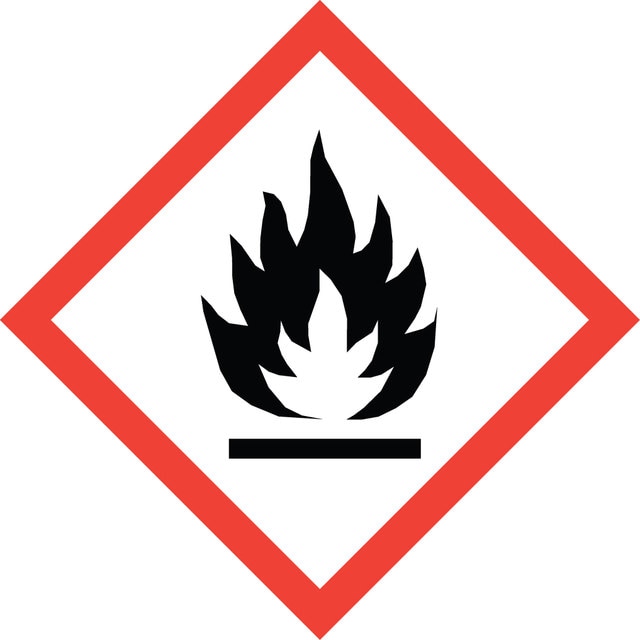
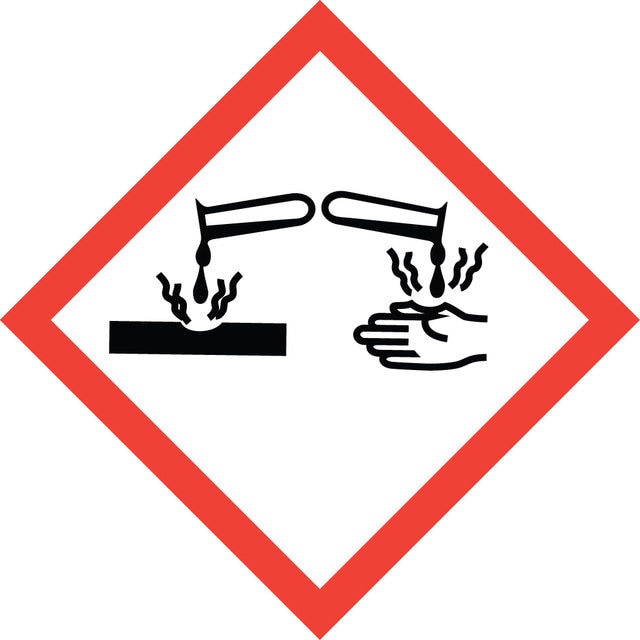
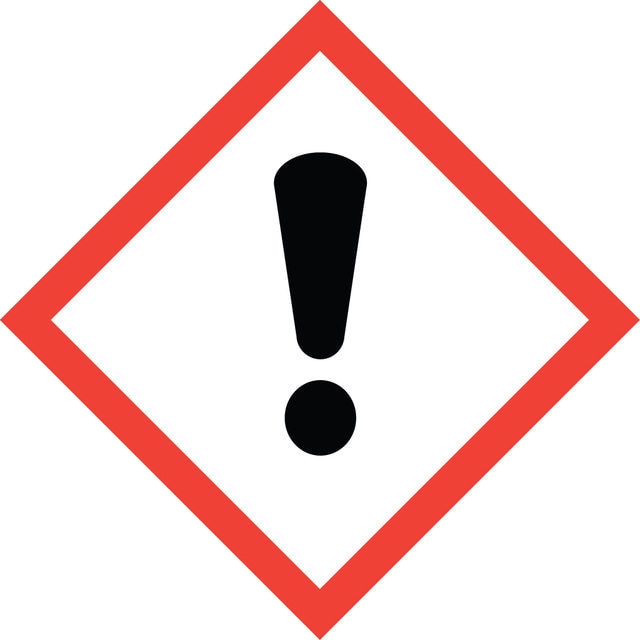
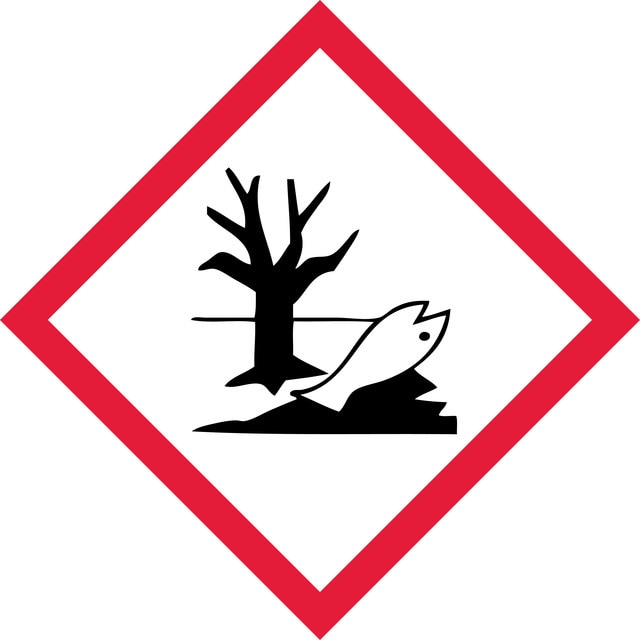
Danger

Hazard Classifications

Acute Tox. 4 Dermal - Acute Tox. 4 Inhalation - Acute Tox. 4 Oral - Aquatic Acute 1 - Aquatic Chronic 2 - Eye Dam. 1 - Flam. Liq. 3 - Skin Corr. 1A - STOT SE 3

target_organs

Respiratory system

Storage Class

3 - Flammable liquids

wgk

WGK 2

flash_point_f

119.3 °F - closed cup

flash_point_c

48.5 °C - closed cup

ppe

Faceshields, Gloves, Goggles, type ABEK (EN14387) respirator filter


Regulatory Listings

Regulatory Listings are mainly provided for chemical products. Only limited information can be provided here for non-chemical products. No entry means none of the components are listed. It is the user’s obligation to ensure the safe and legal use of the product.

Deleterious substance

pdsc

Class I Designated Chemical Substances

prtr

Group 4: Flammable liquids + Type 2 petroleums + Hazardous rank III + Water soluble liquid

fsl

Substances Subject to be Indicated Names

ishl_indicated

Substances Subject to be Notified Names

ishl_notified

147230-RSAMPLE: + 147230-18KG:4548173105741 + 147230-50KG: + 147230-VAR: + 147230-1L: + 147230-204KG:4548173248387 + 147230-25ML: + 147230-2.5L: + 147230-3KG:4548173105758 + 147230-5ML: + 147230-5G:4548173105772 + 147230-100G:4548173105734 + 147230-500ML: + 147230-BULK: + 147230-500G:4548173105765

jan


Choose from one of the most recent versions:

Certificates of Analysis (COA)

Lot/Batch Number

Don't see the Right Version?

If you require a particular version, you can look up a specific certificate by the Lot or Batch number.

Already Own This Product?

Find documentation for the products that you have recently purchased in the Document Library.

Visit the Document Library

Lei Ying et al.
Biomacromolecules, 4(1), 157-165 (2003-01-14)
Surface modification of argon-plasma-pretreated poly(ethylene terephthalate) (PET) films via UV-induced graft copolymerization with acrylic acid (AAc) was carried out. Galactosylated surfaces were then obtained by coupling a galactose derivative (1-O-(6'-aminohexyl)-D-galactopyranoside) to the AAc graft chains with the aid of a
Influence of charge density on the swelling of colloidal poly (< i> N</i>-isopropylacrylamide-co-acrylic acid) microgels.
Kratz K, et al.
Colloids and Surfaces. A, Physicochemical and Engineering Aspects, 170(2), 137-149 (2000)
Loredana Detomaso et al.
Biomaterials, 26(18), 3831-3841 (2005-01-01)
Continuous and modulated glow discharges were used to deposit thin films from acrylic acid vapors. Different deposition regimes were investigated, and their effect on chemical composition, morphology and homogeneity of the coatings, as well as on their stability in water
Acrylic Acid
IARC Monographs, 71, 1223-1230 null
Adrie J J Straathof et al.
Applied microbiology and biotechnology, 67(6), 727-734 (2005-03-01)
Acrylic acid might become an important target for fermentative production from sugars on bulk industrial scale, as an alternative to its current production from petrochemicals. Metabolic engineering approaches will be required to develop a host microorganism that may enable such

Articles

歯科修復材料の開発は、生体適合性と自然な外観を持つ修復材の必要性から、非常に重要です。アマルガムやコンポジットレジンといった従来の歯科材料には、素材固有の短所があります。

Innovation in dental restorative materials is driven by the need for biocompatible and natural-appearing restoration alternatives. Conventional dental materials like amalgam and composite resins have inherent disadvantages.

RAFT polymerization offers living characteristics to radical polymerization, contributing versatility to reversible deactivation radical polymerization methods.

By altering the physicochemical properties, smart or intelligent drug delivery systems can be designed to deliver therapeutic molecules on-demand. Learn more about the application of stimuli-responsive materials in drug delivery.

Our team of scientists has experience in all areas of research including Life Science, Material Science, Chemical Synthesis, Chromatography, Analytical and many others.

Contact Technical Service