
156159

Sodium cyanoborohydride
reagent grade, 95%
Synonym(s):
Sodium cyanotrihydridoborate
Select a Size
About This Item
grade
reagent grade
Quality Level
assay
95%
form
powder
reaction suitability
reagent type: reductant
mp
>242 °C (dec.) (lit.)
SMILES string
[Na+].[BH3-]C#N
InChI
1S/CH3BN.Na/c2-1-3;/h2H3;/q-1;+1
InChI key
CVDUGUOQTVTBJH-UHFFFAOYSA-N
General description
Application
- To convert the amino-functional Si3N4 surface to a reactive surface with aldehyde groups.
- For coupling amino-modified oligonucleotide probes.
- In the synthesis of a novel phenolate-bridged dilanthanum(III) complex of interest as a model for metalloproteins.
- In the reductive amination of aldehydes and ketones, and in the reductive alkylation of amines.
Still not finding the right product?
Explore all of our products under Sodium cyanoborohydride
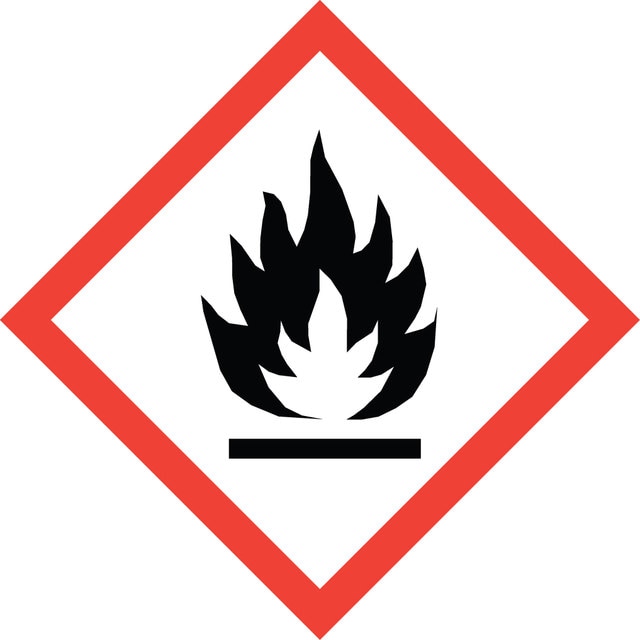
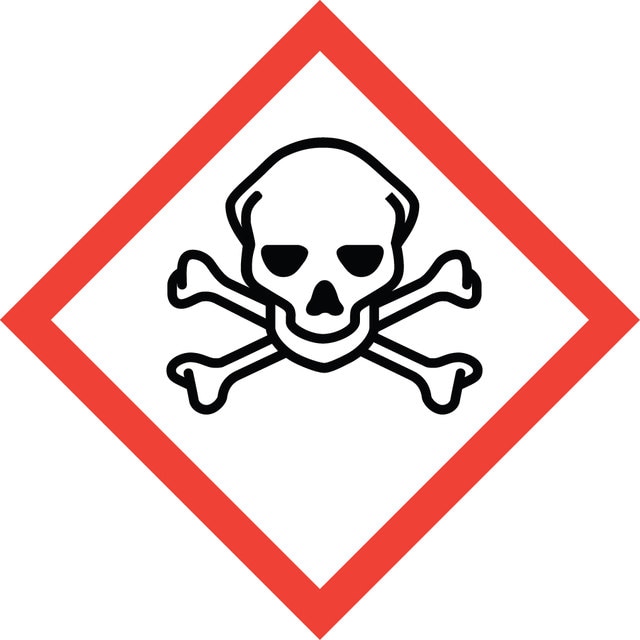

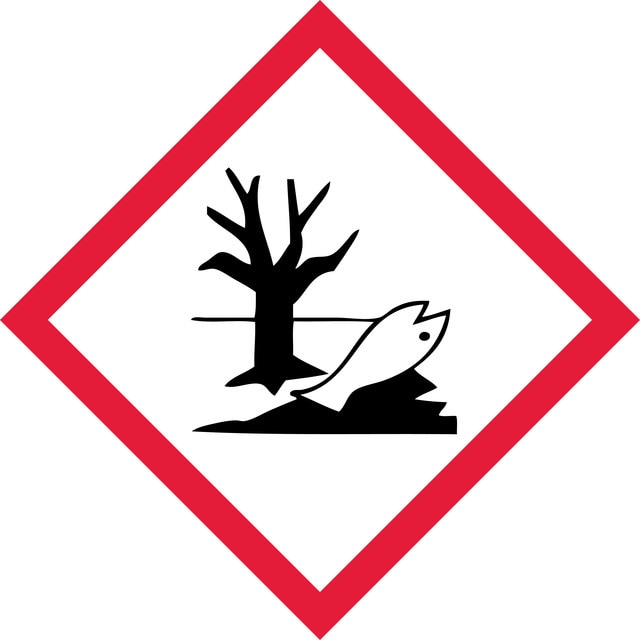
signalword
Danger
supp_hazards
Storage Class
4.3 - Hazardous materials which set free flammable gases upon contact with water
flash_point_f
158.0 °F - closed cup
flash_point_c
70 °C - closed cup
ppe
Eyeshields, Faceshields, Gloves, type P3 (EN 143) respirator cartridges
Hazard Classifications
Acute Tox. 2 Dermal - Acute Tox. 2 Inhalation - Acute Tox. 2 Oral - Aquatic Acute 1 - Aquatic Chronic 1 - Eye Dam. 1 - Flam. Sol. 1 - Skin Corr. 1B - Water-react. 1
Regulatory Listings
Regulatory Listings are mainly provided for chemical products. Only limited information can be provided here for non-chemical products. No entry means none of the components are listed. It is the user’s obligation to ensure the safe and legal use of the product.
Poisonous substance
pdsc
Class I Designated Chemical Substances
prtr
Group 3: Spontaneously combustible substances and water- reactive materials + Metal hydrides + Hazardous rank I + 1st spontaneously combustible materials and water reactive materials
fsl
156159-250G:4.548173107936E12 + 156159-25G:4.548173318318E12 + 156159-10KG:4.548173107912E12 + 156159-50G:4.54817310795E12 + 156159-10G:4.548173107905E12 + 156159-1KG:4.548173107929E12 + 156159-25KG:4.548173107943E12
jan
Choose from one of the most recent versions:
Already Own This Product?
Find documentation for the products that you have recently purchased in the Document Library.
Protocols
A step-by-step protocol for released N-linked glycan analysis of the monoclonal antibody adalimumab, based on UHPLC-FLR-MS and procainamide labeling.
Articles
Glycans play a key role in protein structure and disease; representation on cell surfaces is the glycome.