Skip to Content
Merck

157635

7,7,8,8-Tetracyanoquinodimethane

98%

Synonym(s):

TCNQ, (2,5-Cyclohexadiene-1,4-diylidene)-dimalononitrile

Sign In to View Organizational & Contract Pricing.

Select a Size


About This Item

Empirical Formula (Hill Notation):
C12H4N4
CAS Number:
Molecular Weight:
204.19
UNSPSC Code:
12352103
NACRES:
NA.23
PubChem Substance ID:
EC Number:
216-174-8
Beilstein/REAXYS Number:
1427366
MDL number:
Technical Service
Need help? Our team of experienced scientists is here for you.
Let Us Assist
Technical Service
Need help? Our team of experienced scientists is here for you.
Let Us Assist

SMILES string

N#C\C(C#N)=C1/C=C\C(C=C1)=C(/C#N)C#N

InChI key

PCCVSPMFGIFTHU-UHFFFAOYSA-N

InChI

1S/C12H4N4/c13-5-11(6-14)9-1-2-10(4-3-9)12(7-15)8-16/h1-4H

assay

98%

form

solid

mp

287-289 °C (dec.) (lit.)

orbital energy

LUMO 4.6 eV 

semiconductor properties

N-type (mobility=10−5 cm2/V·s)

Quality Level

Gene Information

human ... CAPN1(823)
rat ... Capn1(29153), Nos1(24598)

Looking for similar products? Visit Product Comparison Guide

Related Categories

Application

Electron-acceptor molecule used to form charge-transfer superconductors.
Tetrathiotetracene (TTT) and TNCQ can be thermally co-deposited to form n-type thin films with a power factor of 0.33 μWm-1K-2 and an electrical conductivity of 57 Sm-1 to fabricate thin film organic thermoelectric generators. It can be used to functionalize chemical vapor deposited (CVD) graphene and form a p-doped nanocomposite that finds potential application as a conductive anode for organic solar cells (OSCs). Electrochemical sensors can be developed by using TNCQ and graphene oxide to form a glassy electrode for the detection of reduced glutathione (GSH).

General description

7,7,8,8-Tetracyanoquinodimethane (TNCQ) is a strong electron acceptor as it has four cyano groups and π-conjugation bonds that form charge transferring chains and ion radical salts which are mainly used as p-dopants for the fabrication of a variety of semiconductor applications.

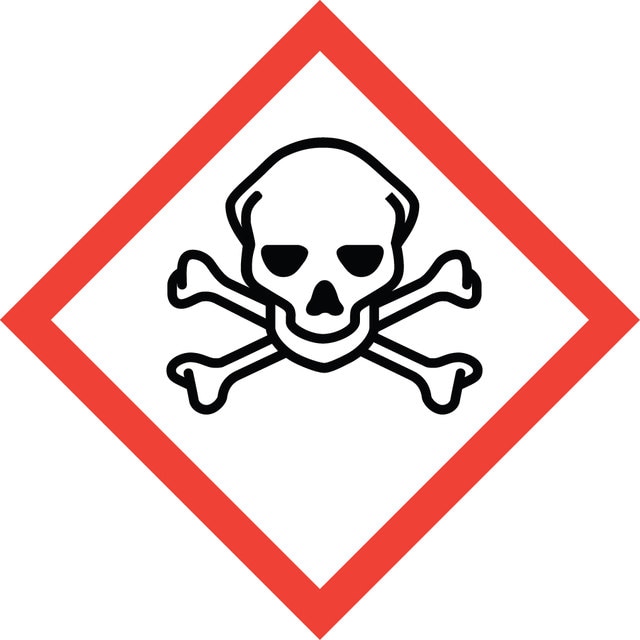
pictograms

Skull and crossbones

signalword

Danger

Hazard Classifications

Acute Tox. 3 Dermal - Acute Tox. 3 Inhalation - Acute Tox. 3 Oral

Storage Class

6.1A - Combustible acute toxic Cat. 1 and 2 / very toxic hazardous materials

wgk

WGK 3

flash_point_f

Not applicable

flash_point_c

Not applicable

ppe

dust mask type N95 (US), Eyeshields, Gloves


Regulatory Listings

Regulatory Listings are mainly provided for chemical products. Only limited information can be provided here for non-chemical products. No entry means none of the components are listed. It is the user’s obligation to ensure the safe and legal use of the product.

Deleterious substance

pdsc

157635-VAR: + 157635-10G:4548173108186 + 157635-BULK: + 157635-1G:4548173108193 + 157635-5G:4548173108209

jan


Choose from one of the most recent versions:

Certificates of Analysis (COA)

Lot/Batch Number

Don't see the Right Version?

If you require a particular version, you can look up a specific certificate by the Lot or Batch number.

Already Own This Product?

Find documentation for the products that you have recently purchased in the Document Library.

Visit the Document Library

Growth and characterization of 7, 7, 8, 8-tetracyano-quinodimethane crystals on chemical vapor deposition graphene.
Black A, et al.
Journal of Crystal Growth, 453(2), 1-6 (2016)
Thermoelectric Properties of Poly (3-hexylthiophene)(P3HT) Doped with 2, 3, 5, 6-Tetrafluoro-7, 7, 8, 8-tetracyanoquinodimethane (F4TCNQ) by Vapor-Phase Infiltration.
Lim E, et al.
Chemistry of Materials, 30(3), 998-1010 (2018)
Charge-transfer Complex Formed with Bowl-shaped Corannulene as Electron Donor and Planar 7, 7, 8, 8-Tetracyanoquinodimethane as Electron Acceptor.
Yoshida Y, et al.
Chemistry Letters (Jpn), 44(5), 709-711 (2015)
Alexander Mityashin et al.
Advanced materials (Deerfield Beach, Fla.), 24(12), 1535-1539 (2012-03-01)
The mechanism by which molecular dopants donate free charge carriers to the host organic semiconductor is investigated and is found to be quite different from the one in inorganic semiconductors. In organics, a strong correlation between the doping concentration and
Williams, J.M. et al.
Organic Superconductors (Including Fullerenes): Synthesis, Structure, Properties, and Theory (1992)

Articles

溶液処理塗布した後、高品質のペンタセン膜に熱的に変換することが可能な「可溶性ペンタセン前駆体」についてご紹介します。

Fabrication procedure of organic field effect transistor device using a soluble pentacene precursor.

Our team of scientists has experience in all areas of research including Life Science, Material Science, Chemical Synthesis, Chromatography, Analytical and many others.

Contact Technical Service