Skip to Content
Merck

204390

Silver nitrate

99.9999% trace metals basis

Synonym(s):

Nitric acid silver(I) salt

Sign In to View Organizational & Contract Pricing.

Select a Size


About This Item

Linear Formula:
AgNO3
CAS Number:
Molecular Weight:
169.87
NACRES:
NA.23
PubChem Substance ID:
UNSPSC Code:
12352302
EC Number:
231-853-9
MDL number:
Assay:
99.9999% trace metals basis
Form:
crystalline, solid
Technical Service
Need help? Our team of experienced scientists is here for you.
Let Us Assist
Technical Service
Need help? Our team of experienced scientists is here for you.
Let Us Assist

InChI key

SQGYOTSLMSWVJD-UHFFFAOYSA-N

InChI

1S/Ag.NO3/c;2-1(3)4/q+1;-1

SMILES string

[O-][N+]([O-])=O.[Ag+]

vapor density

5.8 (vs air)

assay

99.9999% trace metals basis

form

crystalline, solid

reaction suitability

core: silver

impurities

≤1.5 ppm Trace Metal Analysis

mp

212 °C (dec.) (lit.)

application(s)

PEM fuel cells
homogeneous catalyst
material synthesis precursor

Quality Level

Looking for similar products? Visit Product Comparison Guide

General description

Silver nitrate is a water-soluble silver salt used as a precursor to prepare silver-containing nanomaterials or complexes.

Application

Silver nitrate can be used as:
  • An activator in Ni-P coating of fly-ash cenosphere particles by the electroless method.
  • A silver precursor to prepare Ag–TiO2 nanomaterials applicable in the photocatalytic degradation of rhodamine 6G dye molecule.
It can also be used as a catalyst in the:
  • Hydrolytic oxidation of organosilanes to generate hydrogen.
  • Oxidation of a variety of aldehydes to corresponding carboxylic acids in the presence of H2O2 as an oxidizer.

signalword

Danger

Hazard Classifications

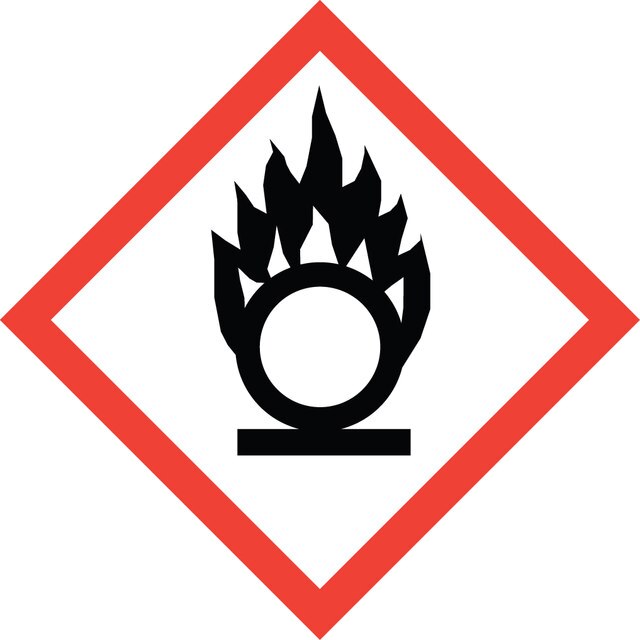
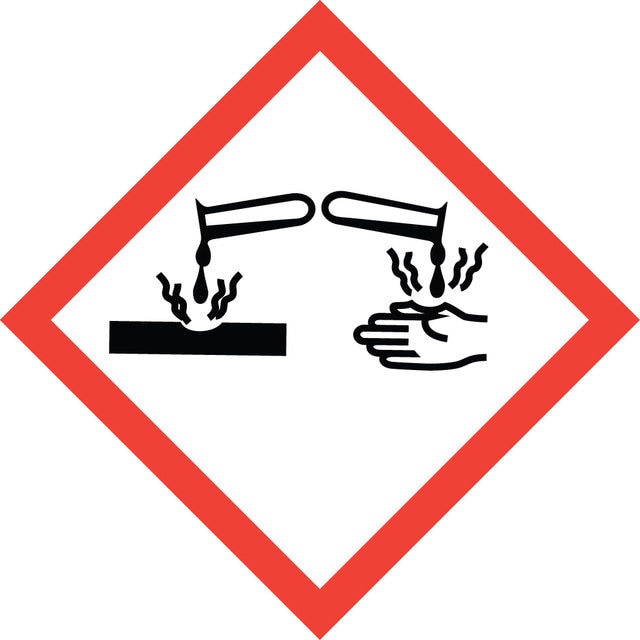
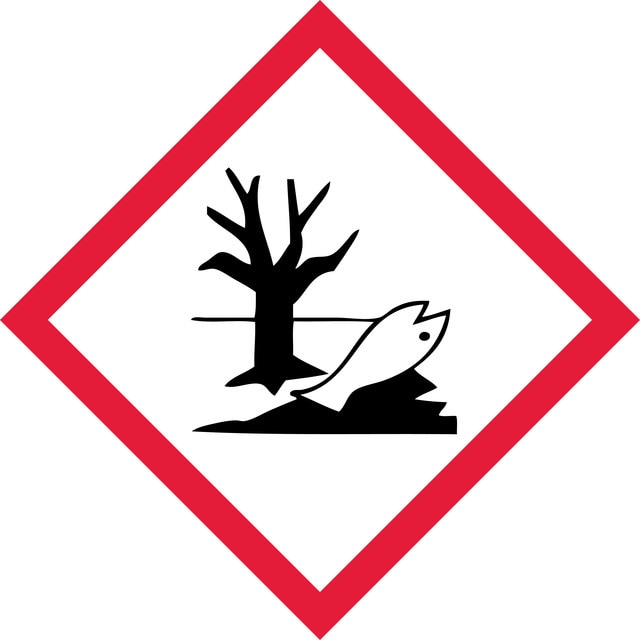
Aquatic Acute 1 - Aquatic Chronic 1 - Eye Dam. 1 - Met. Corr. 1 - Ox. Sol. 2 - Repr. 1B - Skin Corr. 1A

Storage Class

5.1B - Oxidizing hazardous materials

wgk

WGK 3

flash_point_f

Not applicable

flash_point_c

Not applicable

ppe

Eyeshields, Faceshields, Gloves, type P3 (EN 143) respirator cartridges


Regulatory Listings

Regulatory Listings are mainly provided for chemical products. Only limited information can be provided here for non-chemical products. No entry means none of the components are listed. It is the user’s obligation to ensure the safe and legal use of the product.

Deleterious substance

pdsc

Class I Designated Chemical Substances

prtr

Group 1: Oxidizing solids + Nitrates + Hazardous rank I + 1st oxidizing solid

fsl

Substances Subject to be Indicated Names

ishl_indicated

Substances Subject to be Notified Names

ishl_notified

204390-10G:4548173114347 + 204390-BULK: + 204390-2KG: + 204390-50G:4548173114378 + 204390-VAR: + 204390-250G:4548173114361 + 204390-1G:4548173114354

jan


Choose from one of the most recent versions:

Certificates of Analysis (COA)

Lot/Batch Number

It looks like we've run into a problem, but you can still download Certificates of Analysis from our Documents section.

If you need assistance, please contact Customer Support

Already Own This Product?

Find documentation for the products that you have recently purchased in the Document Library.

Visit the Document Library

Andrey Massarsky et al.
Chemosphere, 92(1), 59-66 (2013-04-04)
Nanomaterials (NMs) including silver nanoparticles (AgNPs) are incorporated into an increasing number of consumer and medical products. However, the potential toxicity of AgNPs to aquatic organisms is largely unknown. This study characterizes the effects of AgNPs on zebrafish (Danio rerio)
G Jeremy Leong et al.
Nanoscale, 6(19), 11364-11371 (2014-08-22)
The design and synthesis of shape-directed nanoscale noble metal particles have attracted much attention due to their enhanced catalytic properties and the opportunities to study fundamental aspects of nanoscale systems. As such, numerous methods have been developed to synthesize crystals
Sarah Jessl et al.
Small (Weinheim an der Bergstrasse, Germany), 14(20), e1703879-e1703879 (2018-04-18)
Seed-mediated methods employing cetyltrimethylammonium bromide (CTAB) as a surfactant, and silver salts as additives, are the most common synthetic strategies for high-yield productions of quality Au nanorods. However, the mechanism of these reactions is not yet fully understood and, importantly
Silver nanoparticles from ultrasonic spray pyrolysis of aqueous silver nitrate.
Pingali K, et al.
Aerosol Science and Technology, 39(10), 1010-1014 (2005)
Zhou, J.-K.; et al.
Ind. and Eng. Chem., 45(10), 3503-3511 (2006)

Articles

Oxidation and reduction reactions are some of the most common transformations encountered in organic synthesis

銀ナノ材料は、物理的、化学的、光学的にユニークな特性を持っており、現在、さまざまな生物学的用途に利用されています。

超音波噴霧熱分解(USP)法は、スケーラブルで連続的であるという利点を持っており、多様な種類の材料合成において有効です。

貴金属ナノ構造体は、さまざまな分野で表面特性を活用して、触媒から生物医学研究に至るまで多様な用途が見出されています。

See All

Related Content

改良ポリオールプロセスによる、銀ナノワイヤ合成方法の一例をご紹介します。

This application note discusses the synthesis of silver nanowires.

Our team of scientists has experience in all areas of research including Life Science, Material Science, Chemical Synthesis, Chromatography, Analytical and many others.

Contact Technical Service