Skip to Content
Merck

244643

Tin(II) oxide

≤60 micron particle size, powder, 97%

Sign In to View Organizational & Contract Pricing.

Select a Size


About This Item

Linear Formula:
SnO
CAS Number:
Molecular Weight:
134.71
NACRES:
NA.21
PubChem Substance ID:
UNSPSC Code:
12352302
EC Number:
244-499-5
MDL number:
Assay:
97%
Form:
powder
Technical Service
Need help? Our team of experienced scientists is here for you.
Let Us Assist
Technical Service
Need help? Our team of experienced scientists is here for you.
Let Us Assist

Product Name

Tin(II) oxide, ≤60 micron particle size, powder, 97%

InChI key

QHGNHLZPVBIIPX-UHFFFAOYSA-N

InChI

1S/O.Sn

SMILES string

O=[SnH2]

assay

97%

form

powder

particle size

≤60 micron

Quality Level

Looking for similar products? Visit Product Comparison Guide

Related Categories

Application

Tin(II) oxide has been used in the synthesis of nanofiber optic force transducer as a probe to study the mechanical phenomena in biomolecular systems.

General description

Tin(II) oxide (SnO) is a metal oxide with wide applications in superconductivity, photovoltaics, optoelectronics as an anode, coating substrate, Schottky diode, and catalyst.

pictograms

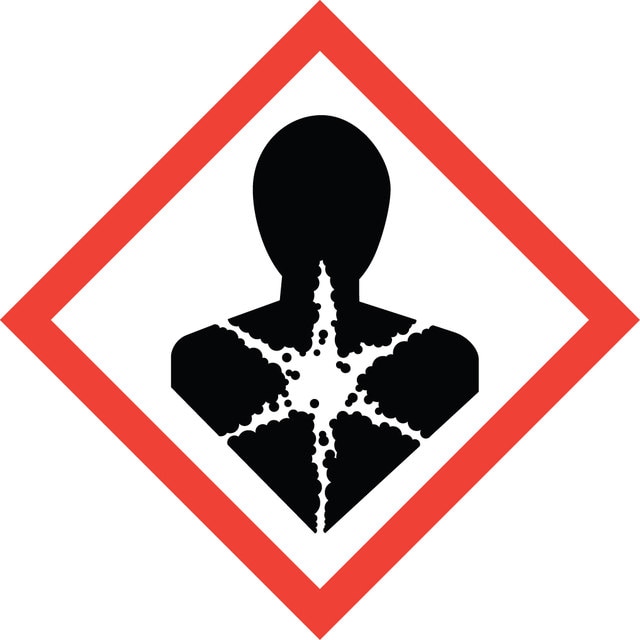
Health hazardExclamation mark

signalword

Danger

Hazard Classifications

Acute Tox. 4 Oral - Eye Irrit. 2 - Skin Sens. 1 - STOT RE 1

Storage Class

6.1C - Combustible acute toxic Cat.3 / toxic compounds or compounds which causing chronic effects

wgk

WGK 3

flash_point_f

Not applicable

flash_point_c

Not applicable

ppe

Eyeshields, Gloves, type N95 (US)


Choose from one of the most recent versions:

Certificates of Analysis (COA)

Lot/Batch Number

Don't see the Right Version?

If you require a particular version, you can look up a specific certificate by the Lot or Batch number.

Already Own This Product?

Find documentation for the products that you have recently purchased in the Document Library.

Visit the Document Library

Tin (II) oxide: structure refinement and thermal expansion.
Pannetier J and Denes G.
Acta Crystallographica Section B, Structural Science, Crystal Engineering and Materials, 36(11), 2763-2765 (1980)
Hydrolysis of bis (dimethylamido) tin to tin (II) oxyhydroxide and its selective transformation into tin (II) or tin (IV) oxide.
Khanderi J, et al.
Inorgorganica Chimica Acta, 427, 27-32 (2015)
A new efficient chiral catalyst system. Combined use of tin (II) oxide, trimethylsilyl triflate and chiral diamine in the asymmetric aldol reaction.
Mukaiyama T, et al.
Chemistry Letters (Jpn), 7, 1147-1150 (1990)
Hiroki Tanaka et al.
PloS one, 10(8), e0134386-e0134386 (2015-08-27)
The aortic wall is perfused by the adventitial vasa vasorum (VV). Tissue hypoxia has previously been observed as a manifestation of enlarged abdominal aortic aneurysms (AAAs). We sought to determine whether hypoperfusion of the adventitial VV could develop AAAs. We
Andreas Römpp et al.
Analytical and bioanalytical chemistry, 407(8), 2329-2335 (2015-01-13)
Mass spectrometry imaging has become a popular tool for probing the chemical complexity of biological surfaces. This led to the development of a wide range of instrumentation and preparation protocols. It is thus desirable to evaluate and compare the data

Our team of scientists has experience in all areas of research including Life Science, Material Science, Chemical Synthesis, Chromatography, Analytical and many others.

Contact Technical Service