Skip to Content
Merck

403326

Strontium

granular, 99% trace metals basis

Synonym(s):

Strontium element

Sign In to View Organizational & Contract Pricing.

Select a Size


About This Item

Empirical Formula (Hill Notation):
Sr
CAS Number:
Molecular Weight:
87.62
NACRES:
NA.23
PubChem Substance ID:
UNSPSC Code:
12141504
EC Number:
231-133-4
MDL number:
Technical Service
Need help? Our team of experienced scientists is here for you.
Let Us Assist
Technical Service
Need help? Our team of experienced scientists is here for you.
Let Us Assist

Product Name

Strontium, granular, 99% trace metals basis

InChI key

CIOAGBVUUVVLOB-UHFFFAOYSA-N

InChI

1S/Sr

SMILES string

[Sr]

description

under oil

assay

99% trace metals basis

form

granular

reaction suitability

reagent type: reductant

resistivity

23 μΩ-cm, 20°C

bp

1384 °C (lit.)

mp

757 °C (lit.)

density

2.6 g/mL at 25 °C (lit.)

Quality Level

Looking for similar products? Visit Product Comparison Guide

Application

Used to make Strontium-potassium-niobate (Sr2KNb5O15, SKN). SKN is of great interest for pyroelectric sensors and various electro-optic devices.2

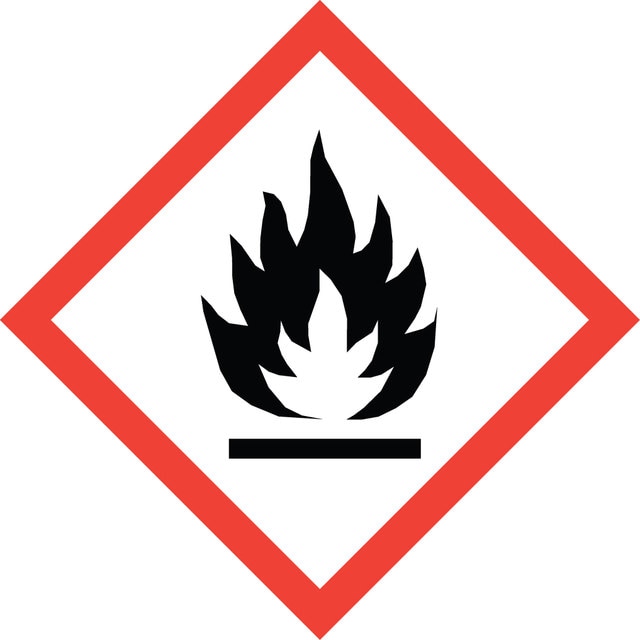
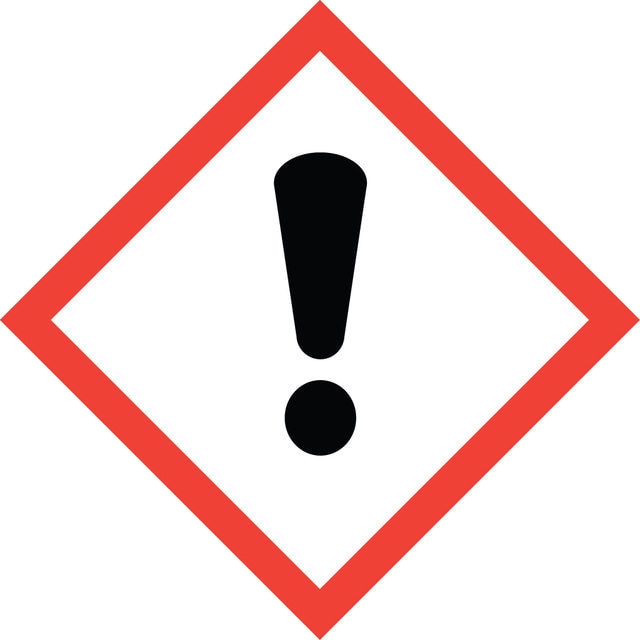
pictograms

FlameExclamation mark

signalword

Danger

hcodes

Hazard Classifications

Skin Irrit. 2 - Water-react 1

supp_hazards

Storage Class

4.3 - Hazardous materials which set free flammable gases upon contact with water

wgk

WGK 3

flash_point_f

Not applicable

flash_point_c

Not applicable

ppe

Eyeshields, Gloves, type P3 (EN 143) respirator cartridges


Choose from one of the most recent versions:

Certificates of Analysis (COA)

Lot/Batch Number

Don't see the Right Version?

If you require a particular version, you can look up a specific certificate by the Lot or Batch number.

Already Own This Product?

Find documentation for the products that you have recently purchased in the Document Library.

Visit the Document Library

Emily Y Tsui et al.
Nature chemistry, 5(4), 293-299 (2013-03-21)
Redox-inactive metals are found in biological and heterogeneous water oxidation catalysts, but, at present, their roles in catalysis are not well understood. Here, we report a series of high-oxidation-state tetranuclear-dioxido clusters comprising three manganese centres and a redox-inactive metal (M).
A Schaafsma et al.
Critical reviews in food science and nutrition, 41(4), 225-249 (2001-06-13)
For early prevention or inhibition of postmenopausal and age-related bone loss, nutritional interventions might be a first choice. For some vitamins and minerals an important role in bone metabolism is known or suggested. Calcium and vitamin D support bone mineral
P J Marie et al.
Calcified tissue international, 69(3), 121-129 (2001-10-31)
The processes of bone resorption and formation are tightly governed by a variety of systemic and local regulatory agents. In addition, minerals and trace elements affect bone formation and resorption through direct or indirect effects on bone cells or bone
Martine Cohen-Solal
Nephrology, dialysis, transplantation : official publication of the European Dialysis and Transplant Association - European Renal Association, 17 Suppl 2, 30-34 (2002-03-21)
Although the prevalence of aluminium-related bone diseases has declined, osteomalacia still persists at a low prevalence. The redistribution of bone disease prevalence corresponds to evolving regimens in the treatment of renal disease. Studies have demonstrated an association between the accumulation
P C D'Haese et al.
Nephrology, dialysis, transplantation : official publication of the European Dialysis and Transplant Association - European Renal Association, 11 Suppl 2, 92-97 (1996-01-01)
A number of considerations suggest that trace element disturbances might occur in dialysed patients. These must at least in part be ascribed to the dialysis treatment itself during which these constituents may either be transferred to or removed from the

Our team of scientists has experience in all areas of research including Life Science, Material Science, Chemical Synthesis, Chromatography, Analytical and many others.

Contact Technical Service