Skip to Content
Merck

440191

Hexamethyldisilazane

reagent grade, ≥99%

Synonym(s):

Bis(trimethylsilyl)amine, HMDS

Sign In to View Organizational & Contract Pricing.

Select a Size


About This Item

Linear Formula:
(CH3)3SiNHSi(CH3)3
CAS Number:
Molecular Weight:
161.39
UNSPSC Code:
12352103
NACRES:
NA.23
PubChem Substance ID:
EC Number:
213-668-5
Beilstein/REAXYS Number:
635752
MDL number:
Technical Service
Need help? Our team of experienced scientists is here for you.
Let Us Assist
Technical Service
Need help? Our team of experienced scientists is here for you.
Let Us Assist

grade

reagent grade

Quality Level

assay

≥99%

form

liquid

refractive index

n20/D 1.407 (lit.)

bp

125 °C (lit.)

SMILES string

C[Si](C)(C)N[Si](C)(C)C

InChI

1S/C6H19NSi2/c1-8(2,3)7-9(4,5)6/h7H,1-6H3

InChI key

FFUAGWLWBBFQJT-UHFFFAOYSA-N

Looking for similar products? Visit Product Comparison Guide

General description

Hexamethyldisilane (HMDS) is a stable and effectivereagent for trimethylsilylation of hydrogen-labile substrates such as alcohols,amines, and carboxylic acids. It is commonly used for the protection of sensitivefunctional groups during chemical synthesis. Owing to its low cost, high vapor pressure, and safety, itis widely used as a precursor in chemical vapor deposition(CVD) reactions.

Application

Hexamethyldisilane (HMDS) can be used:
  • As a silylating agent in the trimethylsilylation of alcohols under nearly neutral reaction conditions.
  • To control the molecular weights of polypeptides during ring-opening polymerization of α-amino acid N-carboxyanhydrides.
  • To fabricate silicon carbonitride thin films by plasma-enhanced CVD.
  • For specimen preparation for scanning electron microscopy and the preparation of trimethylsilyl ethers from hydroxy compounds.

Features and Benefits

  • High chemicalstability and low molecular weight
  • Nontoxic andcost-effective reagent
  • Ammonia is theonly byproduct generated during silylation
  • Silylationreaction using HDMS is nearly neutral and does not need any precaution
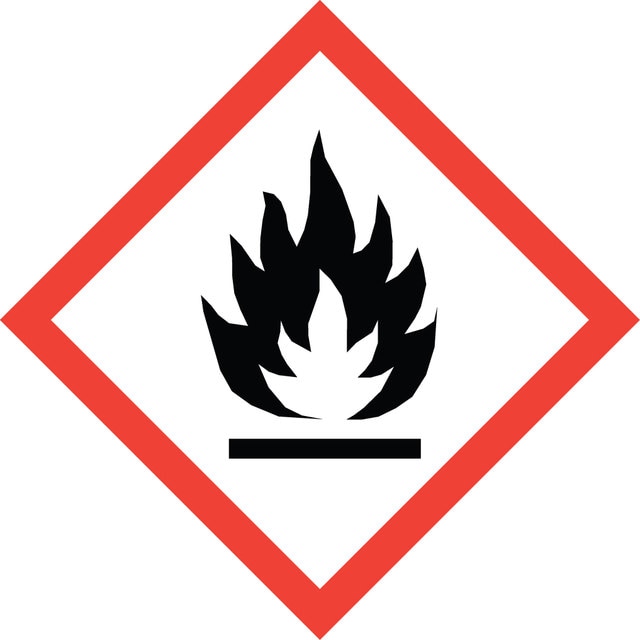
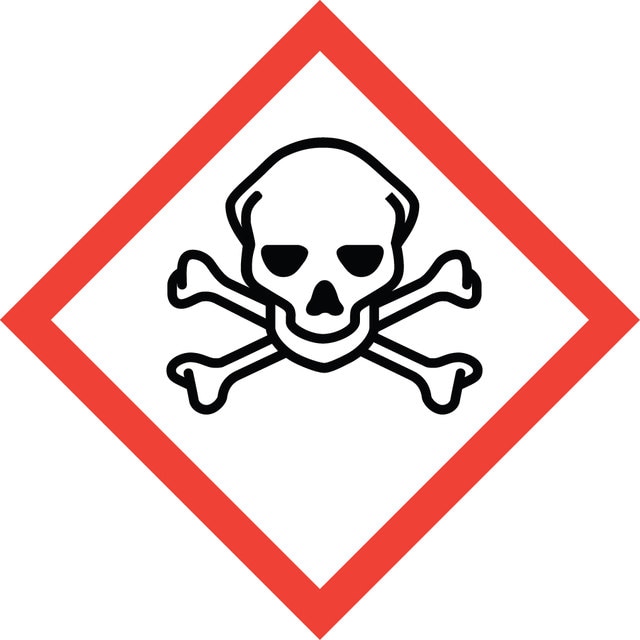
pictograms

FlameSkull and crossbones

signalword

Danger

Hazard Classifications

Acute Tox. 3 Dermal - Acute Tox. 4 Inhalation - Acute Tox. 4 Oral - Aquatic Chronic 3 - Flam. Liq. 2

Storage Class

3 - Flammable liquids

wgk

WGK 2

flash_point_f

52.5 °F - closed cup

flash_point_c

11.4 °C - closed cup

ppe

Faceshields, Gloves, Goggles, type ABEK (EN14387) respirator filter


Regulatory Listings

Regulatory Listings are mainly provided for chemical products. Only limited information can be provided here for non-chemical products. No entry means none of the components are listed. It is the user’s obligation to ensure the safe and legal use of the product.

Group 4: Flammable liquids + Type 1 petroleums + Hazardous rank II + Water insoluble liquid

fsl

Substances Subject to be Indicated Names

ishl_indicated

Substances Subject to be Notified Names

ishl_notified

440191-1L: + 440191-VAR: + 440191-BULK: + 440191-100ML: + 440191-250ML:

jan


Choose from one of the most recent versions:

Certificates of Analysis (COA)

Lot/Batch Number

It looks like we've run into a problem, but you can still download Certificates of Analysis from our Documents section.

If you need assistance, please contact Customer Support

Already Own This Product?

Find documentation for the products that you have recently purchased in the Document Library.

Visit the Document Library

F Braet et al.
Journal of microscopy, 186(Pt 1), 84-87 (1997-04-01)
Critical point drying (CPD) is a common method of drying biological specimens for scanning electron microscopy (SEM). Drying by evaporation of hexamethyldisilazane (HMDS) has been described as a good alternative. This method, however, is infrequently used. Therefore, we reassessed HMDS
Rapid and highly efficient trimethylsilylation of alcohols and phenols
with hexamethyldisilazane (HMDS) catalysed by in situ generated I2
using OxoneR /KI or cerium ammonium nitrate (CAN)/KI systems
under mild conditions
Eskandar K, et al.
Journal of Chemical Sciences (Bangalore), 123(5), 703-708 (2011)
Svatopluk Civiš et al.
Scientific reports, 6, 23199-23199 (2016-03-17)
Recent synthetic efforts aimed at reconstructing the beginning of life on our planet point at the plausibility of scenarios fueled by extraterrestrial energy sources. In the current work we show that beyond nucleobases the sugar components of the first informational
Clyde Savio Pinto et al.
Scientific reports, 9(1), 12191-12191 (2019-08-23)
Apical projections are integral functional units of epithelial cells. Microvilli and stereocilia are cylindrical apical projections that are formed of bundled actin. Microridges on the other hand, extend laterally, forming labyrinthine patterns on surfaces of various kinds of squamous epithelial
Ashang Luwang Laiva et al.
International journal of pharmaceutics, 483(1-2), 115-123 (2015-02-15)
Electrospun hybrid nanofibrous scaffolds have gained much importance in the field of tissue engineering and drug delivery applications owing to its multifaceted properties. In this study, the properties of composite polycaprolactone (PCL)/silk fibroin (SF) nanofibrous scaffolds was investigated as a

Articles

半導体デバイス作製に非常に重要な材料である窒化シリコン(SiNx)のALD用前駆体化合物について解説いただきました。

ナノワイヤは、ナノスケールの電子的および構造的制御によってバルク材料の限界を克服し、次世代デバイスや応用の実現に貢献することが期待されています。

一置換および二置換アルコキシシロキサンから合成された融解ゲルは、生物医学、電子工学、光電子工学などへの応用が期待されています。

Hybrid organic-inorganic sol-gel materials containing silica were first called “ORMOSILs” in 1984.

See All

Our team of scientists has experience in all areas of research including Life Science, Material Science, Chemical Synthesis, Chromatography, Analytical and many others.

Contact Technical Service