Skip to Content
Merck

471399

Toluene-d8

99 atom % D, contains 0.03 % (v/v) TMS

Sign In to View Organizational & Contract Pricing.

Select a Size

Change View

About This Item

Linear Formula:
C6D5CD3
CAS Number:
Molecular Weight:
100.19
UNSPSC Code:
12142201
NACRES:
NA.21
PubChem Substance ID:
EC Number:
218-009-5
Beilstein/REAXYS Number:
1909300
MDL number:
Isotopic purity:
99 atom % D
Assay:
≥99.0%
Mass shift:
M+8
Form:
liquid
Technical Service
Need help? Our team of experienced scientists is here for you.
Let Us Assist


isotopic purity

99 atom % D

Quality Level

assay

≥99.0%

form

liquid

contains

0.03 % (v/v) TMS

expl. lim.

0.34-6.3 % (lit.)

technique(s)

NMR: suitable

impurities

≤0.0100% water
water

refractive index

n20/D 1.494 (lit.)

bp

110 °C (lit.)

mp

-84 °C (lit.)

density

0.943 g/mL at 25 °C (lit.)

mass shift

M+8

SMILES string

[2H]c1c([2H])c([2H])c(c([2H])c1[2H])C([2H])([2H])[2H]

InChI

1S/C7H8/c1-7-5-3-2-4-6-7/h2-6H,1H3/i1D3,2D,3D,4D,5D,6D

InChI key

YXFVVABEGXRONW-JGUCLWPXSA-N

General description

Toluene-d8 is a deuterated NMR solvent containing 0.03% (v/v) TMS (tetramethylsilane). It is useful in NMR-based research and analyses. Its spin–lattice relaxation time (T 1), viscosity and density have been measured over -35 to 200°C range. The temperature dependent chemical shifts in the proton NMR spectra of α,β-unsaturated ketones in toluene-d8 has been studied.
Toluene-d8 is a non polar, aromatic solvent.

Application


  • Organic aerosol mixing observed by single-particle mass spectrometry.: The study focuses on the dynamics of organic aerosols, utilizing advanced spectrometric techniques to analyze the interaction and transformation of airborne organic compounds such as Toluene-d₈ (Robinson et al., 2013).

Biochem/physiol Actions

Toluene-d8 is used in the determination of magnitude of magnetic interactions, hydrogen bond geometry and its association with solvent polarity. Toluene is highly biotoxic and lethal for microorganisms, therefore can be used as a sterilant.

Other Notes

Check out ChemisTwin®, our brand new online portal for identity confirmation and quantification of NMR spectra. Learn more or reach out to us for a free trial.


Still not finding the right product?

Explore all of our products under Toluene-d8
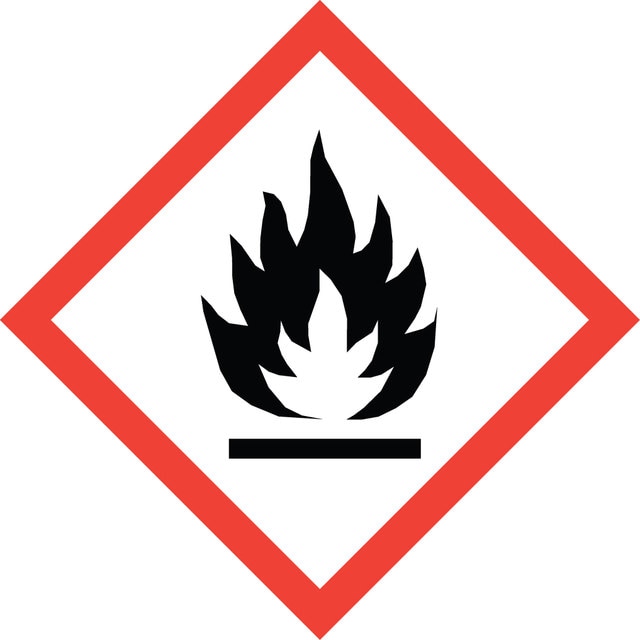

signalword

Danger

Hazard Classifications

Aquatic Chronic 3 - Asp. Tox. 1 - Flam. Liq. 2 - Repr. 2 - Skin Irrit. 2 - STOT RE 2 - STOT SE 3

target_organs

Central nervous system

Storage Class

3 - Flammable liquids

wgk

WGK 3

flash_point_f

39.2 °F - closed cup

flash_point_c

4 °C - closed cup


Regulatory Listings

Regulatory Listings are mainly provided for chemical products. Only limited information can be provided here for non-chemical products. No entry means none of the components are listed. It is the user’s obligation to ensure the safe and legal use of the product.

Class I Designated Chemical Substances

prtr

Group 4: Flammable liquids + Type 1 petroleums + Hazardous rank II + Water insoluble liquid

fsl

Substances Subject to be Indicated Names

ishl_indicated

Substances Subject to be Notified Names

ishl_notified

471399-10G:4.548173156101E12 + 471399-25G:4.548173156118E12 + 471399-5G:4.548173156125E12

jan


Choose from one of the most recent versions:

Certificates of Analysis (COA)

Lot/Batch Number

Don't see the Right Version?

If you require a particular version, you can look up a specific certificate by the Lot or Batch number.

Already Own This Product?

Find documentation for the products that you have recently purchased in the Document Library.

Visit the Document Library


Related Content


Geometry of hydrogen bonds formed by lipid bilayer nitroxide probes: a high-frequency pulsed ENDOR/EPR study
Smirnova TI, et al.
Journal of the American Chemical Society, 129(12), 3476-3477 (2007)
A Pseudomonas thrives in high concentrations of toluene
Inoue A and Horikoshi K
Nature, 339, 264-264 (1989)
Solvent Effects in Nuclear Magnetic Resonance Spectroscopy. IX. 1 A Variable-Temperature Study of α,β-Unsaturated Ketones in Toluene-d8 Solution.
Ronayne J, et al.
Journal of the American Chemical Society, 88(22), 5288-5292 (1966)