
741442

(3-Aminopropyl)triethoxysilane
≥98.0%

Greener Alternative
Synonym(s):
APTS, 3-Triethoxysilylpropylamine, APTES
Select a Size
About This Item
Quality Segment
assay
≥98.0%
form
liquid
greener alternative product characteristics
Design for Energy Efficiency
Design for Energy Efficiency
Learn more about the Principles of Green Chemistry.
sustainability
Greener Alternative Product, Greener Alternative Product
color
APHA: ≤25
refractive index
n
bp
217 °C/760 mmHg (lit.)
density
0.929 g/mL at 25 °C, 0.946 g/mL at 25 °C (lit.)
functional group
silyl
SMILES string
CCO[Si](CCCN)(OCC)OCC
InChI
1S/C9H23NO3Si/c1-4-11-14(12-5-2,13-6-3)9-7-8-10/h4-10H2,1-3H3
InChI key
WYTZZXDRDKSJID-UHFFFAOYSA-N
General description
Application
- For the surface functionalization of silica nanoparticles to enhance their colloidal stability.
- As a self-assembled monolayer (SAM) in the fabrication of amorphous silicon thin-film solar cells, to enhance their performance and stability.
- To modify zinc oxide quantum dots for enhancing the performance of fluorescent orthodontic adhesives.
- Synthesis of Fe3O4@SiO2/APTS/Ru magnetic nanocomposite catalyst for hydrogenation reactions
Features and Benefits
- (≥98.0%) ensures effective bonding and modification without the interference of impurities, leading to improved adhesion and durability of coatings.
- The absence of contaminants allows for consistent performance in enhancing the compatibility between organic and inorganic materials, resulting in stronger and more reliable composites.
- It ensures that the functional groups are readily available for reactions, leading to efficient immobilization and improved sensitivity of biosensors.
Still not finding the right product?
Explore all of our products under (3-Aminopropyl)triethoxysilane
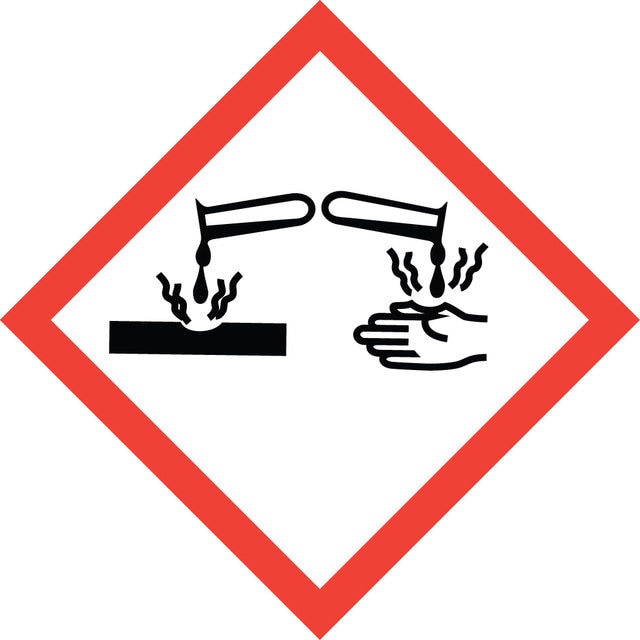

Signal Word
Danger
Hazard Codes
Precautionary Statements
Hazard Classifications
Acute Tox. 4 Oral - Eye Dam. 1 - Skin Corr. 1B - Skin Sens. 1
Storage Class
8A - Combustible corrosive hazardous materials
WGK
WGK 1
Flash Point (°F)
195.1 °F - closed cup
Flash Point (°C)
90.6 °C - closed cup
Regulatory Listings
Regulatory Listings are mainly provided for chemical products. Only limited information can be provided here for non-chemical products. No entry means none of the components are listed. It is the user’s obligation to ensure the safe and legal use of the product.
Group 4: Flammable liquids + Type 3 petroleums + Hazardous rank III + Water soluble liquid
fsl
Substances Subject to be Indicated Names
ishl_indicated
Substances Subject to be Notified Names
ishl_notified
741442-BULK: + 741442-5X500ML: + 741442-500ML:4548173398105 + 741442-VAR: + 741442-100ML:4548173391502
jan
Choose from one of the most recent versions:
Already Own This Product?
Find documentation for the products that you have recently purchased in the Document Library.