
D39002

1,2-Dibromobenzene
98%
Synonym(s):
o-Dibromobenzene
Select a Size
About This Item
vapor density
8.2 (vs air)
Quality Level
assay
98%
form
liquid
refractive index
n20/D 1.611 (lit.)
bp
224 °C (lit.)
mp
4-6 °C (lit.)
density
1.956 g/mL at 25 °C (lit.)
SMILES string
Brc1ccccc1Br
InChI
1S/C6H4Br2/c7-5-3-1-2-4-6(5)8/h1-4H
InChI key
WQONPSCCEXUXTQ-UHFFFAOYSA-N
General description
Application
- Selective Covalent Capture of Collagen Triple Helices with Minimal Protecting Group Strategy: This study details the use of Rink Amide MBHA resin for capturing collagen triple helices, highlighting its efficiency in solid-phase synthesis (JDH Le Tracy Yu, 2020).
- Solid phase peptide synthesis: new resin and new protecting group: Introduction of a novel resin, Fmoc-Rink-Amide PEG Octagel, showcasing its application in peptide synthesis (S Ramkisson, 2018).
- Development of a novel, automated, robotic system for rapid, high-throughput, parallel, solid-phase peptide synthesis: This paper discusses the utilization of Rink Amide MBHA resin in developing an automated system for peptide synthesis (K Kiss et al., 2023).
- Synthesis of Peptoids Containing Multiple Nhtrp and Ntrp Residues: A Comparative Study of Resin, Cleavage Conditions and Submonomer Protection: The study compares different resins including Rink Amide MBHA, analyzing their efficacy in peptoid synthesis (A Lone et al., 2020).
- diborylbenzenes via palladium-catalyzed borylation of bromobenzenes
- o,o′-tri- and -tetrasubstituted biphenyls via aryne cross-coupling reaction

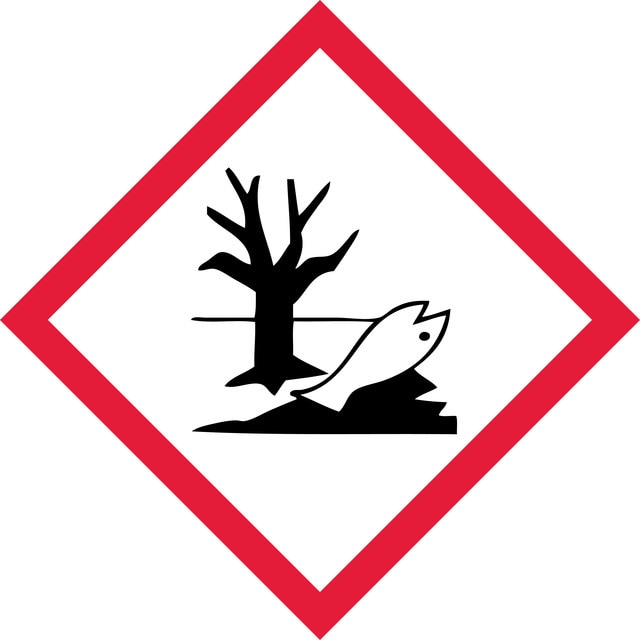
signalword
Warning
hcodes
Hazard Classifications
Aquatic Chronic 2 - Eye Irrit. 2 - Skin Irrit. 2 - STOT SE 3
target_organs
Respiratory system
Storage Class
10 - Combustible liquids
wgk
WGK 3
flash_point_f
197.6 °F - closed cup
flash_point_c
92 °C - closed cup
ppe
Eyeshields, Gloves, type ABEK (EN14387) respirator filter
Regulatory Listings
Regulatory Listings are mainly provided for chemical products. Only limited information can be provided here for non-chemical products. No entry means none of the components are listed. It is the user’s obligation to ensure the safe and legal use of the product.
Group 4: Flammable liquids + Type 3 petroleums + Hazardous rank III + Water insoluble liquid
fsl
Choose from one of the most recent versions:
Already Own This Product?
Find documentation for the products that you have recently purchased in the Document Library.