Skip to Content
Merck

M47949

2-Methylheptane

98%

Synonym(s):

2-Methylheptane

Sign In to View Organizational & Contract Pricing.

Select a Size

Change View

About This Item

Linear Formula:
CH3(CH2)4CH(CH3)2
CAS Number:
Molecular Weight:
114.23
UNSPSC Code:
12352100
NACRES:
NA.22
PubChem Substance ID:
EC Number:
209-747-9
Beilstein/REAXYS Number:
1696862
MDL number:
Assay:
98%
Form:
liquid
Technical Service
Need help? Our team of experienced scientists is here for you.
Let Us Assist


vapor pressure

0.77 psi ( 37.7 °C)

Quality Level

assay

98%

form

liquid

refractive index

n20/D 1.395 (lit.)

bp

116 °C/761 mmHg (lit.)

density

0.698 g/mL at 25 °C (lit.)

SMILES string

CCCCCC(C)C

InChI

1S/C8H18/c1-4-5-6-7-8(2)3/h8H,4-7H2,1-3H3

InChI key

JVSWJIKNEAIKJW-UHFFFAOYSA-N


signalword

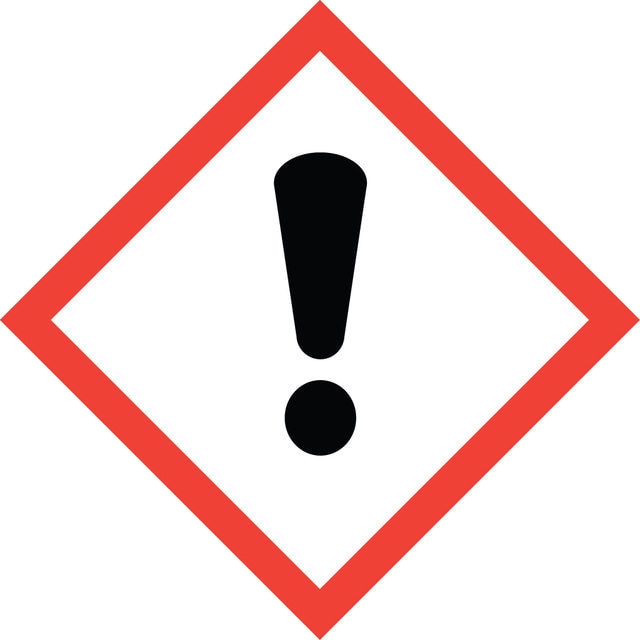
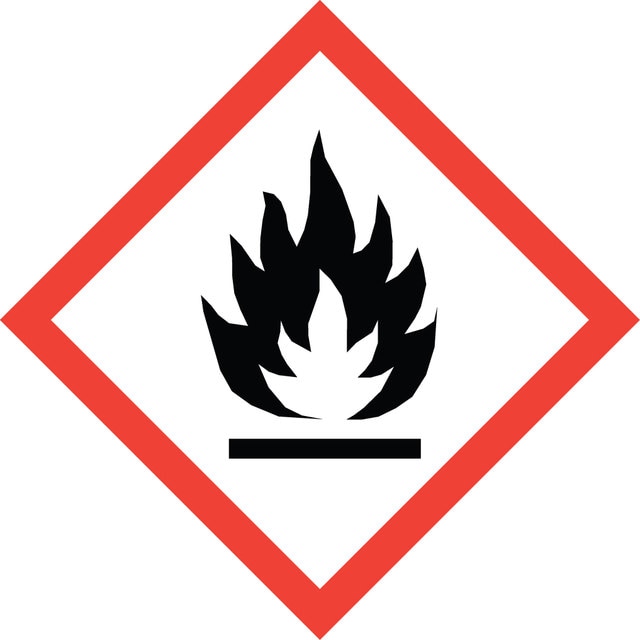
Danger

Hazard Classifications

Aquatic Acute 1 - Aquatic Chronic 1 - Asp. Tox. 1 - Flam. Liq. 2 - Skin Irrit. 2 - STOT SE 3

target_organs

Central nervous system

Storage Class

3 - Flammable liquids

flash_point_f

39.2 °F - closed cup

flash_point_c

4 °C - closed cup

ppe

Eyeshields, Faceshields, Gloves, type ABEK (EN14387) respirator filter


Regulatory Listings

Regulatory Listings are mainly provided for chemical products. Only limited information can be provided here for non-chemical products. No entry means none of the components are listed. It is the user’s obligation to ensure the safe and legal use of the product.

Group 4: Flammable liquids + Type 1 petroleums + Hazardous rank II + Water insoluble liquid

fsl

Substances Subject to be Indicated Names

ishl_indicated

Substances Subject to be Notified Names

ishl_notified

M47949-25G:4.548173950327E12 + M47949-5G:4.548173950334E12

jan


Choose from one of the most recent versions:

Certificates of Analysis (COA)

Lot/Batch Number

Don't see the Right Version?

If you require a particular version, you can look up a specific certificate by the Lot or Batch number.

Already Own This Product?

Find documentation for the products that you have recently purchased in the Document Library.

Visit the Document Library


Glen S Patten et al.
International journal of food sciences and nutrition, 68(2), 201-209 (2016-09-20)
Long-chain n-3 polyunsaturated fatty acids (LC n-3 PUFA) may be more bioavailable from krill oil compared to fish oil due to their phospholipid structure. We tested whether a microencapsulated krill and tuna oil blend (ME-TOKO) provided greater LC n-3 PUFA
Feras Abujaber et al.
Talanta, 201, 266-270 (2019-05-28)
Magnetic cellulose nanoparticles (MCNPs) were used for the first time as sorbents for stir bar-sorptive dispersive microextraction (SBSDME). The main experimental parameters involved in the SBSDME process that affect extraction (i.e. amount of MCNPs, ionic strength, pH, extraction and back-extraction
Daniel P Killeen et al.
Journal of agricultural and food chemistry, 65(17), 3551-3558 (2017-04-20)
Fish oils are the primary dietary source of ω-3 polyunsaturated fatty acids (PUFA), but these compounds are prone to oxidation, and commercial fish oil supplements sometimes contain less PUFA than claimed. These supplements are predominantly sold in softgel capsules. In