Skip to Content
Merck

W224511

Carvacrol

greener alternative

natural, 99%, FG

Synonym(s):

5-Isopropyl-2-methylphenol

Sign In to View Organizational & Contract Pricing.

Select a Size


About This Item

Linear Formula:
(CH3)2CHC6H3(CH3)OH
CAS Number:
Molecular Weight:
150.22
FEMA Number:
2245
Council of Europe no.:
2055
UNSPSC Code:
12164502
PubChem Substance ID:
Flavis number:
4.031
EC Number:
207-889-6
NACRES:
NA.21
MDL number:
Beilstein/REAXYS Number:
1860514
Organoleptic:
camphoraceous; woody; spicy
Grade:
FG, Fragrance grade, Halal, Kosher, natural
Agency:
follows IFRA guidelines, meets purity specifications of JECFA
Food allergen:
no known allergens
Technical Service
Need help? Our team of experienced scientists is here for you.
Let Us Assist
Technical Service
Need help? Our team of experienced scientists is here for you.
Let Us Assist

Quality Level

grade

FG, Fragrance grade, Halal, Kosher, natural

agency

follows IFRA guidelines, meets purity specifications of JECFA

reg. compliance

EU Regulation 1223/2009, EU Regulation 1334/2008 & 178/2002, FDA 21 CFR 117

assay

99%

greener alternative product characteristics

Less Hazardous Chemical Syntheses
Use of Renewable Feedstocks
Learn more about the Principles of Green Chemistry.

sustainability

Greener Alternative Product

refractive index

n20/D 1.522 (lit.)

bp

236-237 °C (lit.)

mp

3-4 °C (lit.)

density

0.976 g/mL at 20 °C (lit.)

application(s)

flavors and fragrances

documentation

see Safety & Documentation for available documents

food allergen

no known allergens

fragrance allergen

carvacrol

greener alternative category

organoleptic

camphoraceous; woody; spicy

SMILES string

CC(C)c1ccc(C)c(O)c1

InChI

1S/C10H14O/c1-7(2)9-5-4-8(3)10(11)6-9/h4-7,11H,1-3H3

InChI key

RECUKUPTGUEGMW-UHFFFAOYSA-N

Looking for similar products? Visit Product Comparison Guide

General description

Carvacrol is one of the key constituents of basil and thyme essential oils. It is one of the compounds that may be responsible for antioxidant activities of these oils.
We are committed to bringing you greener alternative products, which adhere to one or more of the 12 Principles of Green Chemistry. This product is Biobased and thus aligns with "Less Hazardous Chemical Syntheses" and "Use of Renewable Feedstocks".

Application


  • Prophylactic efficacy of baicalin and carvacrol against Salmonella Typhimurium biofilm on food and food contact surfaces.: The study explores the effectiveness of carvacrol in preventing biofilm formation by Salmonella Typhimurium, with implications for food safety (Ashrafudoulla et al., 2024).


signalword

Danger

Hazard Classifications

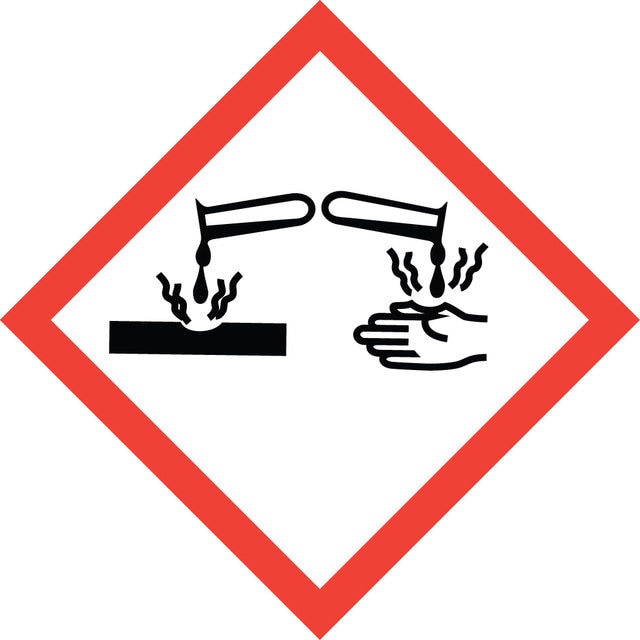
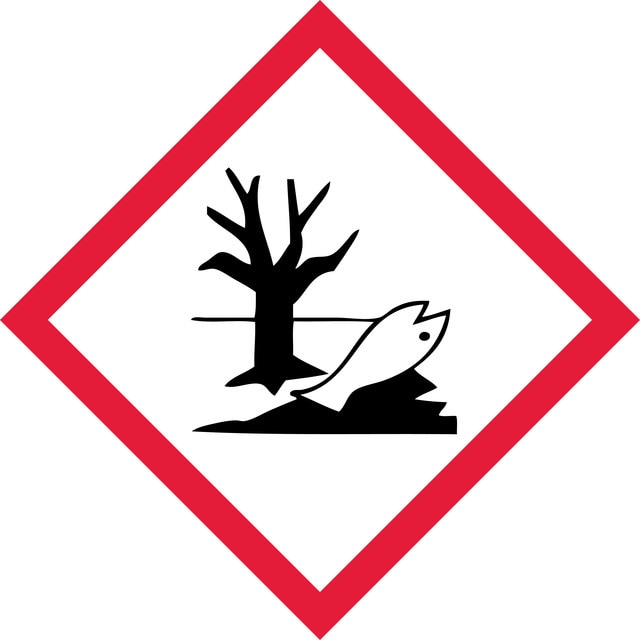
Acute Tox. 4 Oral - Aquatic Chronic 2 - Eye Dam. 1 - Skin Corr. 1B

Storage Class

8A - Combustible corrosive hazardous materials

wgk

WGK 3

flash_point_f

>212.0 °F

flash_point_c

> 100 °C


Regulatory Listings

Regulatory Listings are mainly provided for chemical products. Only limited information can be provided here for non-chemical products. No entry means none of the components are listed. It is the user’s obligation to ensure the safe and legal use of the product.

Group 4: Flammable liquids + Type 3 petroleums + Hazardous rank III + Water insoluble liquid

fsl

W224511-SAMPLE-K: + W224511-VAR-K: + W224511-1KG-K:4548173335452 + W224511-100G-K:4548173335438 + W224511-10KG-K:4548173335445 + W224511-BULK-K:

jan


Choose from one of the most recent versions:

Certificates of Analysis (COA)

Lot/Batch Number

It looks like we've run into a problem, but you can still download Certificates of Analysis from our Documents section.

If you need assistance, please contact Customer Support

Already Own This Product?

Find documentation for the products that you have recently purchased in the Document Library.

Visit the Document Library

Identification of volatile components in basil (Ocimum basilicum L.) and thyme leaves (Thymus vulgaris L.) and their antioxidant properties.
Lee SJ, et al.
Food Chemistry, 91(1), 131-137 (2005)
Yuhua Chang et al.
Journal of agricultural and food chemistry, 61(37), 8906-8913 (2013-09-04)
A simple cost-effective method (spontaneous emulsification) for fabricating physically stable antimicrobial nanoemulsions from essential oils is described. These nanoemulsions (10 wt % total oil phase) were formed by titration of a mixture of essential oil (carvacrol), carrier oil (medium chain
Samed Koc et al.
Veterinary parasitology, 193(1-3), 316-319 (2012-12-12)
The acaricidal activity of an essential oil obtained from aerial parts of Origanum bilgeri P.H. Davis (Lamiaceae), an endemic species in Turkey, and its major constituents, carvacrol was evaluated against unfed adults Rhipicephalus turanicus Pomerantzev (Acari: Ixodidae) collected from Kepez
Josué de Moraes et al.
Parasitology research, 112(2), 603-610 (2012-10-23)
Blood flukes of the genus Schistosoma are the causative agents of human schistosomiasis, a debilitating disease that afflicts over 200 million people worldwide. Praziquantel is the drug of choice but concerns over praziquantel resistance have renewed interest in the search
Wei-Zhe Liang et al.
Toxicology, 303, 152-161 (2012-11-14)
Carvacrol is one of the main substances of essential oil which triggers intracellular Ca(2+) mobilization and causes cytotoxicity in diverse cell models. However, the mechanism of carvacrol-induced Ca(2+) movement and cytotoxicity is not fully understood. This study examined the effect

Articles

The EU’s definition of natural flavors is under review as GMM use in fermentation raises questions. Learn how regulations and consumer perceptions may shift.

Our team of scientists has experience in all areas of research including Life Science, Material Science, Chemical Synthesis, Chromatography, Analytical and many others.

Contact Technical Service