Skip to Content
Merck

09-1755

Ethylene glycol monophenyl ether

SAJ first grade, ≥95.0%

Synonym(s):

2-Phenoxyethanol, Phenylglycol

Sign In to View Organizational & Contract Pricing.

Select a Size


About This Item

Linear Formula:
C6H5OCH2CH2OH
CAS Number:
Molecular Weight:
138.16
EC Number:
204-589-7
UNSPSC Code:
12352112
PubChem Substance ID:
Beilstein/REAXYS Number:
1364011
MDL number:
Assay:
≥95.0%
Grade:
SAJ first grade
Bp:
247 °C (lit.)
Vapor pressure:
0.01 mmHg ( 20 °C)
Technical Service
Need help? Our team of experienced scientists is here for you.
Let Us Assist
Technical Service
Need help? Our team of experienced scientists is here for you.
Let Us Assist

InChI key

QCDWFXQBSFUVSP-UHFFFAOYSA-N

InChI

1S/C8H10O2/c9-6-7-10-8-4-2-1-3-5-8/h1-5,9H,6-7H2

SMILES string

OCCOc1ccccc1

grade

SAJ first grade

vapor density

4.8 (vs air)

vapor pressure

0.01 mmHg ( 20 °C)

assay

≥95.0%

form

liquid

availability

available only in Japan

dilution

(for analytical testing)

refractive index

n20/D 1.537 (lit.)

pH

7 (23 °C, 10 g/L)

bp

247 °C (lit.)

mp

11-13 °C (lit.)

density

1.102 g/mL at 25 °C (lit.)

Looking for similar products? Visit Product Comparison Guide
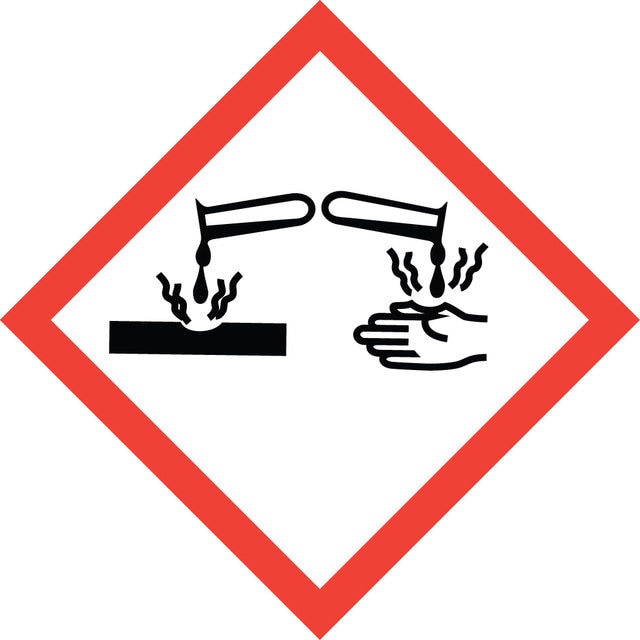
pictograms

CorrosionExclamation mark

signalword

Danger

Hazard Classifications

Acute Tox. 4 Oral - Eye Dam. 1 - STOT SE 3

target_organs

Respiratory system

Storage Class

10 - Combustible liquids

wgk

WGK 1

flash_point_f

258.8 °F - closed cup

flash_point_c

126 °C - closed cup

ppe

Eyeshields, Faceshields, Gloves, type ABEK (EN14387) respirator filter


Regulatory Listings

Regulatory Listings are mainly provided for chemical products. Only limited information can be provided here for non-chemical products. No entry means none of the components are listed. It is the user’s obligation to ensure the safe and legal use of the product.

Group 4: Flammable liquids + Type 3 petroleums + Hazardous rank III + Water insoluble liquid

fsl

Substances Subject to be Indicated Names

ishl_indicated

Substances Subject to be Notified Names

ishl_notified

09-1755-5-500ML-J: + 09-1755-BULK-J:

jan


Choose from one of the most recent versions:

Certificates of Analysis (COA)

Lot/Batch Number

Don't see the Right Version?

If you require a particular version, you can look up a specific certificate by the Lot or Batch number.

Already Own This Product?

Find documentation for the products that you have recently purchased in the Document Library.

Visit the Document Library

Joshua Quick et al.
Genome biology, 16, 114-114 (2015-05-31)
Foodborne outbreaks of Salmonella remain a pressing public health concern. We recently detected a large outbreak of Salmonella enterica serovar Enteritidis phage type 14b affecting more than 30 patients in our hospital. This outbreak was linked to community, national and
Yi Shen et al.
Environmental science & technology, 49(12), 7364-7372 (2015-05-27)
Graphene nanosheets, as a novel nanoadsorbent, can be further modified to optimize the adsorption capability for various pollutants. To overcome the structural limits of graphene (aggregation) and graphene oxide (hydrophilic surface) in water, sulfonated graphene (GS) was prepared by diazotization
Therese Lloyd et al.
BMC medicine, 13, 171-171 (2015-08-01)
In the UK, a man's lifetime risk of being diagnosed with prostate cancer is 1 in 8. We calculated both the lifetime risk of being diagnosed with and dying from prostate cancer by major ethnic group. Public Health England provided
Shao-Ping Weng et al.
Reproductive toxicology (Elmsford, N.Y.), 29(4), 452-457 (2010-04-13)
Ethylene glycol monomethyl ether (EGME) is known to alter the reproductive function of exposed animals and their offspring; however, its influence on cumulus-oocyte complexes (COCs) remains unclear. This study assessed the toxicity of EGME on oocytes and COCs by analyzing
J Lademann et al.
Skin pharmacology and physiology, 25(2), 100-106 (2012-02-04)
Colonization and infection of wounds represent a major reason for the impairment of tissue repair. Recently, it has been reported that tissue-tolerable plasma (TTP) is highly efficient in the reduction of the bacterial load of the skin. In the present

Our team of scientists has experience in all areas of research including Life Science, Material Science, Chemical Synthesis, Chromatography, Analytical and many others.

Contact Technical Service