Skip to Content
Merck

19-3500

Iodomethane

SAJ special grade, ≥99.5%

Synonym(s):

Methyl iodide

Sign In to View Organizational & Contract Pricing.

Select a Size


About This Item

Empirical Formula (Hill Notation):
CH3I
CAS Number:
Molecular Weight:
141.94
PubChem Substance ID:
UNSPSC Code:
12352101
Beilstein/REAXYS Number:
969135
MDL number:
Assay:
≥99.5%
Grade:
SAJ special grade
Bp:
41-43 °C (lit.)
Vapor pressure:
24.09 psi ( 55 °C), 7.89 psi ( 20 °C)
Technical Service
Need help? Our team of experienced scientists is here for you.
Let Us Assist
Technical Service
Need help? Our team of experienced scientists is here for you.
Let Us Assist

SMILES string

CI

InChI

1S/CH3I/c1-2/h1H3

InChI key

INQOMBQAUSQDDS-UHFFFAOYSA-N

grade

SAJ special grade

vapor density

4.89 (vs air)

vapor pressure

24.09 psi ( 55 °C), 7.89 psi ( 20 °C)

assay

≥99.5%

form

liquid

availability

available only in Japan

dilution

(for analytical testing)

refractive index

n20/D 1.531 (lit.)

bp

41-43 °C (lit.)

mp

−64 (lit.)

density

2.28 g/mL at 25 °C (lit.)

Looking for similar products? Visit Product Comparison Guide

signalword

Danger

Hazard Classifications

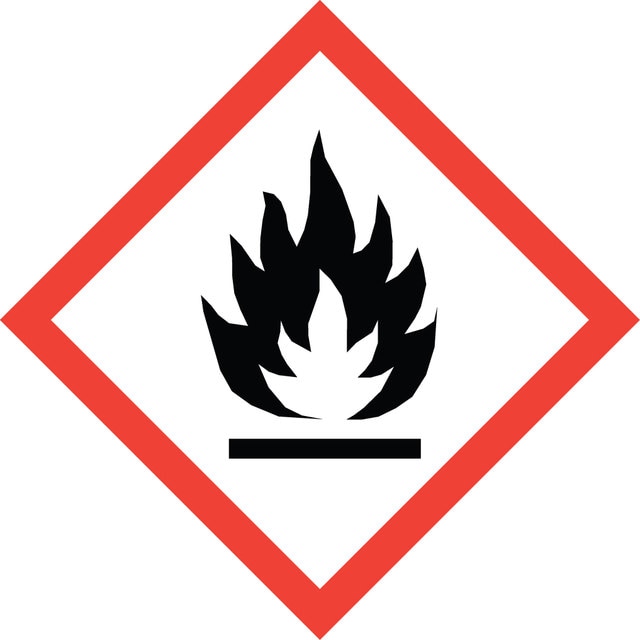
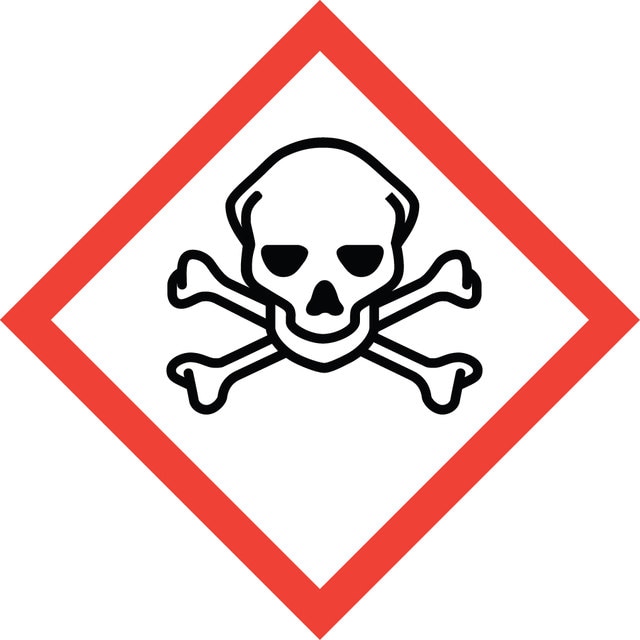
Acute Tox. 3 Inhalation - Acute Tox. 3 Oral - Acute Tox. 4 Dermal - Aquatic Acute 1 - Aquatic Chronic 2 - Carc. 2 - Eye Dam. 1 - Flam. Liq. 3 - Skin Irrit. 2 - STOT SE 3

target_organs

Respiratory system

Storage Class

3 - Flammable liquids

wgk

WGK 3

flash_point_f

89.8 °F - closed cup

flash_point_c

32.1 °C - closed cup


Regulatory Listings

Regulatory Listings are mainly provided for chemical products. Only limited information can be provided here for non-chemical products. No entry means none of the components are listed. It is the user’s obligation to ensure the safe and legal use of the product.

Deleterious substance

pdsc

Group 4: Flammable liquids + Type 2 petroleums + Hazardous rank III + Water insoluble liquid

fsl

Substances Subject to be Indicated Names

ishl_indicated

Substances Subject to be Notified Names

ishl_notified

19-3500-5-500G-J: + 19-3500-2-25G-J:

jan


Choose from one of the most recent versions:

Certificates of Analysis (COA)

Lot/Batch Number

Don't see the Right Version?

If you require a particular version, you can look up a specific certificate by the Lot or Batch number.

Already Own This Product?

Find documentation for the products that you have recently purchased in the Document Library.

Visit the Document Library

Microhydration effects on the intermediates of the S(N)2 reaction of iodide anion with methyl iodide.
Keisuke Doi et al.
Angewandte Chemie (International ed. in English), 52(16), 4380-4383 (2013-01-31)
Kazunori Kawamura et al.
Nuclear medicine and biology, 39(1), 89-99 (2011-08-13)
To explore the possible use of positron emission tomography (PET) probes for imaging of I(2)-imidazoline receptors (I(2)Rs) in peripheral tissues, we labeled two new I(2)R ligands, 2-[2-(o-tolyl)vinyl]-4,5-dihydro-1H-imidazole (K(i) for I(2)Rs, 3.7 nM) and 2-[2-(o-tolyl)ethyl]-4,5-dihydro-1H-imidazole (K(i) for I(2)Rs, 1.7 nM) with
Warayuth Sajomsang et al.
International journal of biological macromolecules, 50(1), 263-269 (2011-11-22)
Five water-soluble chitosan derivatives were carried out by quaternizing either iodomethane or N-(3-chloro-2-hydroxypropyl) trimethylammonium chloride (Quat188) as a quaternizing agent under basic condition. The degree of quaternization (DQ) ranged between 28±2% and 90±2%. The antifungal activity was evaluated by using
Christian R Evenhuis et al.
The journal of physical chemistry. A, 115(23), 5992-6001 (2011-02-12)
The photodissociation of methyl iodide in the A band is studied by full-dimensional (9D) wave packet dynamics calculations using the multiconfigurational time-dependent Hartree approach. The potential energy surfaces employed are based on the diabatic potentials of Xie et al. [J.
R Otto et al.
Nature chemistry, 4(7), 534-538 (2012-06-22)
Solvents have a profound influence on chemical reactions in solution and have long been used to control their outcome. Such effects are generally considered to be governed by thermodynamics; however, little is known about the steric effects of solvent molecules.

Our team of scientists has experience in all areas of research including Life Science, Material Science, Chemical Synthesis, Chromatography, Analytical and many others.

Contact Technical Service