Skip to Content
Merck

24-6080

1-Propanol

SAJ first grade, ≥99.0%

Synonym(s):

Propyl alcohol

Sign In to View Organizational & Contract Pricing.

Select a Size


About This Item

Linear Formula:
CH3CH2CH2OH
CAS Number:
Molecular Weight:
60.10
PubChem Substance ID:
UNSPSC Code:
12352001
Beilstein/REAXYS Number:
1098242
MDL number:
Assay:
≥99.0%
Grade:
SAJ first grade
Bp:
97 °C (lit.)
Vapor pressure:
10 mmHg ( 147 °C)
14.9 mmHg ( 20 °C)
Technical Service
Need help? Our team of experienced scientists is here for you.
Let Us Assist
Technical Service
Need help? Our team of experienced scientists is here for you.
Let Us Assist

Product Name

1-Propanol, SAJ first grade, ≥99.0%

SMILES string

CCCO

InChI

1S/C3H8O/c1-2-3-4/h4H,2-3H2,1H3

InChI key

BDERNNFJNOPAEC-UHFFFAOYSA-N

grade

SAJ first grade

vapor density

2.1 (vs air)

vapor pressure

10 mmHg ( 147 °C)
14.9 mmHg ( 20 °C)

assay

≥99.0%

form

liquid

autoignition temp.

700 °F

expl. lim.

13.7 %

availability

available only in Japan

dilution

(for analytical testing)

refractive index

n20/D 1.384 (lit.)

pH

8.5 (20 °C, 200 g/L)

bp

97 °C (lit.)

mp

−127 °C (lit.)

density

0.804 g/mL at 25 °C (lit.)

Looking for similar products? Visit Product Comparison Guide

signalword

Danger

Hazard Classifications

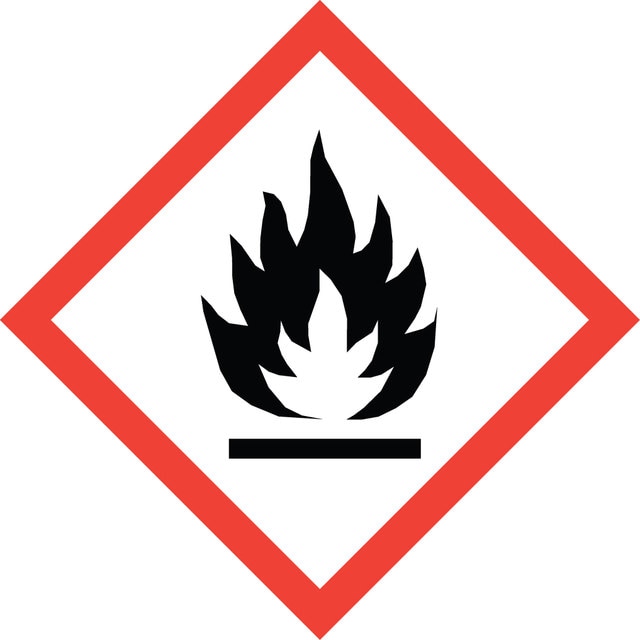
Eye Dam. 1 - Flam. Liq. 2 - STOT SE 3

target_organs

Central nervous system

Storage Class

3 - Flammable liquids

wgk

WGK 1

flash_point_f

59.0 °F

flash_point_c

15 °C


Regulatory Listings

Regulatory Listings are mainly provided for chemical products. Only limited information can be provided here for non-chemical products. No entry means none of the components are listed. It is the user’s obligation to ensure the safe and legal use of the product.

Group 4: Flammable liquids + Alcohols + Hazardous rank II

fsl

Substances Subject to be Indicated Names

ishl_indicated

Substances Subject to be Notified Names

ishl_notified

24-6080-8-14KG-J: + 24-6080-5-500ML-J:

jan


Choose from one of the most recent versions:

Certificates of Analysis (COA)

Lot/Batch Number

Don't see the Right Version?

If you require a particular version, you can look up a specific certificate by the Lot or Batch number.

Already Own This Product?

Find documentation for the products that you have recently purchased in the Document Library.

Visit the Document Library

David Fernandez Rivas et al.
Ultrasonics sonochemistry, 19(6), 1252-1259 (2012-05-23)
Micromachined pits on a substrate can be used to nucleate and stabilize microbubbles in a liquid exposed to an ultrasonic field. Under suitable conditions, the collapse of these bubbles can result in light emission (sonoluminescence, SL). Hydroxyl radicals (OH()) generated
Takeshi Morita et al.
The journal of physical chemistry. B, 116(24), 7328-7333 (2012-06-01)
We characterized the effects of ethanol (ET) and dimethyl sulfoxide (DMSO) on H(2)O within a limited H(2)O-rich region by the 1-propanol (1P)-probing methodology developed by us earlier. The results are displayed on a two-dimensional map with twin coordinates: one pertaining
Sheba D Bergman et al.
Chemistry (Weinheim an der Bergstrasse, Germany), 18(33), 10393-10398 (2012-07-13)
A general directed Ru-catalyzed C(sp(3))-H α-alkylation protocol for piperidines (less-reactive substrates than the corresponding five-membered cyclic amines) has been developed. The use of a hindered alcohol (2,4-dimethyl-3-pentanol) as the solvent and catalyst activator, and a catalytic amount of trans-1,2-cyclohexanedicarboxylic acid
Wilma I W Dodde et al.
Therapeutic drug monitoring, 25(4), 433-440 (2003-07-29)
We present a high-performance liquid chromatography (HPLC) method suitable for the analysis of epirubicin and its metabolite epirubicinol in saliva and plasma. Preparation of saliva and plasma samples was performed by extraction of analytes with a chloroform:2-propanol mixture (6:1, vol/vol)
Anja K K Rahn et al.
Journal of agricultural and food chemistry, 61(37), 8743-8751 (2013-08-24)
Chloropropanol (CP) esters are part of an emerging group of process-induced toxicants that are considered as potential health hazards particularly in palm oil. Mass spectrometry-based methodologies for identification of CP esters in food are critical in overcoming the challenges associated

Our team of scientists has experience in all areas of research including Life Science, Material Science, Chemical Synthesis, Chromatography, Analytical and many others.

Contact Technical Service