
37-0480

Zinc oxide
SAJ first grade, ≥99.0%
Sign In to View Organizational & Contract Pricing.
Select a Size
Change View
About This Item
Linear Formula:
ZnO
CAS Number:
Molecular Weight:
81.39
UNSPSC Code:
12352302
PubChem Substance ID:
MDL number:
eCl@ss:
38150402
Assay:
≥99.0%
Grade:
SAJ first grade
Form:
solid
grade
SAJ first grade
assay
≥99.0%
form
solid
reaction suitability
reagent type: catalyst
core: zinc
availability
available only in Japan
storage temp.
15-25°C
SMILES string
O=[Zn]
InChI
1S/O.Zn
InChI key
XLOMVQKBTHCTTD-UHFFFAOYSA-N
Application
Employed in the preparation of NaZnSiO3OH, a novel chiral framework material which has potential application in ion exchange, adsorption or catalysis.
Still not finding the right product?
Explore all of our products under Zinc oxide
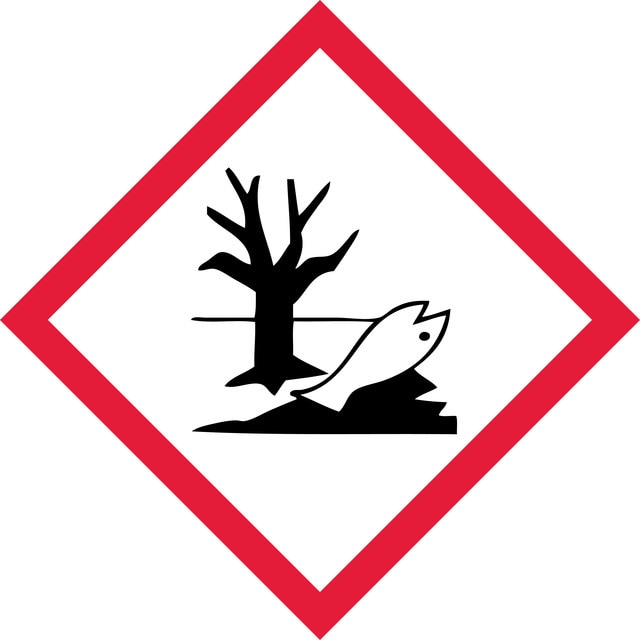
signalword
Warning
hcodes
pcodes
Hazard Classifications
Aquatic Acute 1 - Aquatic Chronic 1
Storage Class
13 - Non Combustible Solids
wgk
WGK 2
flash_point_f
Not applicable
flash_point_c
Not applicable
Regulatory Listings
Regulatory Listings are mainly provided for chemical products. Only limited information can be provided here for non-chemical products. No entry means none of the components are listed. It is the user’s obligation to ensure the safe and legal use of the product.
Substances Subject to be Indicated Names
ishl_indicated
Substances Subject to be Notified Names
ishl_notified
37-0480-5-500G-J:4.548173018607E12
jan
Choose from one of the most recent versions:
Already Own This Product?
Find documentation for the products that you have recently purchased in the Document Library.
A Ra Kim et al.
Journal of biomedical nanotechnology, 9(5), 926-929 (2013-06-28)
Our innate immunity is composed of several integral leukocytes including neutrophil, NK cell, macrophage or so. They are usually known to produce reactive oxygen species (ROS), in order to induce cell damages by these oxidizing reagents, and finally disrupting mitochondrial
Xiaolong Li et al.
Journal of nanoscience and nanotechnology, 13(8), 5859-5863 (2013-07-26)
In this study, we present the synthesis of ZnO nanowire by hydrothermal process through reutilization of sludge from soy sauce wastewater electrochemical treatment. The influences of floc content and caramel pigment concentration on the morphologies of ZnO were studied. The
Long Giang Bach et al.
Journal of nanoscience and nanotechnology, 13(1), 694-697 (2013-05-08)
ZnO nanoparticles were covalently wrapped by polystyrene (PS) through surface thiol-lactam initiated radical polymerization using the grafting from approach. The surface of ZnO nanoparticles was initially modified by 3-mercapto propyltrimethoxysilane to afford thiol functionalized ZnO nanoparticles (ZnO-SH). The controlled radical