Skip to Content
Merck

288306

Chloroform

anhydrous, ≥99%, contains 0.5-1.0% ethanol as stabilizer

Synonym(s):

Methylidyne trichloride, Trichloromethane

Sign In to View Organizational & Contract Pricing.

Select a Size


About This Item

Empirical Formula (Hill Notation):
CHCl3
CAS Number:
Molecular Weight:
119.38
UNSPSC Code:
12191502
NACRES:
NA.21
PubChem Substance ID:
MDL number:
Beilstein/REAXYS Number:
1731042
Grade:
anhydrous
Assay:
≥99%
Bp:
60.5-61.5 °C (lit.)
Vapor pressure:
160 mmHg ( 20 °C)
Technical Service
Need help? Our team of experienced scientists is here for you.
Let Us Assist
Technical Service
Need help? Our team of experienced scientists is here for you.
Let Us Assist

Product Name

Chloroform, anhydrous, ≥99%, contains 0.5-1.0% ethanol as stabilizer

color

colorless

InChI

1S/CHCl3/c2-1(3)4/h1H

SMILES string

ClC(Cl)Cl

InChI key

HEDRZPFGACZZDS-UHFFFAOYSA-N

grade

anhydrous

vapor density

4.1 (vs air)

vapor pressure

160 mmHg ( 20 °C)

assay

≥99%

form

liquid

contains

0.5-1.0% ethanol as stabilizer

packaging

Sure/Seal of 1, 2 L
Sure/Seal of 100, 12x100 mL

impurities

<0.001% water
<0.005% water (100 mL pkg)

evapn. residue

<0.0003%

refractive index

n20/D 1.445 (lit.)

bp

60.5-61.5 °C (lit.)

mp

−63 °C (lit.)

density

1.48 g/mL at 25 °C
1.492 g/mL at 25 °C (lit.)

Quality Level

Looking for similar products? Visit Product Comparison Guide

Application

Chloroform has been used as a solvent for dissolving lipids and also as a cleansing agent. It may also be used in solvent extraction process and also for recrystallization.

General description

Chloroform is a volatile chlorinated organic solvent whose vapors have a narcotic effect. Due to its light sensitivity, it may undergo degradation with time. This can be suppressed by adding ethanol as a stabilizer. The addition will increase the polarity of the solvent and potentially impact certain applications.

Legal Information

Sure/Seal is a trademark of Sigma-Aldrich Co. LLC

pictograms

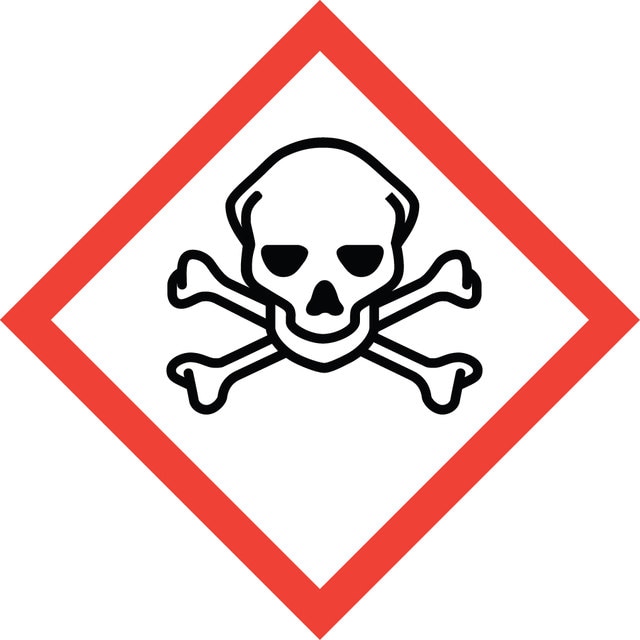
Skull and crossbonesHealth hazard

signalword

Danger

Hazard Classifications

Acute Tox. 3 Inhalation - Acute Tox. 4 Oral - Carc. 2 - Eye Irrit. 2 - Repr. 2 - Skin Irrit. 2 - STOT RE 1 Oral - STOT SE 3

target_organs

Central nervous system, Liver,Kidney

Storage Class

6.1D - Non-combustible acute toxic Cat.3 / toxic hazardous materials or hazardous materials causing chronic effects

wgk

WGK 3

flash_point_f

does not flash

flash_point_c

does not flash


Choose from one of the most recent versions:

Certificates of Analysis (COA)

Lot/Batch Number

Don't see the Right Version?

If you require a particular version, you can look up a specific certificate by the Lot or Batch number.

Already Own This Product?

Find documentation for the products that you have recently purchased in the Document Library.

Visit the Document Library

Electrogenerated chemiluminescent emission from an organized (LB) monolayer of a tris (2,2'-bipyridine) ruthenium (2+)-based surfactant on semiconductor and metal electrodes
Zhang X and Bard AJ
The Journal of Physical Chemistry, 92(20), 5566-5569 (1988)
Eagleson M
Concise Encyclopedia Chemistry, 216-216 (1994)
Analytical chemistry in a drop. Solvent extraction in a microdrop
Liu H and Dasgupta PK
Analytical Chemistry, 68(11), 1817-1821 (1996)
Mariya M Kucherenko et al.
Journal of visualized experiments : JoVE, (46)(46), doi:10-doi:10 (2011-01-06)
The molecular characterization of muscular dystrophies and myopathies in humans has revealed the complexity of muscle disease and genetic analysis of muscle specification, formation and function in model systems has provided valuable insight into muscle physiology. Therefore, identifying and characterizing
High activity and regenerability of a palladium-gold catalyst for chloroform degradation.
Velazquez JC, et al.
Journal of Chemical Technology and Biotechnology (2015)

Articles

Substances are said to be miscible in one another if they dissolve to form a uniform solution. Bookmark or download our miscibility table for common lab solvents.

Our team of scientists has experience in all areas of research including Life Science, Material Science, Chemical Synthesis, Chromatography, Analytical and many others.

Contact Technical Service